

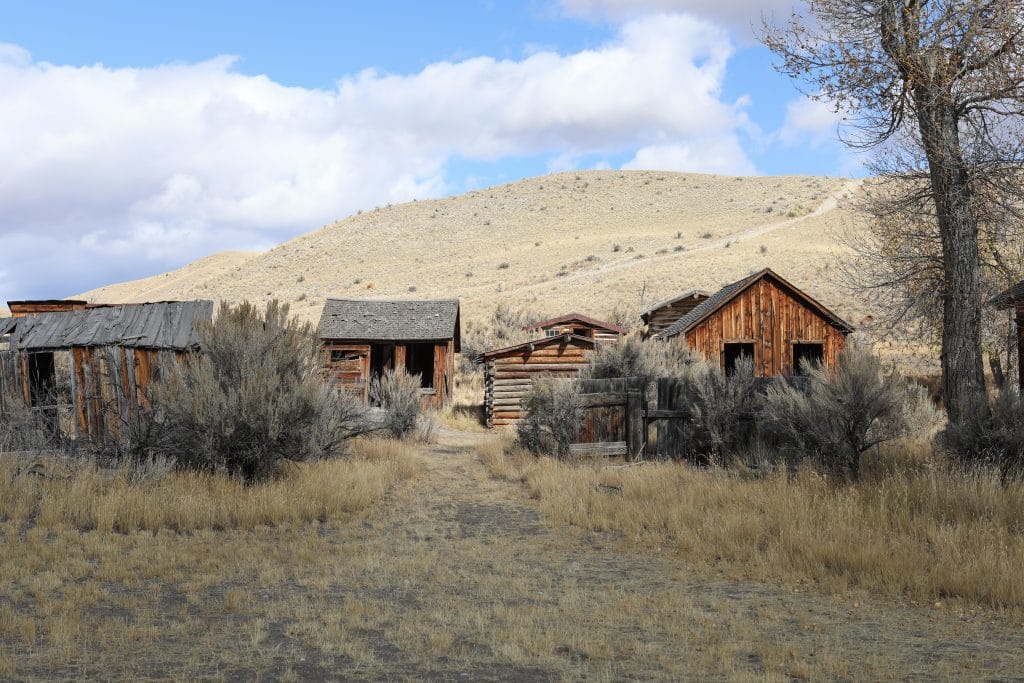
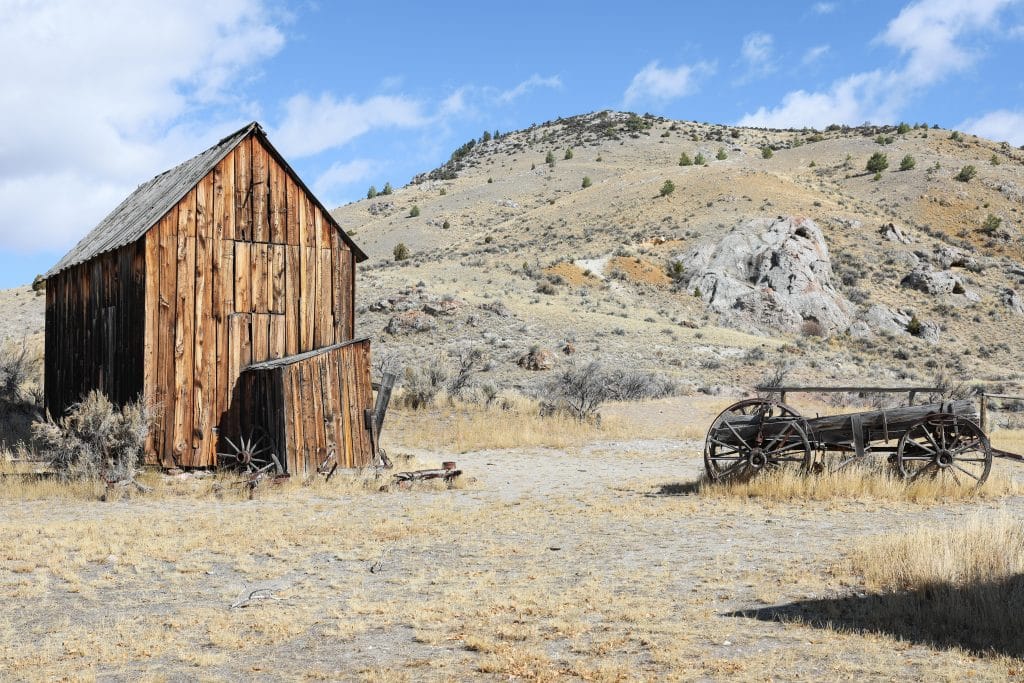
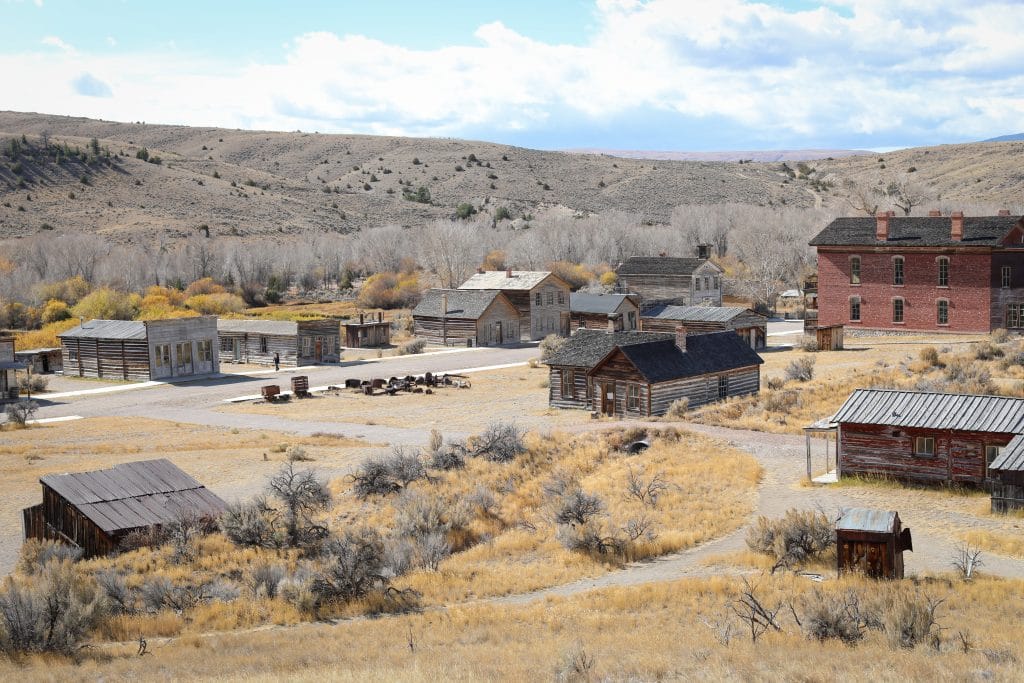
The wild west is still alive and well at the ghost town in Bannack, Montana. The virtually untouched buildings hint to stories of vigilantes, gunfights, gold strikes, and lives cut short by the harsh realities of the time.
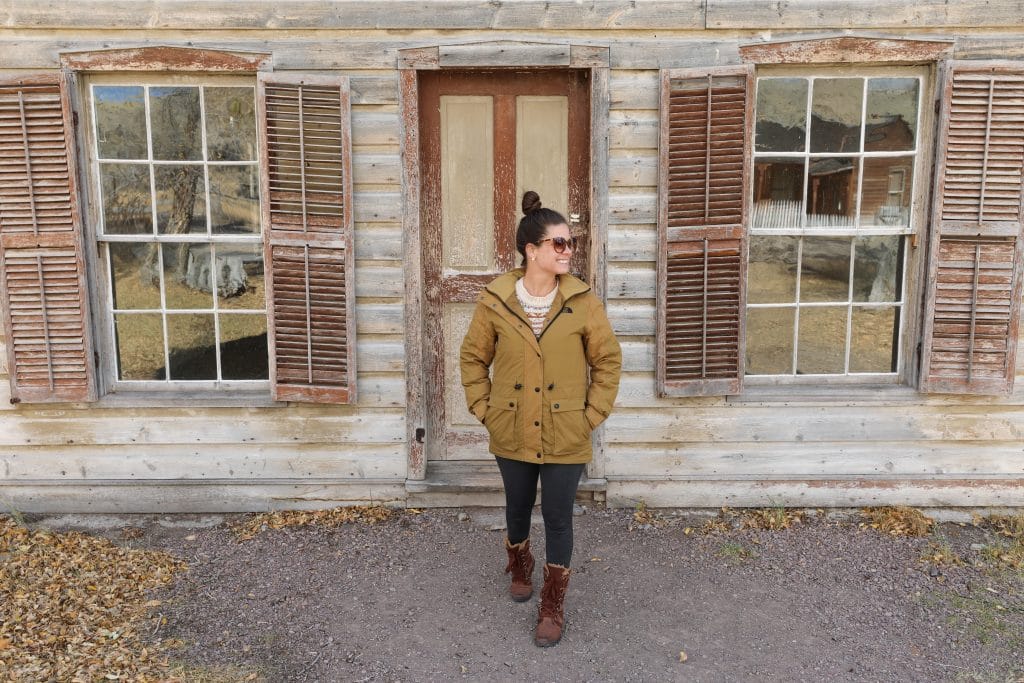
Each doorstep transports you back in time. Each window is a glimpse into everyday life 160 years ago.
The area’s remarkable history is well worth going out of your way to see the next time you’re in Big Sky country. Don’t believe me? Here are just a few reasons why a visit to the ghost town in Bannack, Montana is a must.
From Gold Rush to Ghost Town
In July 1862, John White and a few fellow Coloradoans discovered gold along Willard’s Creek. So, in an effort to protect their discovery, they filed one of the first mining claims in what would later become the great state of Montana.
Word traveled fast and not long after, their little mining camp swelled to over 3,000 eager prospectors. Soon, the camp expanded to become what is now known as Bannack (named for the Bannack Indians who were often in the area). The town featured a courthouse, saloon, schoolhouse, post office, and the first governor’s mansion (which only had one room and originally cost $400!)
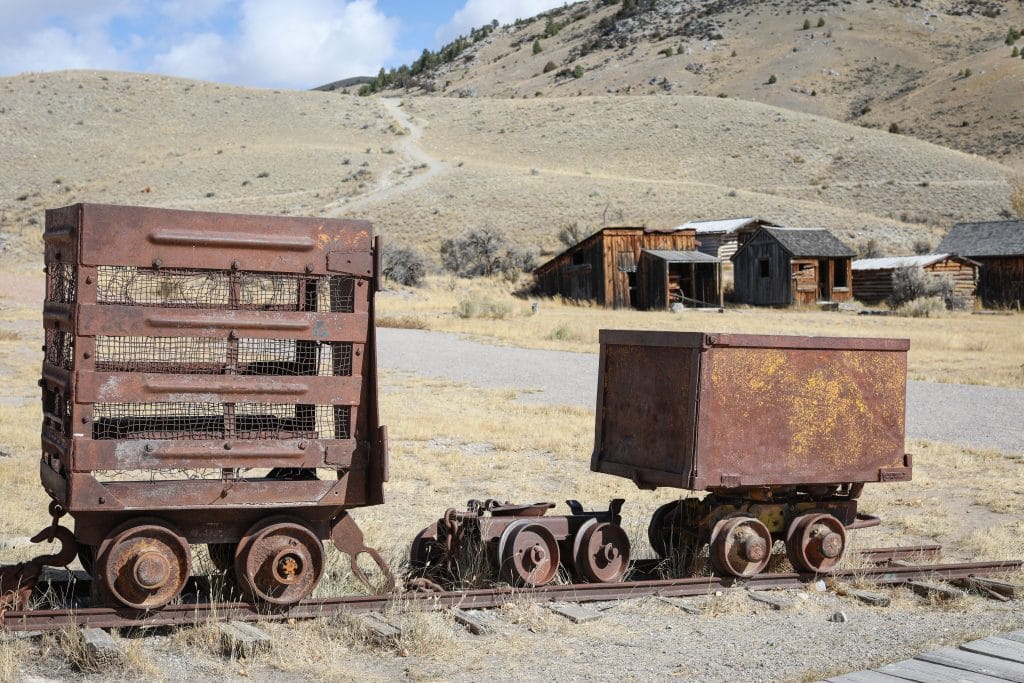
Over the years, Bannack saw a number of gold booms which made its population fluctuate. But, when World War II hit and all non-essential mining was prohibited, it signaled the end for the Territory of Montana’s original capital. Its gold washed clean and its buildings abandoned, the once bustling streets fell silent.
If These Walls Could Talk
Luckily, a group of concerned citizens banded together in the 1940s to preserve what was left. With a goal to maintain building integrity, rather than create a tourist trap to rival Virginia City, the ghost town in Bannack Montana was born. And boy, did it have a story to tell!
Family Homes
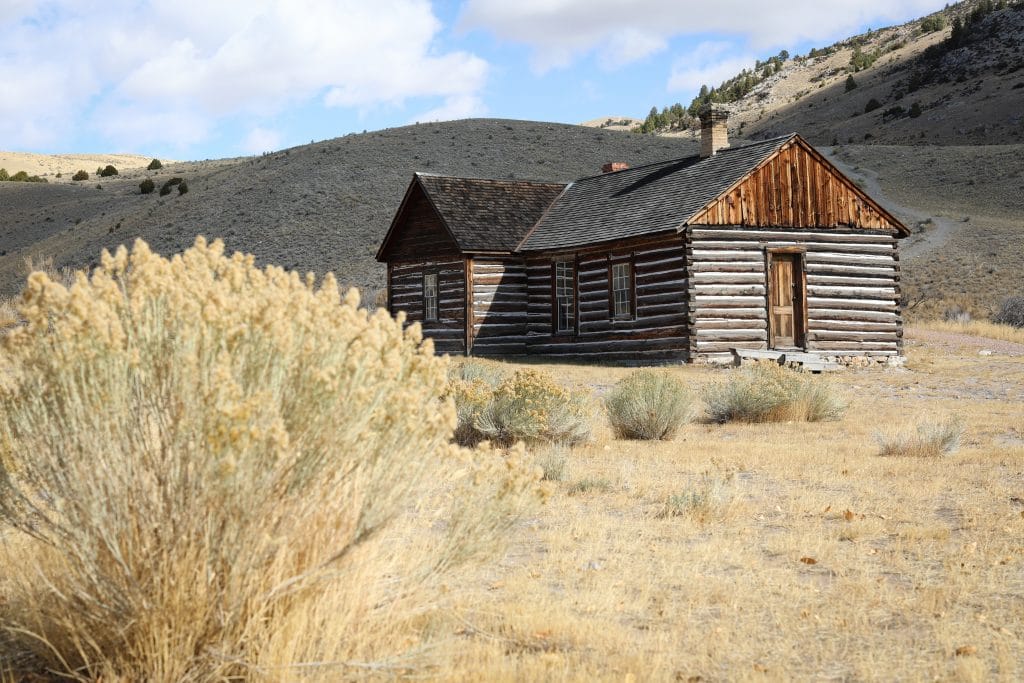
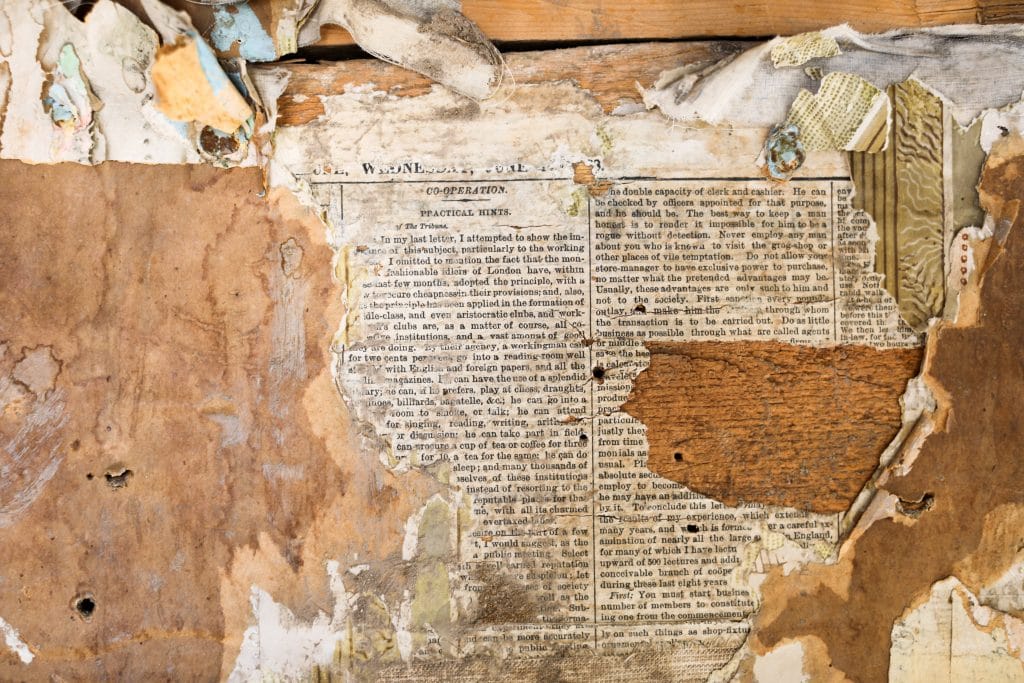
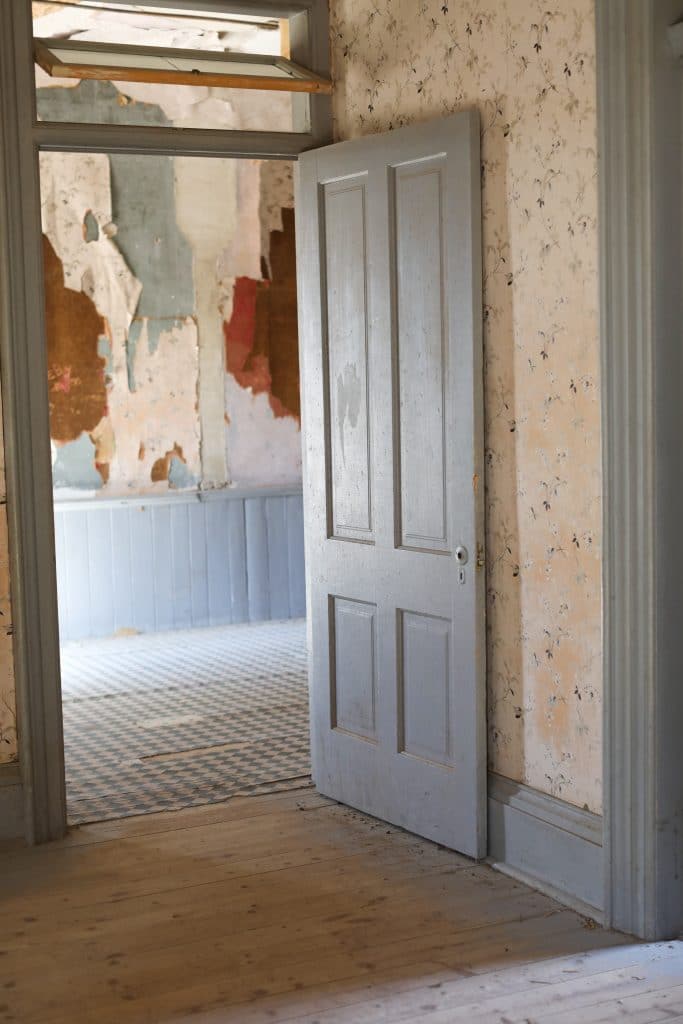
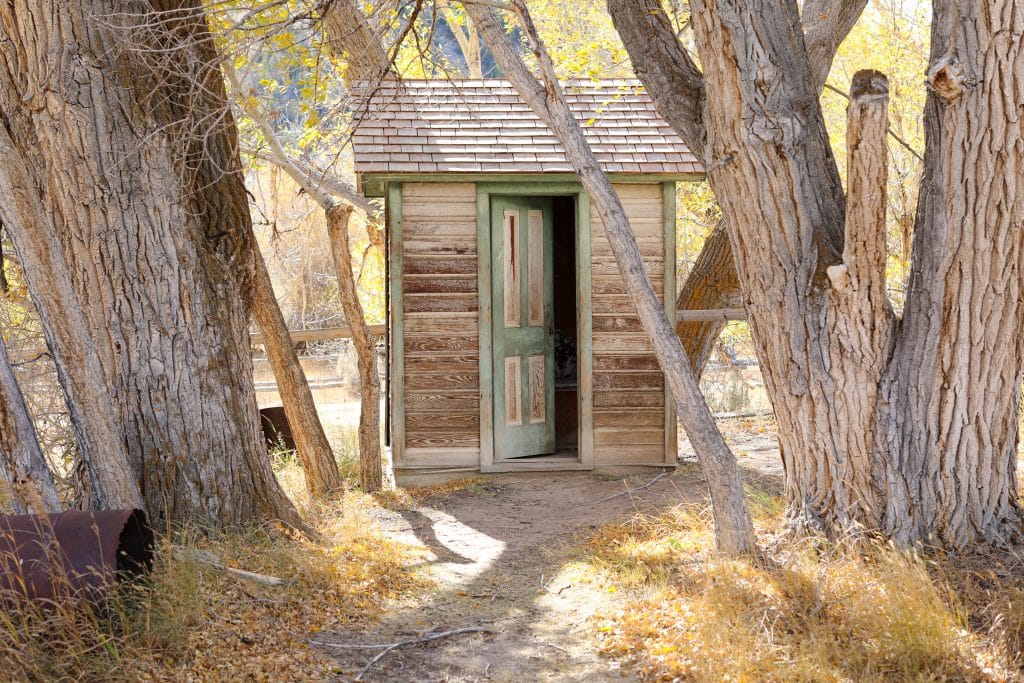
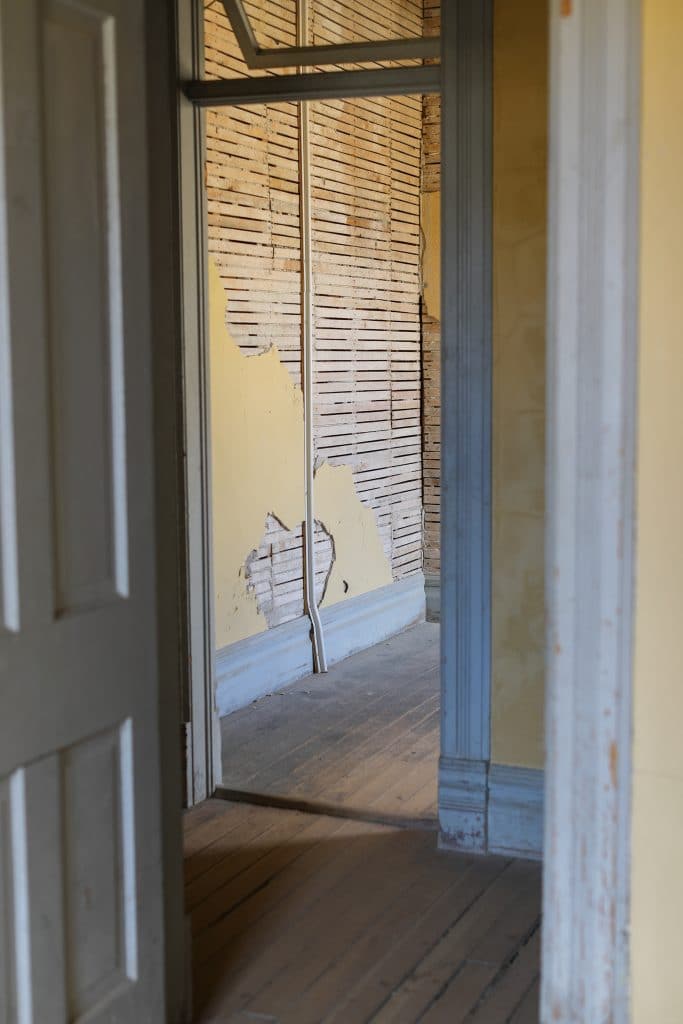
Family homes are scattered throughout town and each still has its own unique character and charm. Sure, it may be buried under layers and layers of wallpaper and dust. But, sunny paint colors, cheerful wallpapers, and lively linoleums turned drab cabins into cozy homes. An atmosphere that was, undoubtedly, a welcome respite from the severe Montana conditions.
Getting supplies was often challenging (and expensive!) Violence erupted over the slightest disagreement. And, freezing temperatures brought illness that regularly resulted in another headstone at the hilltop cemetery.
“We had extremely cold weather here the week before last. The mercury in the thermometers after going forty degrees below zero froze in the bulb. I never knew such cold weather. I was so afraid that the children would freeze their noses or ears that I got up a number of times in the night to see that their heads were covered. Their beds would be covered in frost.” – Mary Edgerton, Winter 1863-64 (Bannack Visitor’s Guide)
Many contagious diseases like whooping cough, scarlet fever, influenza, and diphtheria swept through Bannack during the colder months. And, when they did, those stricken with illness were quarantined in the Bessette House until they either recovered or died. Today, people say they can hear the sound of crying babies coming from that house. A fact that has led many to believe it’s haunted by the souls of the young children who died there.
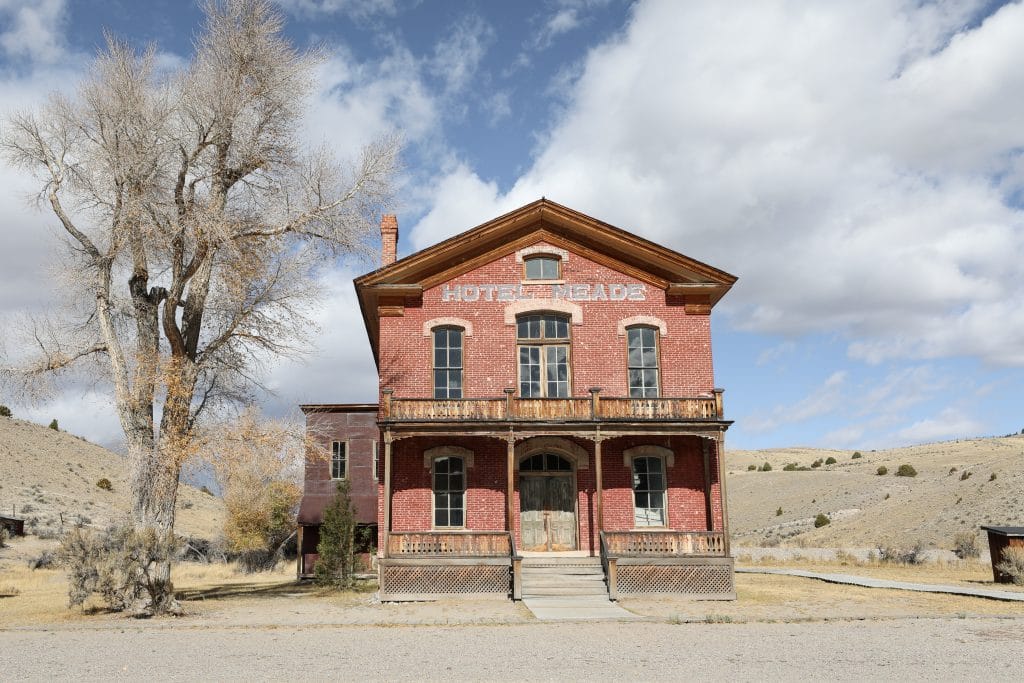
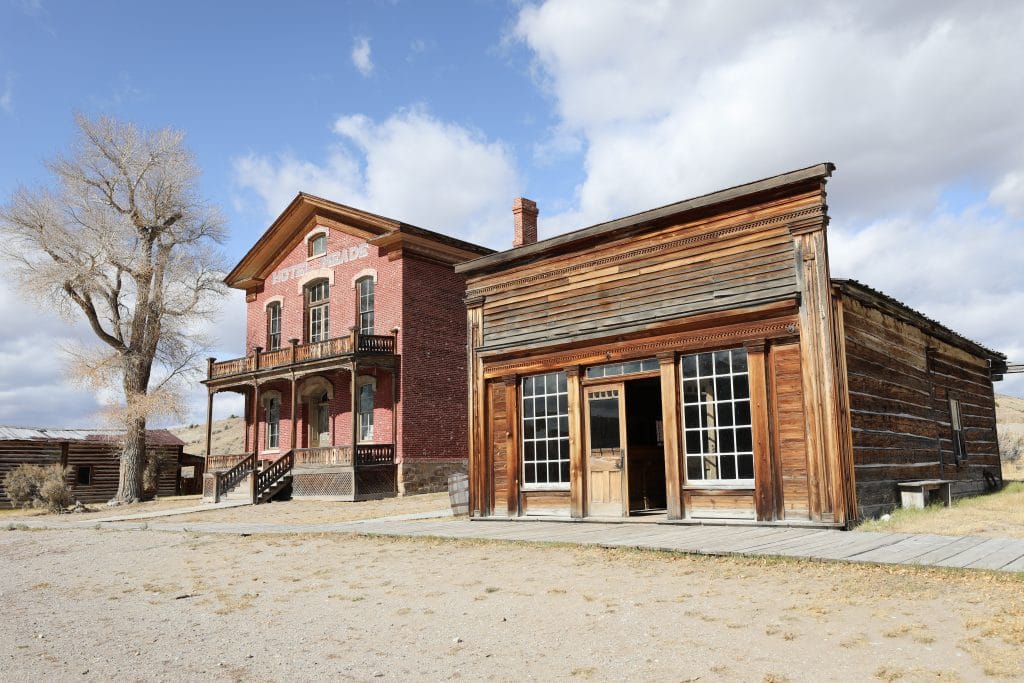
County Courthouse/The Hotel Meade
Built in 1875, the County Courthouse was the first brick courthouse in Montana (and was constructed for only $14,000!) However, after losing a cantankerous battle to Dillon as the location for the Beaverhead County seat, it was abandoned.
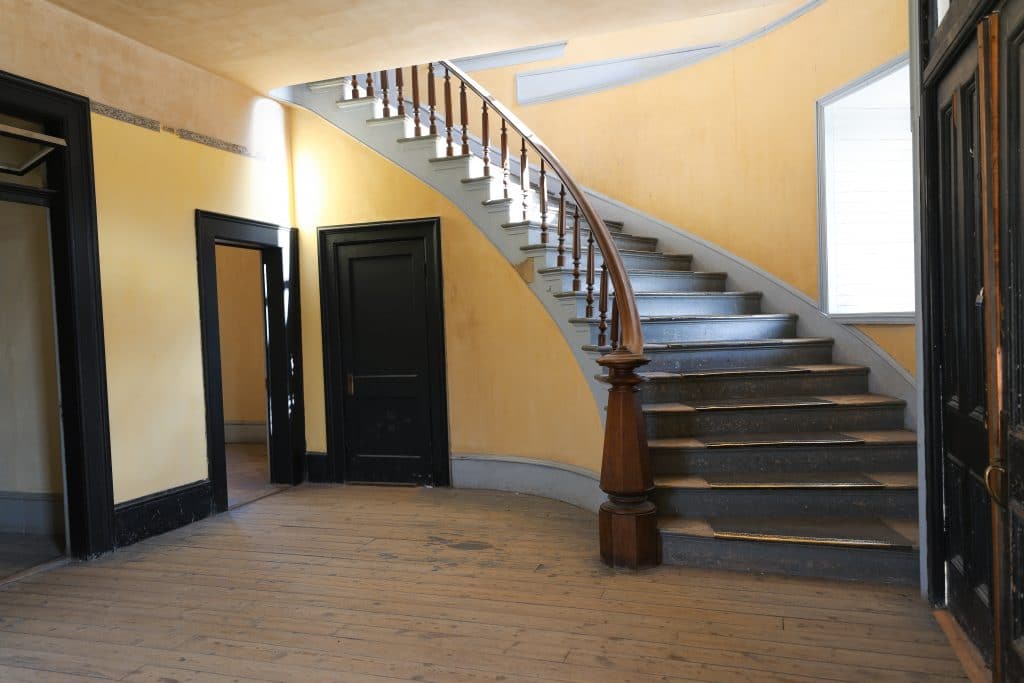
The courthouse remained empty until 1891 when it was purchased by Dr. Meade for a mere $1,250 and turned into a luxury hotel. After an extensive remodel, it became the center of social life in Bannack with parties, gourmet dinners, and travelers visiting from far away places. Depending on the mining activity in the area, it continued to operate sporadically until the 1940s when it closed for good.

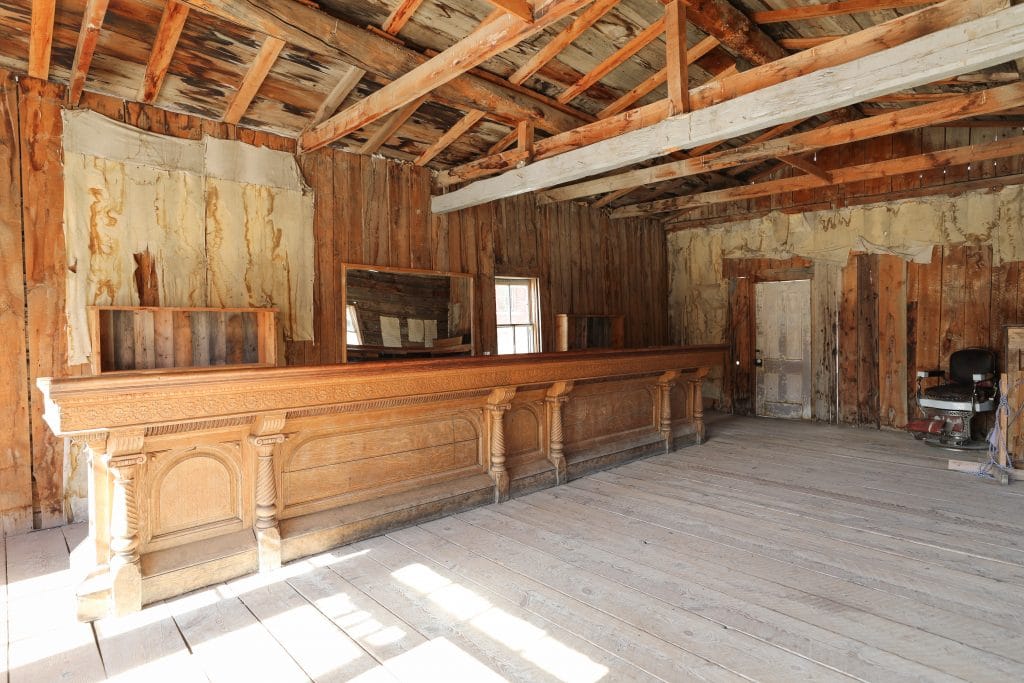
Skinner’s Saloon
No building in Bannack has a more colorful history than Skinner’s Saloon. Cyrus Skinner and Henry Plummer operated the saloon after both served time in the San Quentin Penitentiary. Respectable residents steered clear of the saloon since it’s where the most ruthless and dangerous men gathered. Not surprisingly, it wasn’t long before the saloon became a regular hangout for Plummer’s Road Agents. This group of roughly 25 lawless men committed an estimated 102 murders and numerous robberies in only a few short years.
It’s in this very spot that one of the road agents, George Carhart, met his untimely end. Two men were playing poker and, when one resorted to cheating, they emptied their pistols at one another. Once the smoke cleared, it seemed the only casualty was a beloved town dog named Toodles who caught a stray bullet. However, they soon discovered that he wasn’t the only one to get shot. Road Agent George Carhart had been shot in the stomach and died an agonizing death shortly after.
Shootings were so common, in fact, that the local barber who cut hair in the corner didn’t miss a beat when a fight broke out. He would just continue on with his straight-edge razor while bullets whizzed past his head.
“It is probable that there never was a mining town of the same size that contained more desperadoes and lawless characters than did Bannack during the winter of 1862-63.” – Thomas Dimsdale (Bannack Visitor’s Guide)
For their part in the violence, both Cyrus Skinner and Henry Plummer were hanged. Plummer at the Bannack gallows and Skinner at the gallows in Hellgate (present day Missoula). However, some speculate Skinner was innocent of the crimes he was charged with. Unfortunately, we’ll never know.
The Methodist Church
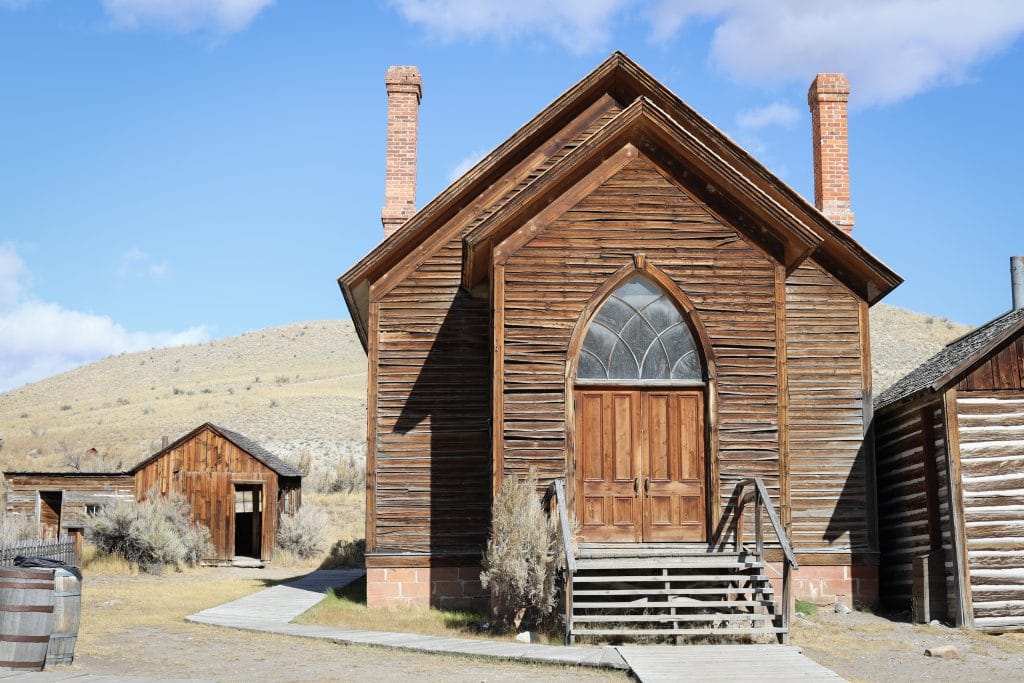
Until the Methodist Church was built in 1877, there was no formal place to worship in Bannack. In fact, many respectable women wrote about the absence of a house of God in their letters and diaries. That’s not to say there was no religion though. Circuit riders or traveling ministers would find their way to isolated mining towns in order to preach the word of God.
One such minister, William Wesley Van Orsdel (affectionately referred to as “Brother Van”), found his way to Bannack in 1872. Because gambling halls and bars were open on Sundays, he walked into one and promptly announced he was a minister. The bartender called for quiet, then told Brother Van he had one hour to preach. Brother Van used his time wisely, breaking into song with “A Diamond in the Ruff”, which was a popular selection at the time. People were so desperate for entertainment that they asked him to continue on. And just like that, Bannack had a religious leader.
He used his influence to convince the town’s people to help build the only church in Bannack, which still stands today.
Masonic Lodge and School House
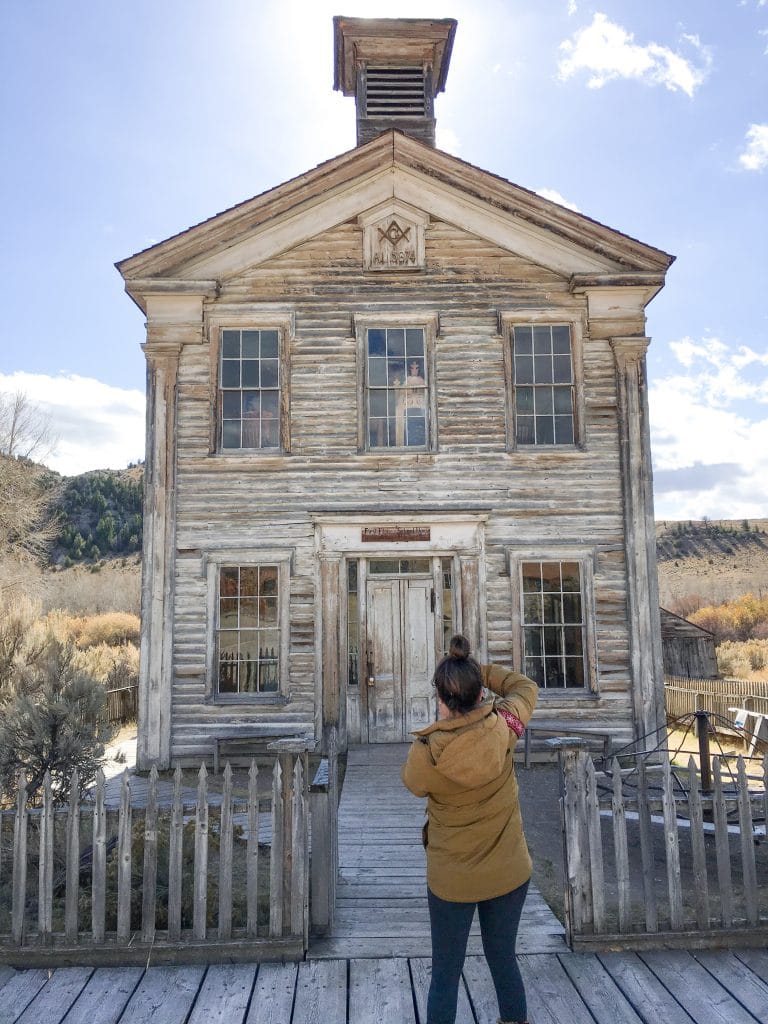
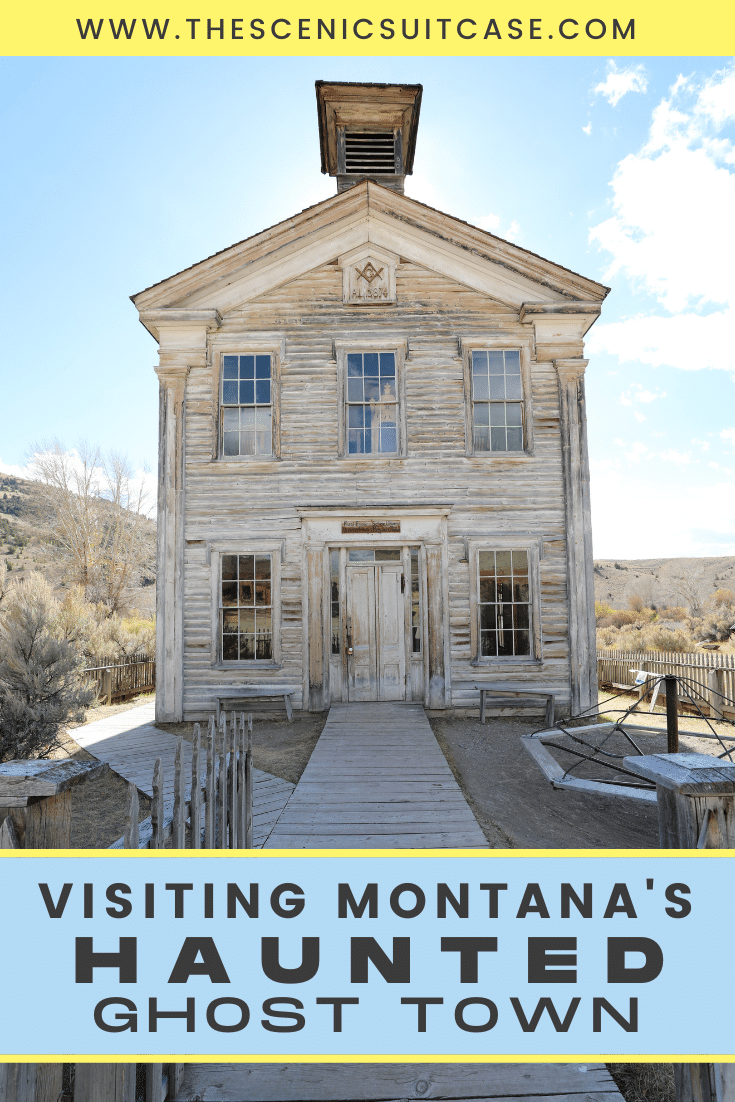
Built in 1874 by the Freemasons (an international fraternity dating back to Europe’s Middle Ages), the Masonic Lodge is still active and has members from all over the world helping to preserve it and other buildings around Bannack. You can still see the Masonic emblem, the Square and Compass, above the second-floor windows. It was carved and mounted on a hickory breadboard that was donated by Mrs. A.F. Graeter.
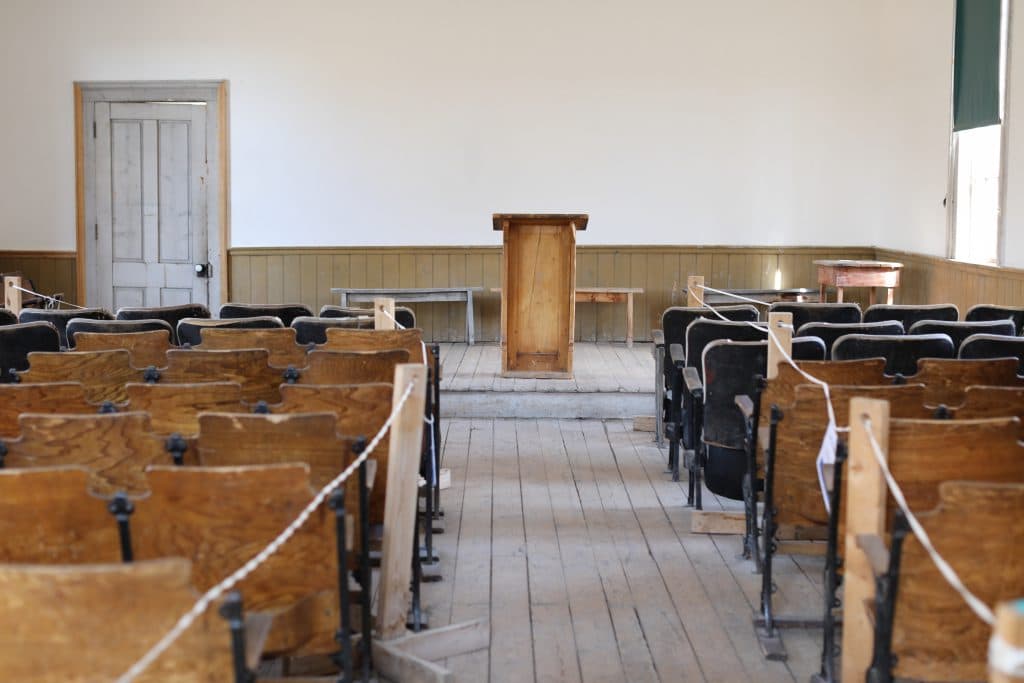
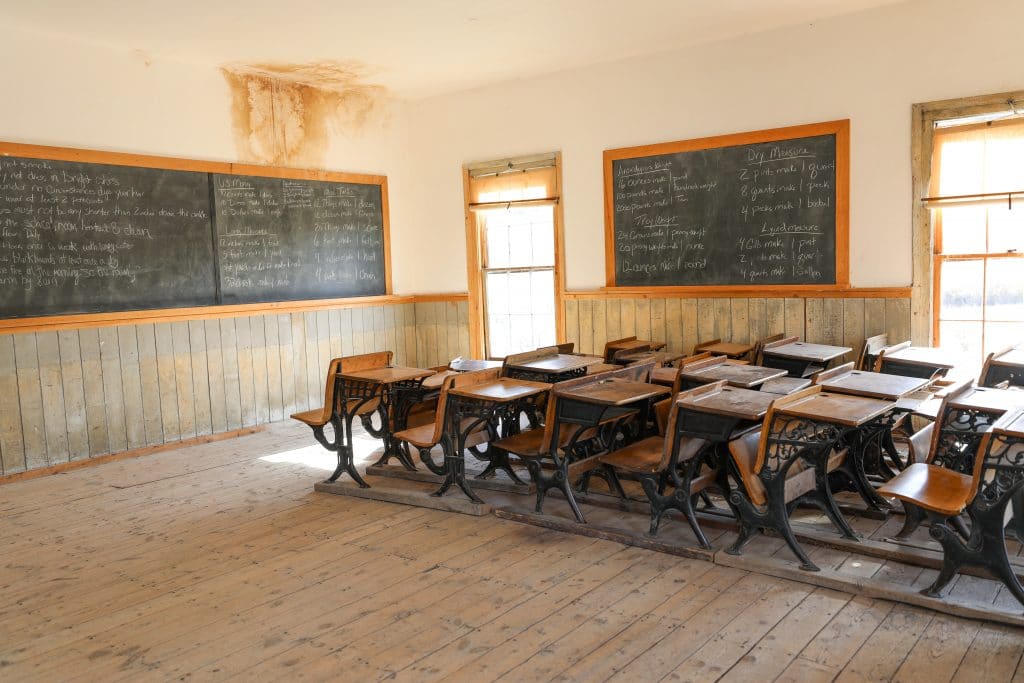
Seeing the need for a public school, the Freemasons donated the first floor of the building for just that. The first teacher was Lucia Darling, niece of Chief Justice Edgerton. And, while teaching children from K-8th grade was daunting enough, she also had to adhere to the expectations of teachers at the time. Those included:
- Marrying during the term of her contract
- Being home between 8pm and 6am (unless attending a school function)
- Not loitering downtown in ice cream stores
- Never traveling beyond the city limits unless given permission by the chairman of the board
- Avoiding rides in carriages or automobiles with a man unless he was her father or brother
- Not smoking
- Never wearing brightly colored clothing
- Not dying her hair
- Wearing at least 2 petticoats (an undergarment worn under a dress)
- Making sure her dresses weren’t shorter than 2 inches above her ankle
She was also responsible for scrubbing the floors, cleaning the blackboards, and keeping the school heated. A bit of a challenge since, in the winter, students reported wind and snow coming in through cracks in the walls. Bright side? At least the cool temperatures kept the kids from falling asleep during their math lessons.
The Gallows
As Sheriff at the time, Henry Plummer ordered the gallows be built to carry out the sentence of a convicted murderer. Ironically, Plummer was later hanged from them for his connection to the lawless and cruel Road Agents.
Justice in the wild west was often swift. Although, the deaths sometimes weren’t. Depending on the crime, criminals were either given a quick death or an agonizingly prolonged one. For less egregious crimes, the convicted would be dropped from above to break their neck for a quick death. Referred to as a “good drop”, it’s what many criminals begged for on the way to the gallows. However, if they had committed an especially heinous crime they weren’t so fortunate. In those cases, they would be hoisted up from the ground by their neck, which was a much more gruesome (and time-consuming) way to die.
Moral of the story? Make sure to stay on the right side of the law!
The Cemeteries
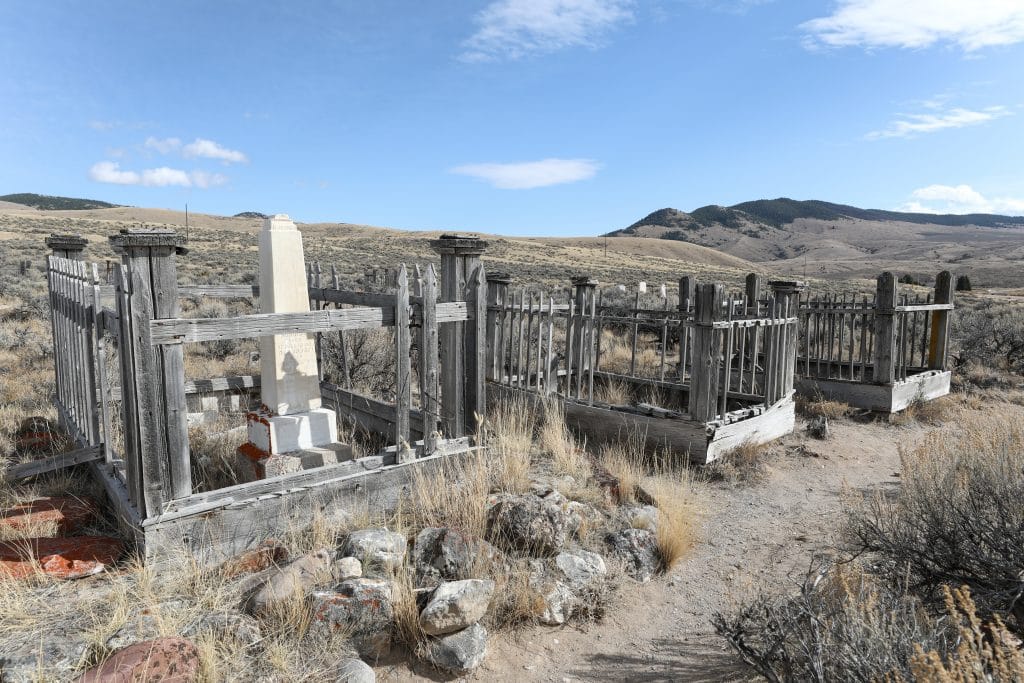
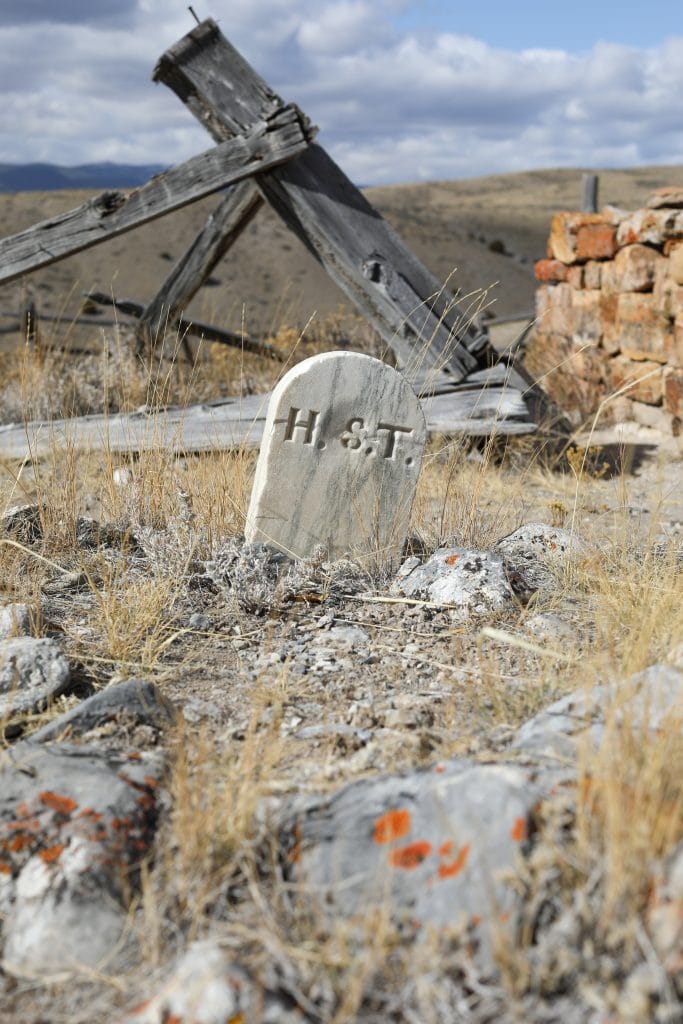
Bannack had two cemeteries where they laid their dead to rest. The first is located on a hill to the north overlooking the town and was used from approximately 1862 to 1880. The headstones, which are worn or missing altogether, mark the graves of many notable town residents both young and old. And, it offers a beautiful view of Bannack below, so a walk up the hill is well worth the effort.
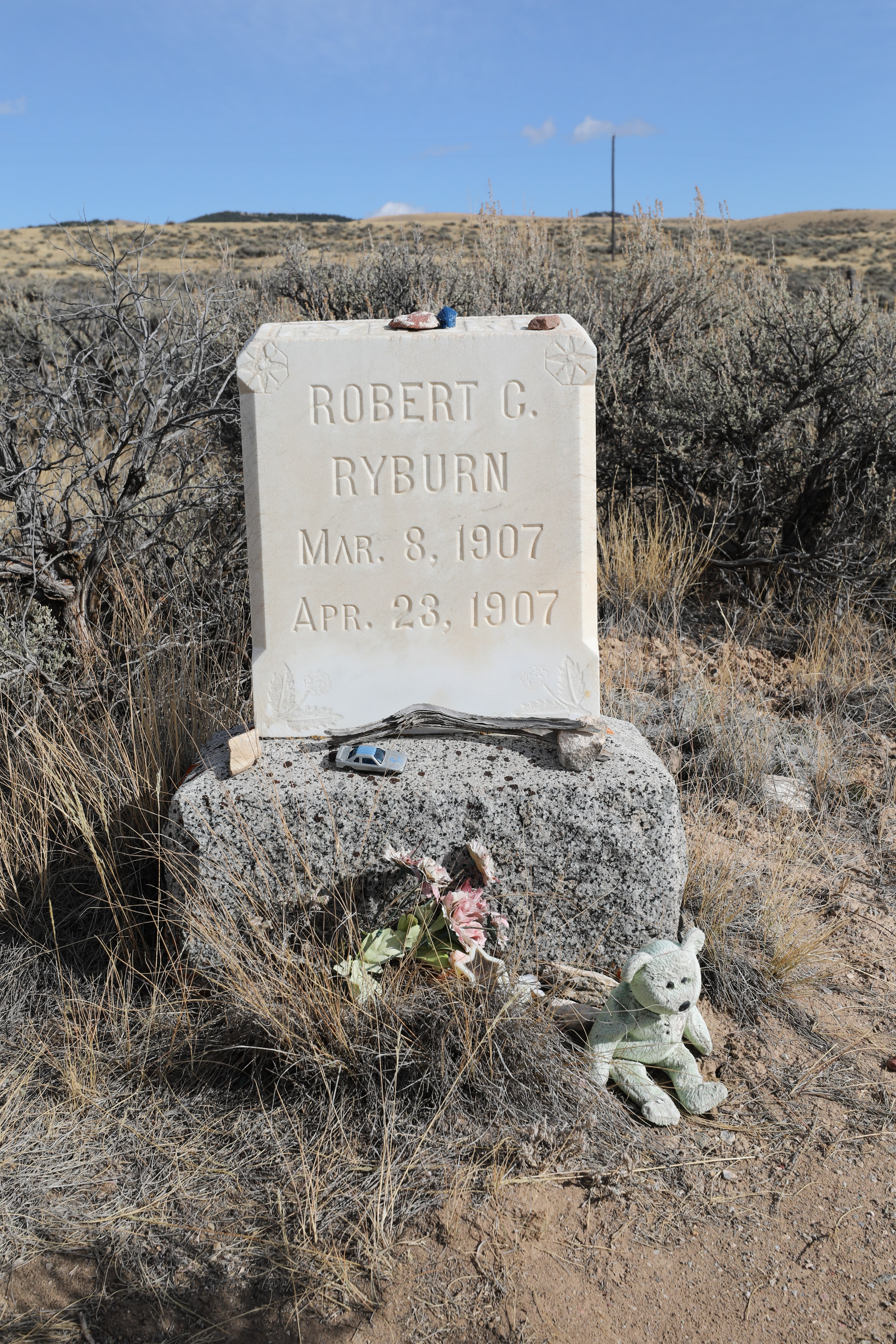
Around 1876, they started using a new cemetery just outside the town entrance. With about 60 graves, it’s a worthwhile stop on your visit. While some residents enjoyed a (relatively) long life, many of the graves are those of children who passed away due to the frigid temperatures or many outbreaks. In fact, some of the gravestones are for kids as young as 1-3 months old!
Today, people still stop by to pay their respects and leave trinkets for the souls in the graves.
Visitor Information
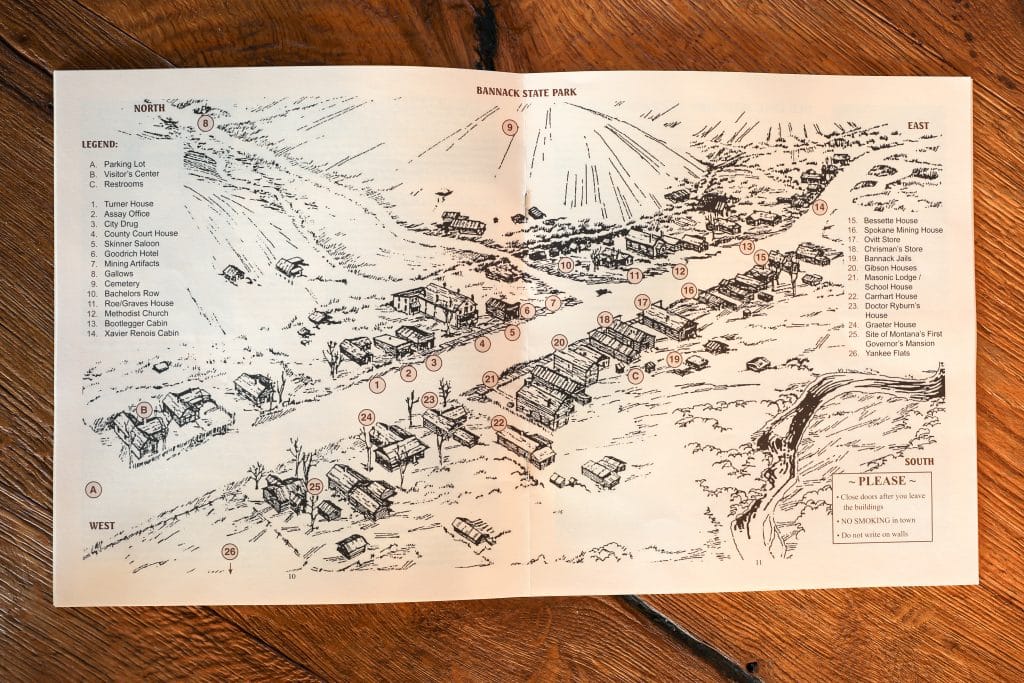
The easiest way to see the ghost town in Bannack Montana is on a self-guided tour. To make the most of your time, I highly recommend stopping by the Visitor Center to purchase one of their $2 guides. Inside, it includes a map depicting what each building is along with insightful history of that location. It’s well worth the money!
In addition to seeing the town on your own, you can also opt for a guided tour or even a photo tour. Plus, the park hosts a plethora of events which are fun for the whole family. So, there’s no shortage of things to see and do while you’re there!
Bannack State Park is open from 8am to sunset Memorial Day through Labor Day. The rest of the year, the park is open from 8am to 5pm. Admission fees are per vehicle and are free for vehicles with a Montana State Parks paid vehicle registration. For all other vehicles, the charge is a mere $8 (talk about a bargain!)
And, if you love Bannack and are dying to see another Montana ghost town, fear not! There are a number of others in the Treasure State to explore!
So, if you love history with a dash of wild west drama, then a visit to the ghost town in Bannack Montana is a must! Because even though the gold may be gone, it’s still a Montana treasure.
Have you been to Bannack before? Comment below, I’d love to hear what you thought!
You May Also Like:
» Magnificent Reasons To Visit Montana
» Complete Mountain Packing Guide
» 10 National Parks To See Before You Die

Very interesting !!!