
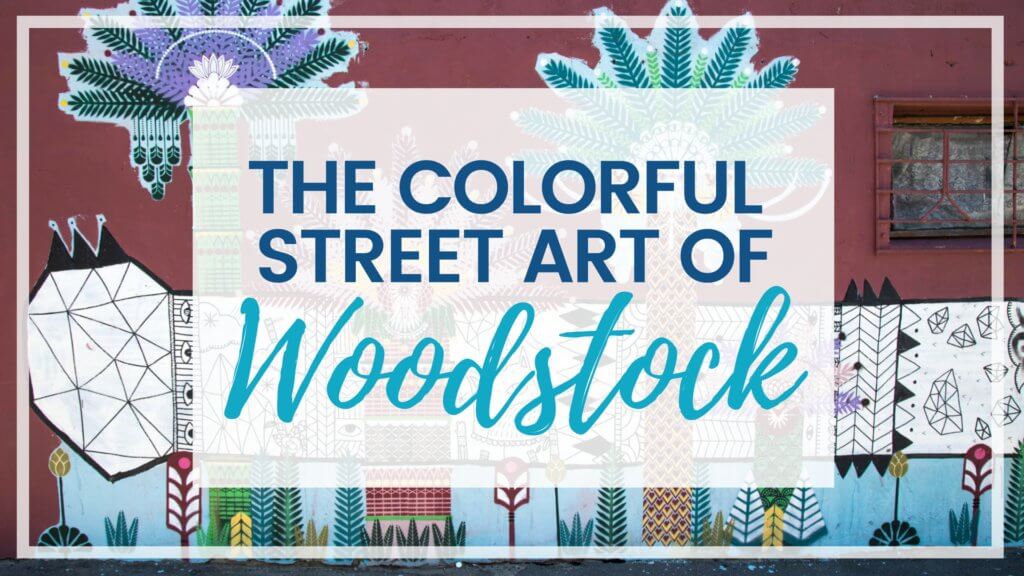

The Mother City has a vibrant history of change, resilience, and rebirth. Nowhere does that history come alive more than in the suburb of Woodstock on the outskirts of Cape Town CBD. Here, the street art of Woodstock has transformed the formerly crime-ridden area into one of the highlights of the city.
Woodstock’s History
Once a sought after seaside resort, over the years Woodstock slowly became more industrialized. After being stripped of its beach during the Land Reclamation in the 1950s, tourism ceased and crime levels rose. It didn’t take long for visitors and even locals to avoid Woodstock altogether.
However, thanks to a focus on urban renewal the once industrialized suburb is now filled with hip coffee shops, local eateries, and artist studios. And at the heart of this change is the spell-binding street art of Woodstock.
These colorful murals now draw crowds and tour groups, making the area safer and giving a facelift to the crumbling facades.
The Street Art of Woodstock
Both local and international artists created the street art around Woodstock. Some creators were famous and some were lesser known. Some were young and some were old. But all had a desire to lift up a community that had been largely forgotten.
All works were commissioned with the approval of each structure’s owner. And who wouldn’t want their building to be adorned with these chromatic masterpieces?
A large number of murals can be found between Victory Road and Albert Road near Essex Street and Barron Street.
The captivating artwork is always fascinating and often political in nature. As you walk the streets you’ll find murals depicting endangered species calling out for conservation. Others highlight social justice, equality, and a hard-fought history. Still others carry simple messages like love.
And because the neighborhood continues to grow and change, a visit to these colorful streets is never redundant. Even the artwork and its message can be skewed when vandals spray paint over the original creations. The area is a living, breathing reminder that nothing stays the same.
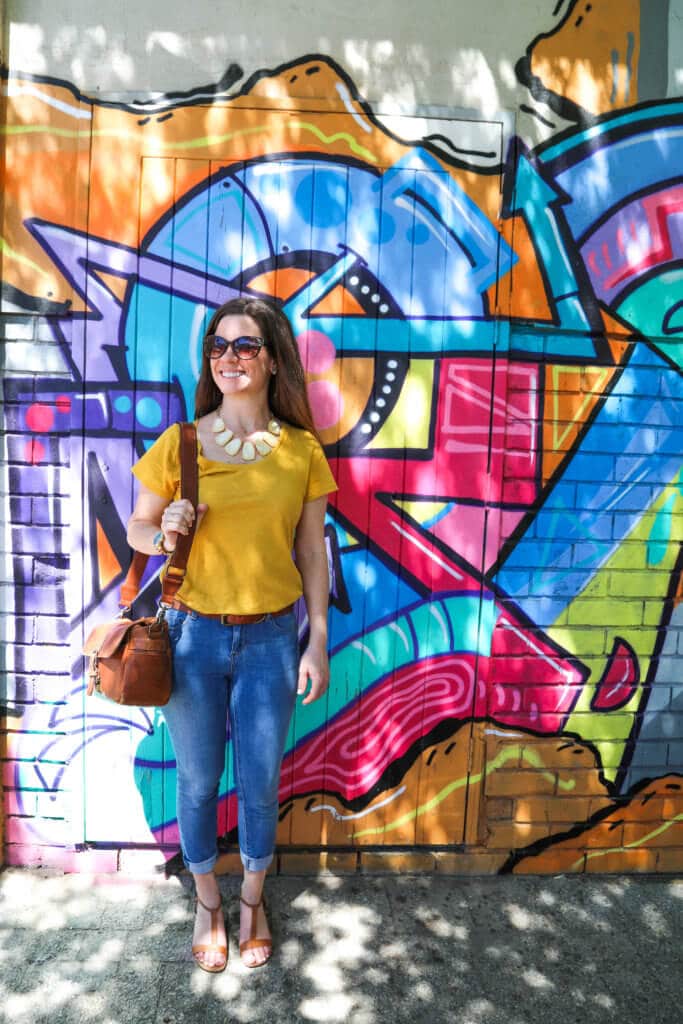
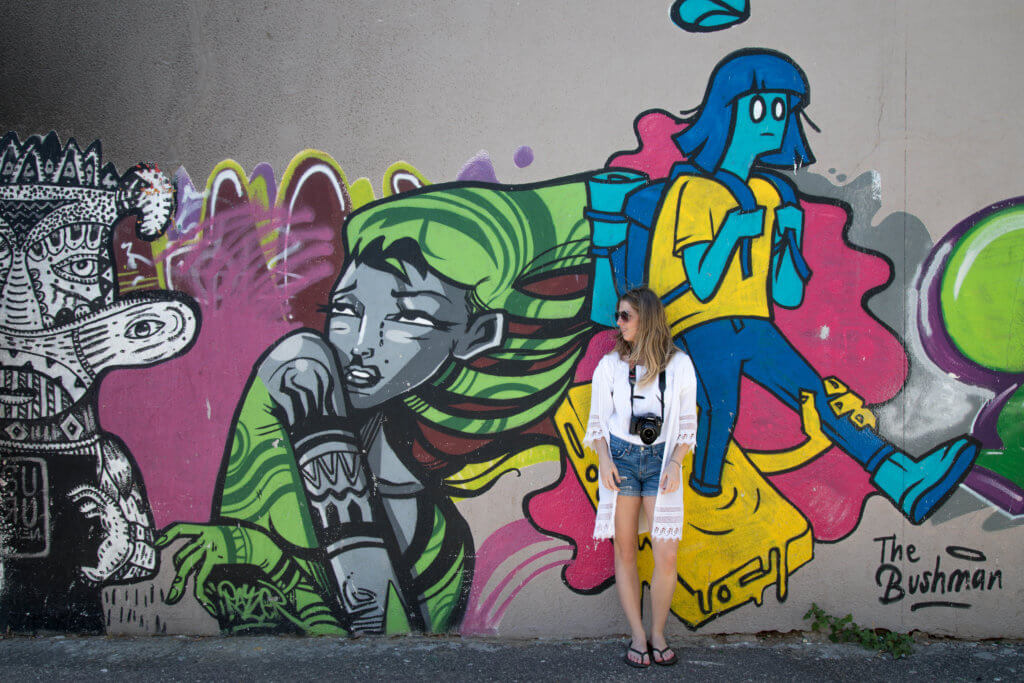
Expert Tip: If you want to take photos by the artwork, I suggest wearing bright, solid colors to stand out against your background.
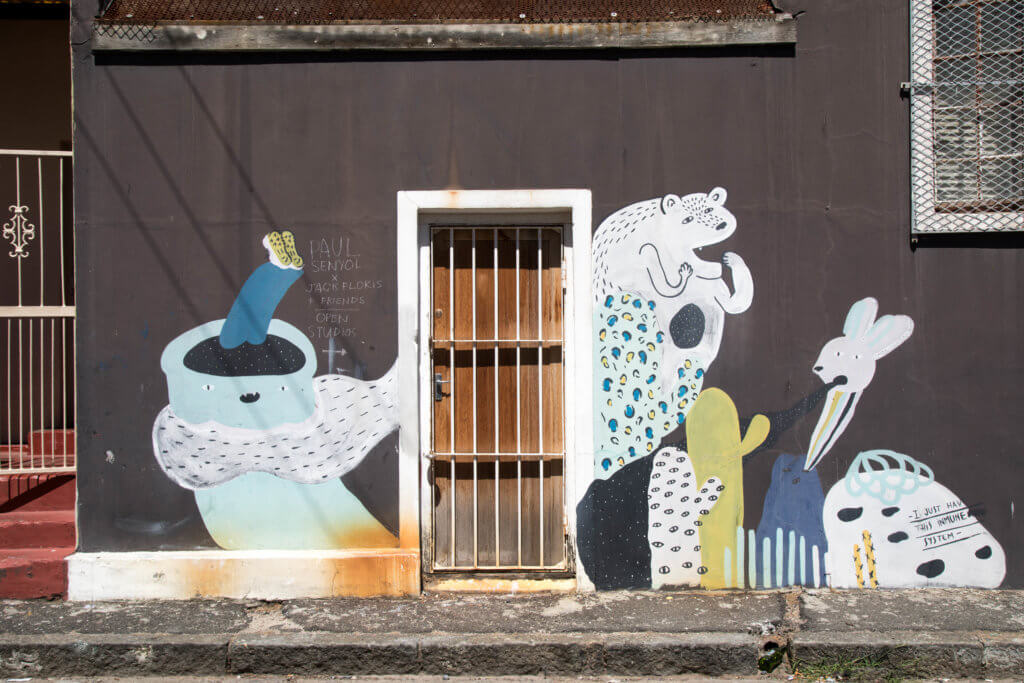
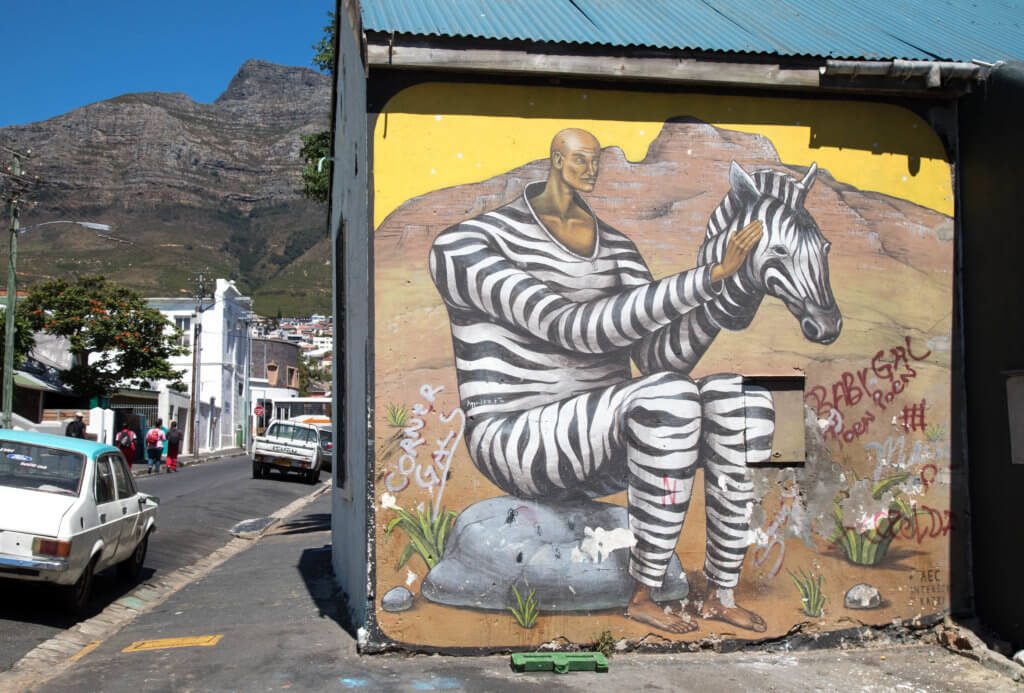
‘The Zebra Suit’ was created by Interesni Kazki, an artist in residence with A Word of Art AEC. It represents reincarnation and our connection with the animal kingdom. It also draws attention to concern over killing animals, because they could very well be our reborn ancestors.
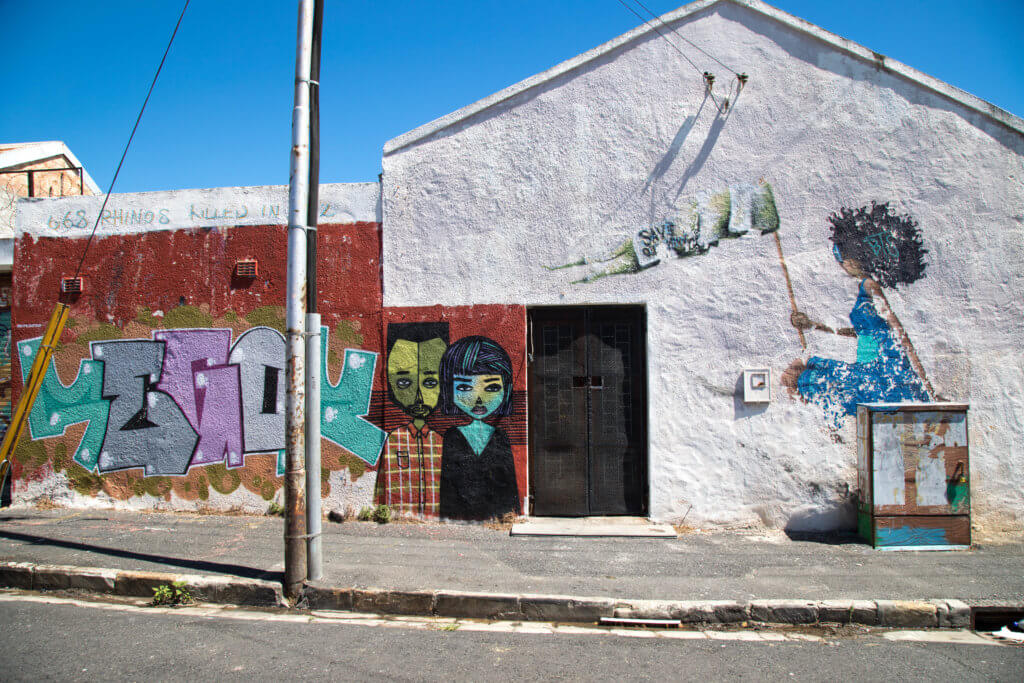
These murals by Louis Masai and Breeze Yoko have changed considerably since they were first painted. The iconic girl with a “Save Our Rhino” flag is worn and faded, and the mural to the left is completely different. It was once a rhino skull encircled by the number of rhinos killed in recent years. At the bottom used to be the phrase “Tomorrow’s Rhino Will Be A Skull.” However, all that remains of the former mural is a faded “668 Rhinos Killed in 2012” at the top.
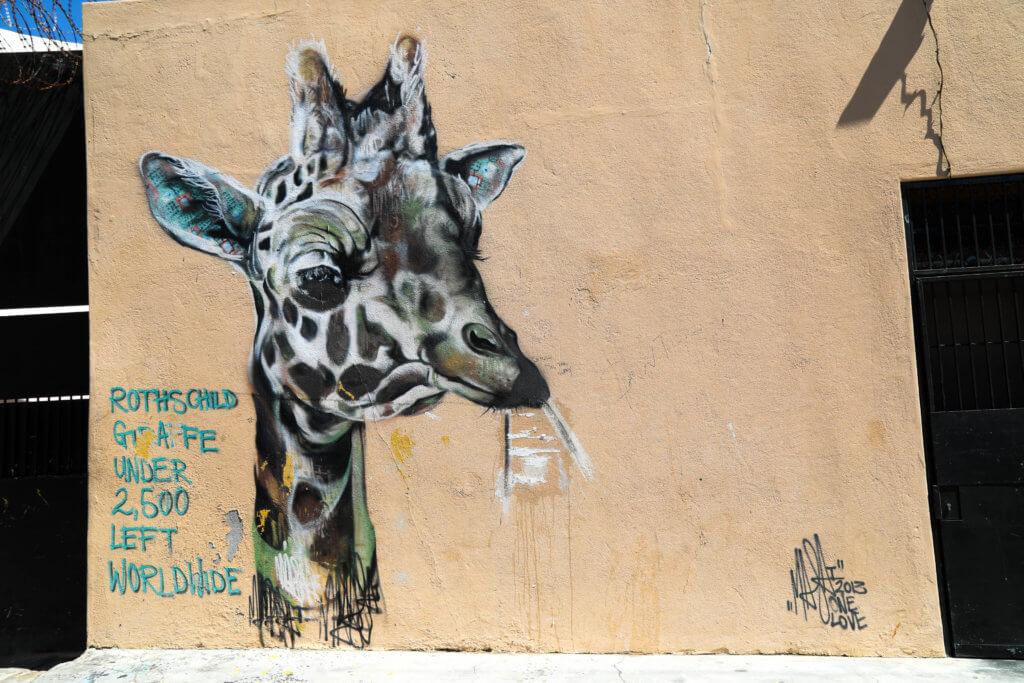
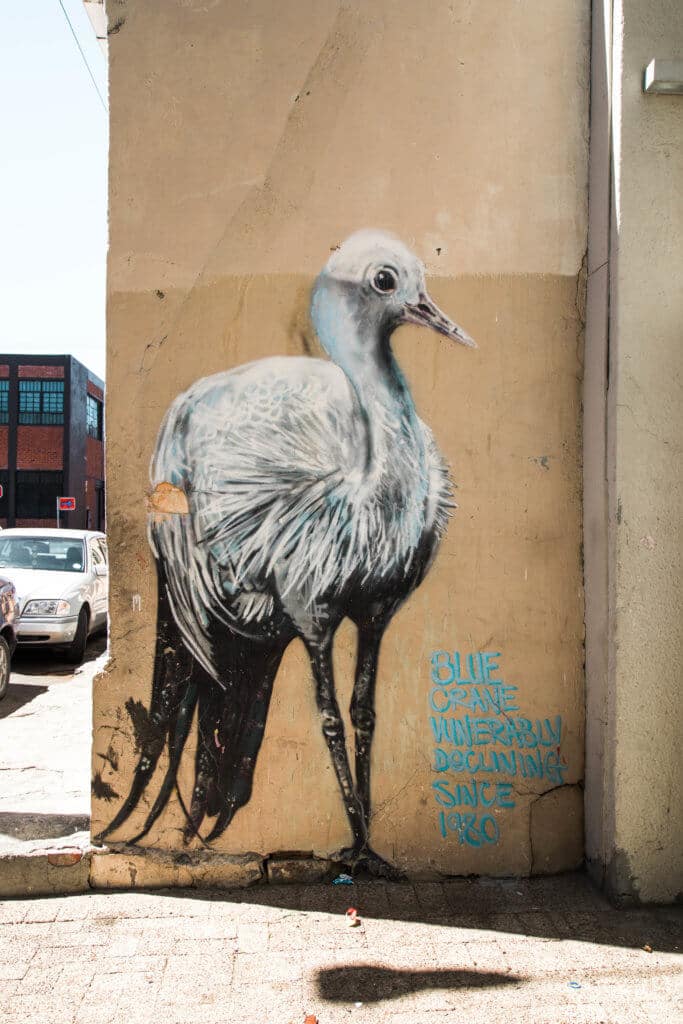
Mak1One created both the Rothschild Giraffe and the Blue Crane murals to draw attention to the species’ dwindling numbers. Born and raised in Mitchell’s Plain, Cape Town, he uses street art as a medium to challenge our thinking, and to bring educational and inspiring messages to under-privileged communities.
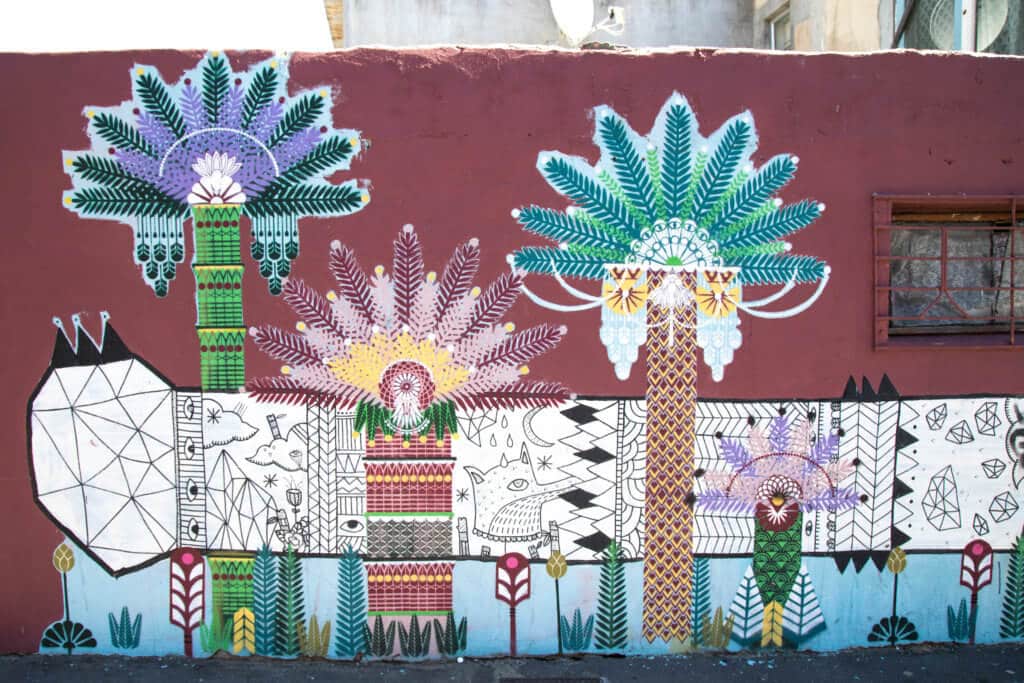
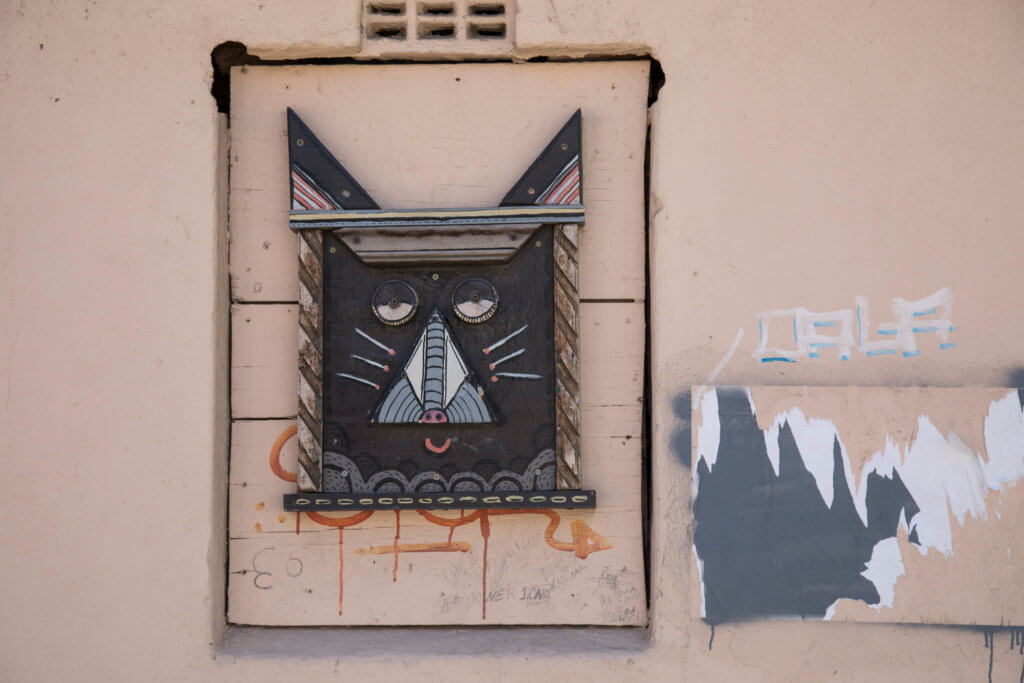
This mural was created by a family of three and may be my absolute favorite in the neighborhood. The geometric patterns and varying colors are prismatic against the pavement.
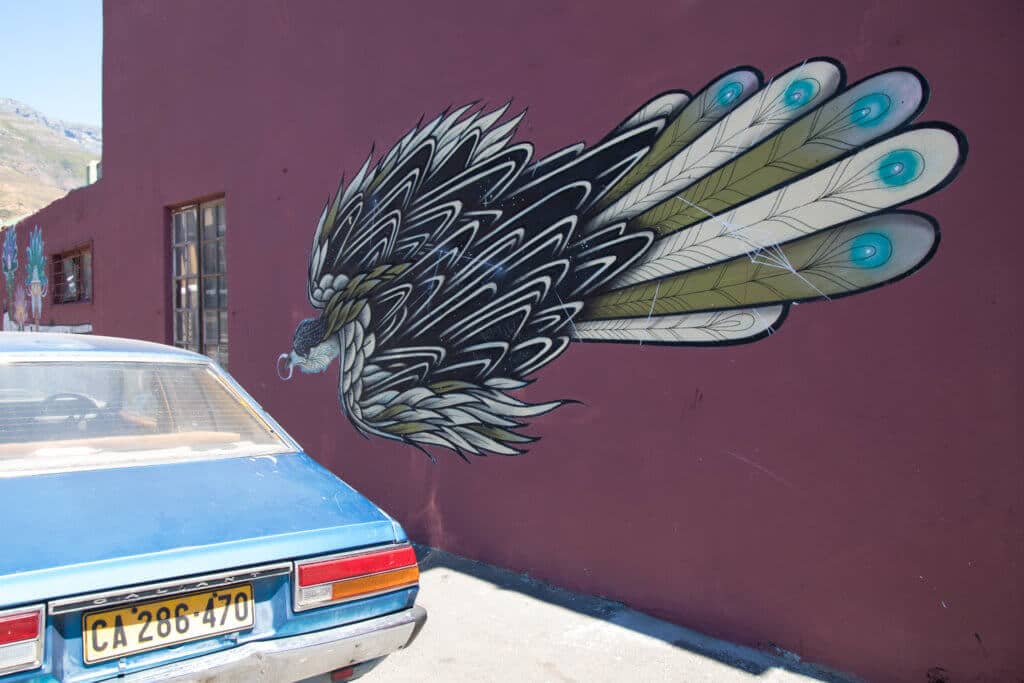
This feathery wonder was created by a local boy who lived here and collected birds. It’s the perfect way to honor his avian interests.

Some of the lovely ladies from my Blonde Abroad Photography Tour. Exploring the area with these talented photographers made the experience even more enjoyable.
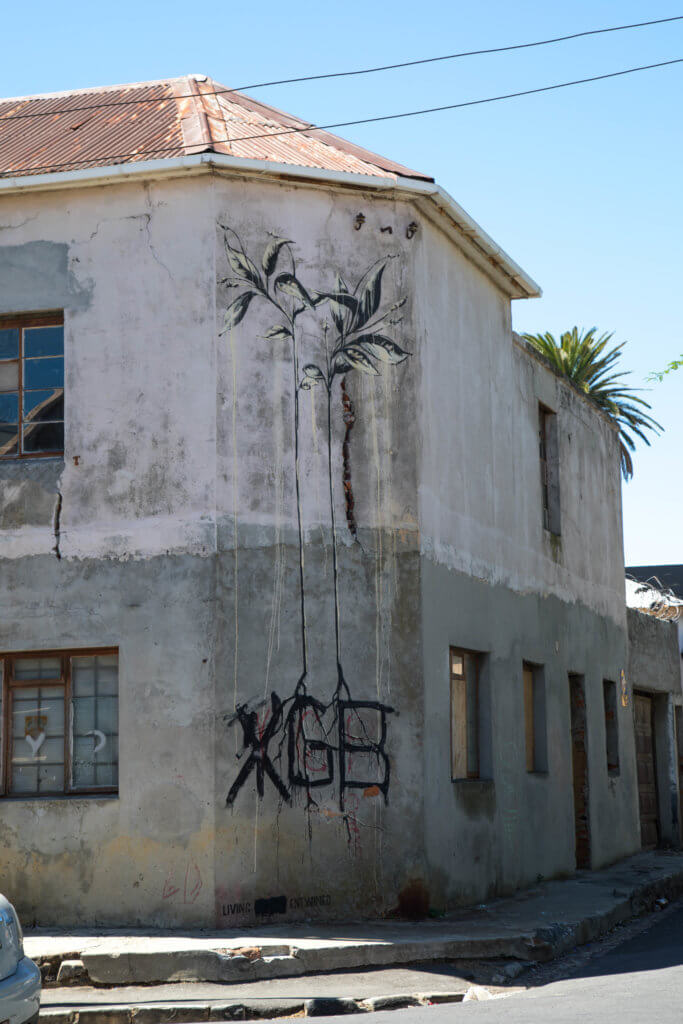
This mural called Living Apart/Entwined by Faith XLVII was another one of my favorites. Its simple, clean lines against the two-tone building are striking. The piece is also a great example of street art that’s been defaced and changed over the years.
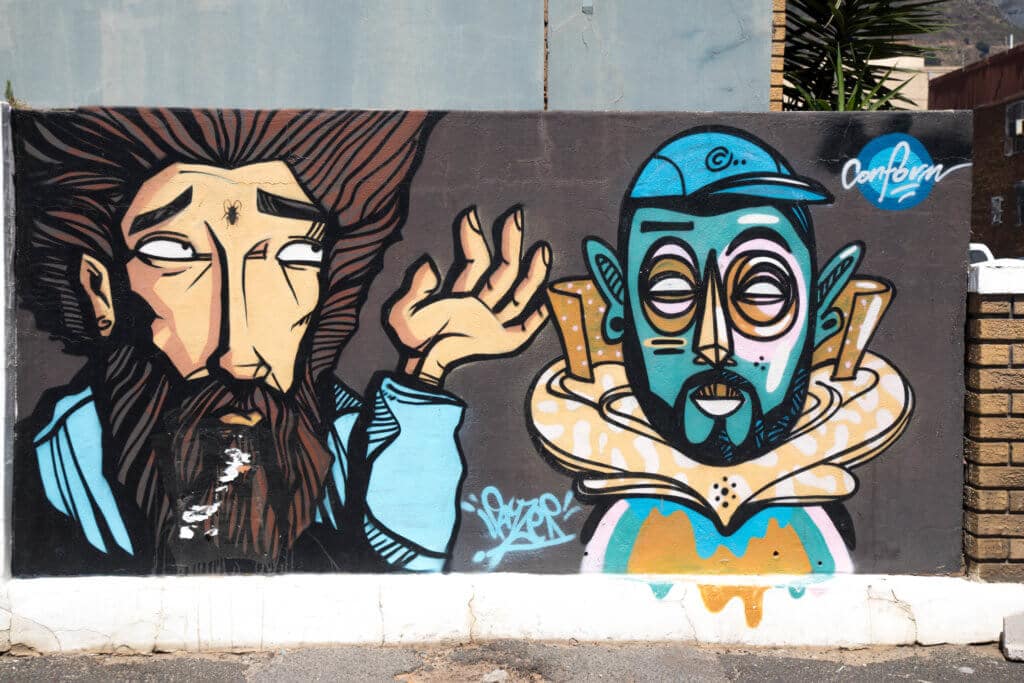
These characters were painted by street artists Rayzer and Conform. I saw several other examples of Conform’s stunning work throughout Woodstock.
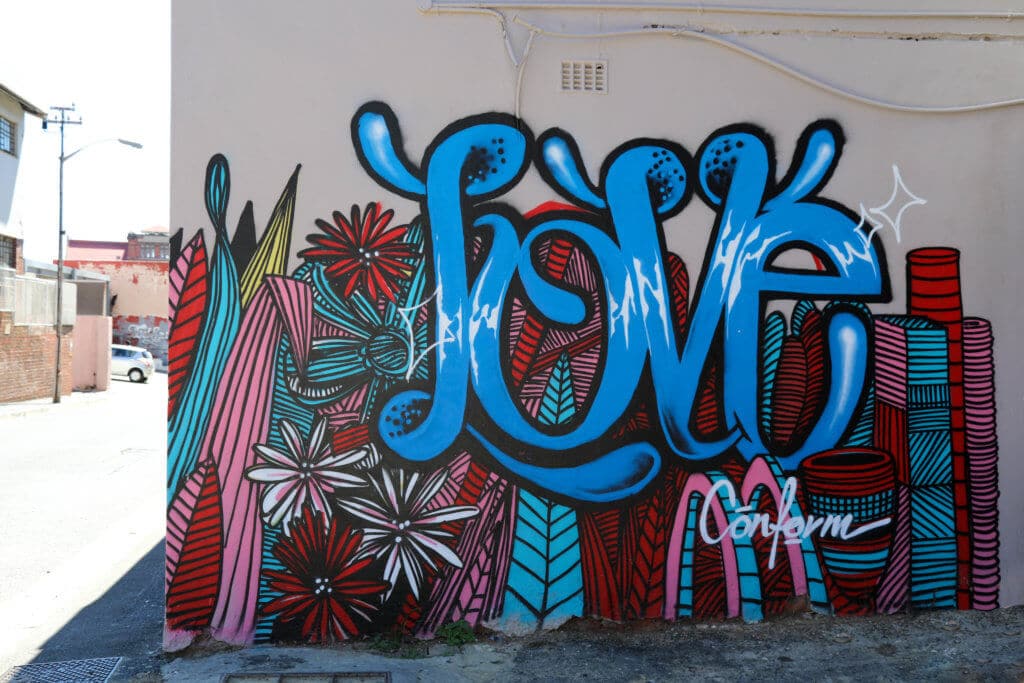
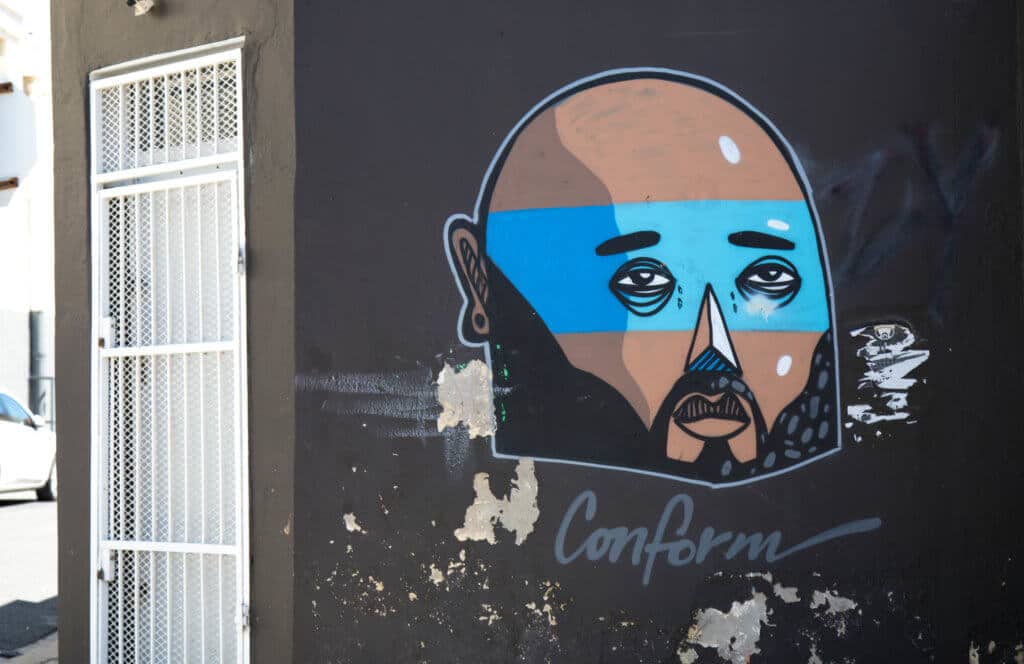
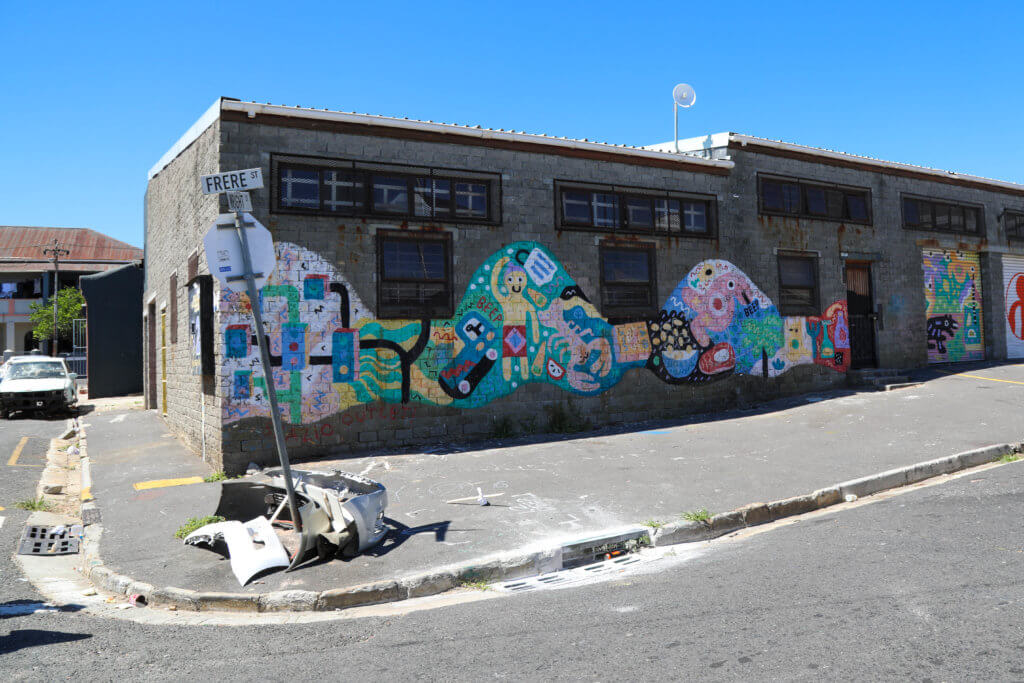
The bright rainbow hues of colorful cartoons against this cement building are meant to create a feeling of playfulness and safety for local children.

Buenos Aires artist Franco Fasoli, or Jaz, created this mural called ‘Eating Man’. Its realism will quite literally stop you in your tracks.
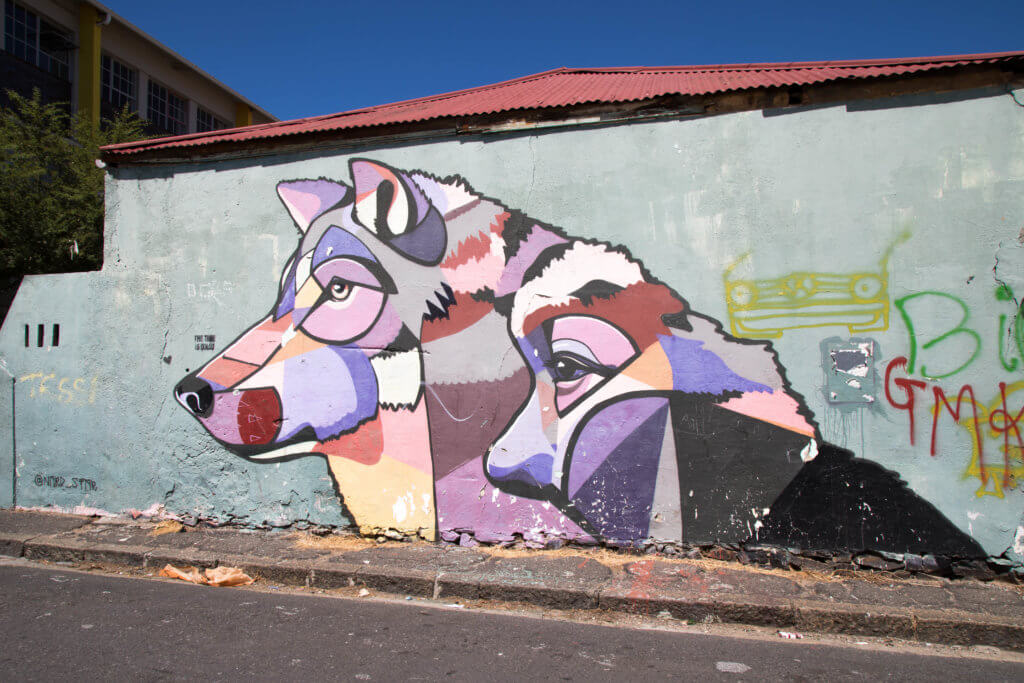
‘Wolf’ by acclaimed local female artist Nardstar is a colorful call for equality between man and beast.
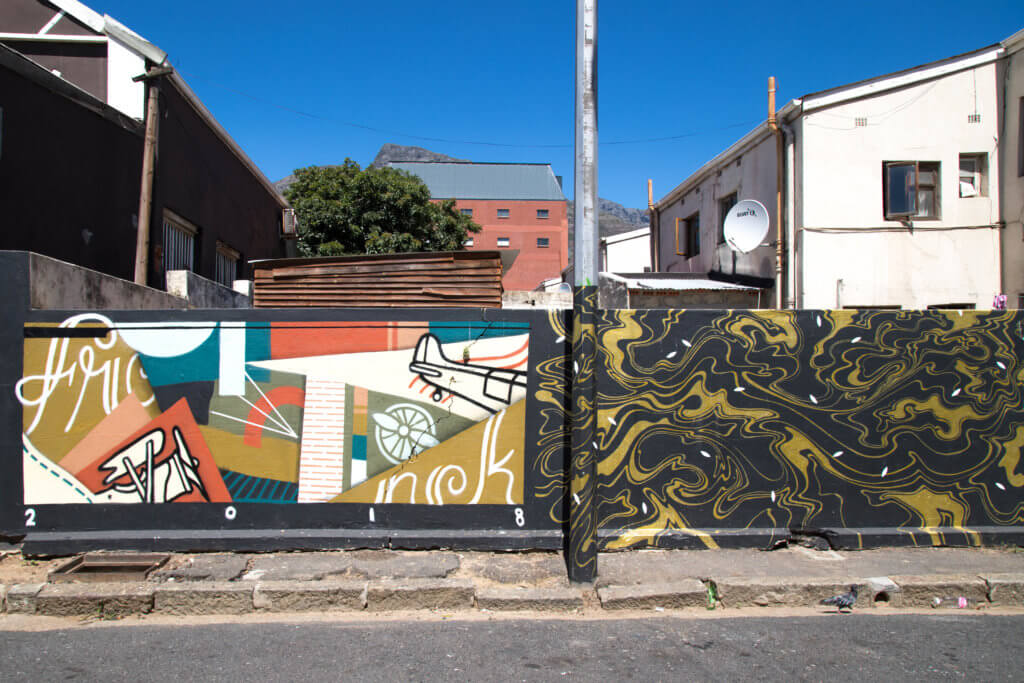
The street art of Woodstock is as interesting as the area’s past. The murals are inspiring, provocative, and leave you with a sense of awe.
It’s easy to see why the area has transformed into one of the highlights of Cape Town.

You May Also Like:
» The Blonde Abroad Photography Tour in South Africa
» Must Have Photography Apps
» 45 Songs to Inspire Your Wanderlust

Hi om a guide im looking fir information or books related to woodstock murals graffiti. Pls advise where i can get some info.
I’m not sure if this book is specific to Woodstock, but it does include a lot of South African street art. Hope this helps!
https://www.barnesandnoble.com/w/graffiti-south-africa-cale-waddacor/1117341988?ean=9780764346576