


Delicate chandeliers made of salt and wood hang amongst salt statues in salt cathedrals. An underground world made almost entirely of sodium chloride (any chemistry majors out there???) From the walls to the ceilings to the floors and fixtures, you might not believe it without taking a lick (although you wouldn’t be the first, so I’d advise against it.)
Wieliczka Salt Mine is a fascinating world 12 million years in the making. Here are just a few things I learned during my Wieliczka Salt Mine tour.

Wieliczka Salt Mine Then and Now
Opening more than 700 years ago, the Wieliczka Salt Mine is Poland’s oldest business. There were tens of generations that worked to bring the three square miles of mining tunnels to life, and it’s a testament to the ingenuity and tenacity of the Polish people. It ceased mining operations in 1996, and then its table salt production in 2007, as one of the oldest continuously operating salt mines in the world. Today, it opens its doors to over one million visitors each year (which helps to employ 200 miners.)
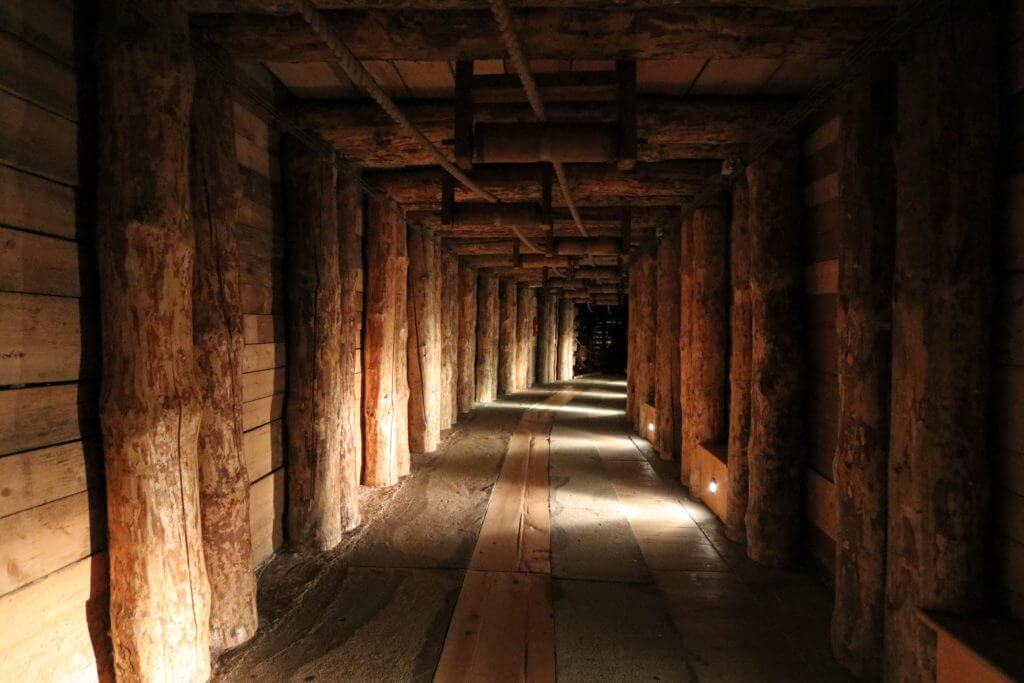
One of the many mining tunnels in Wieliscka. The tourist route is 2.2 miles long (a tiny portion of the 178 miles of passages within the mine.)
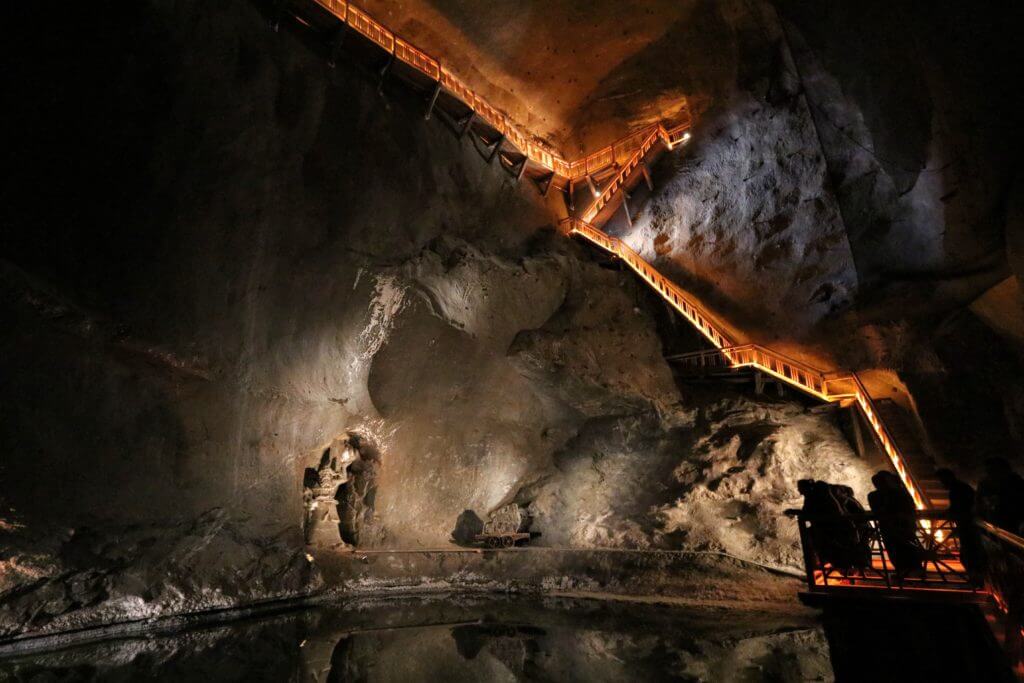
The Wieliczka Salt Mine reaches a total depth of 1,073 feet and even features an underground lake amongst its rooms and cathedrals.
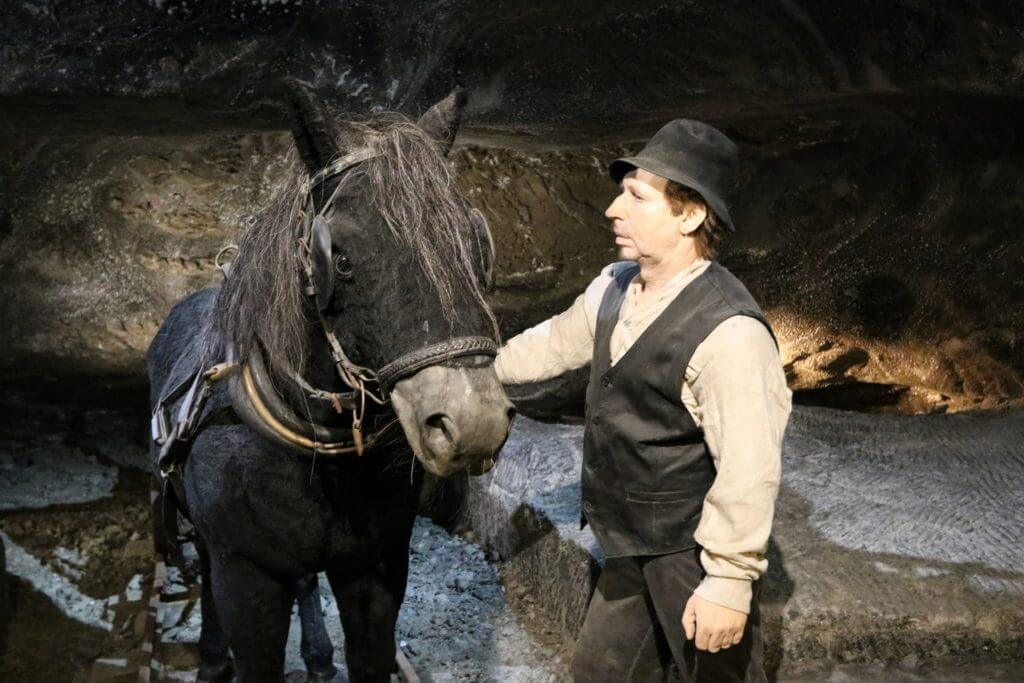
There were 100 horses utilized during mining operations (cut to 4 after WWII.) Due to the logistics of getting horses into the tunnels, they often spent their entire lives underground. However, they were treated like royalty, and even had specific workers dedicated to their health and well-being. If a horse was injured or mis-kept, there were dire consequences for the workers in charge. The last horse used was as recent as 2002.
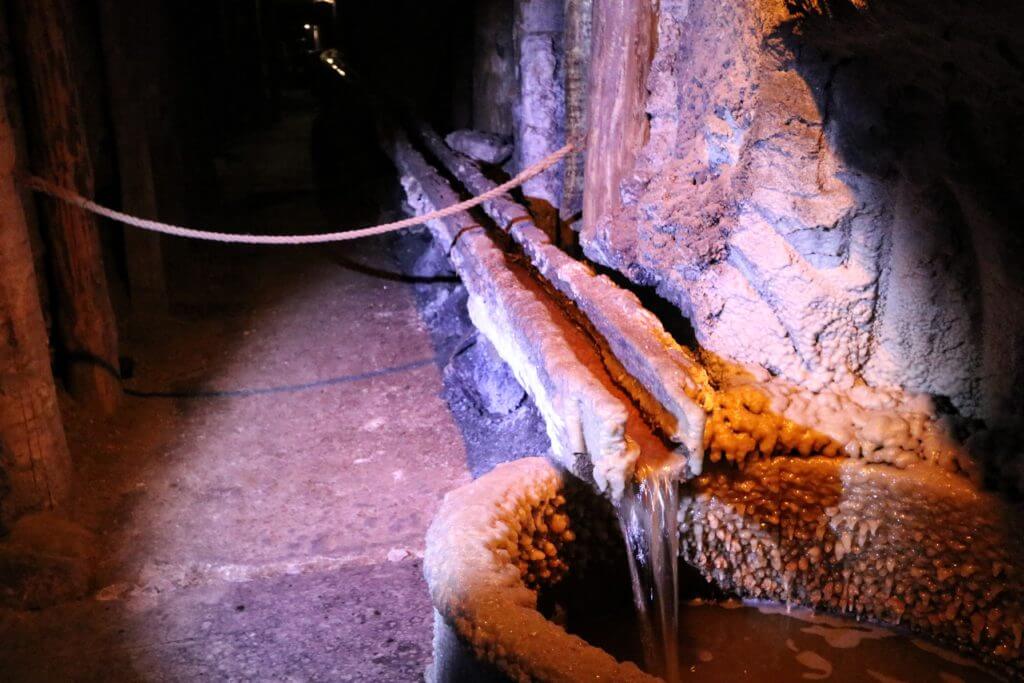
Salt clings to everything, including troughs for water and the basins near them.
Wieliczka Salt Mine’s Striking Beauty
Often referred to as “The Underground Salt Cathedral of Poland,” the Wieliczka Salt Mine has four cathedrals, multiple carvings, and ornate salt chandeliers. You wouldn’t think of a salt mining operation as beautiful, but it certainly is. And it’s because of this beauty that it captured the imagination of millions. As such, the salt mine even has a large reception room to host weddings and other private functions. It’s also what attracted such notable visitors as President Bill Clinton, Johann Wolfgang, Nicolaus Copernicus, and Pope Jean Paul II.
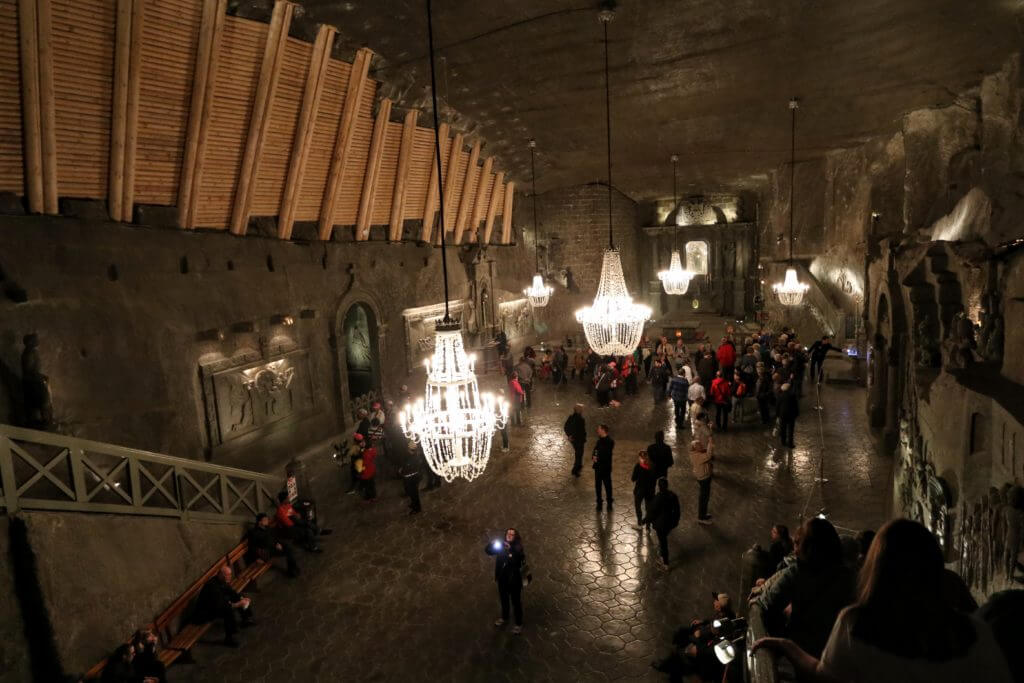
St. Kinga’s Cathedral is one of the most breathtaking sites in the Wieliczka Salt Mine. You enter near the ceiling of one side and then descend a massive staircase to reach the floor. Most notable are the large chandeliers, as well as multiple carvings (including one of Pope Jean Paul II.)
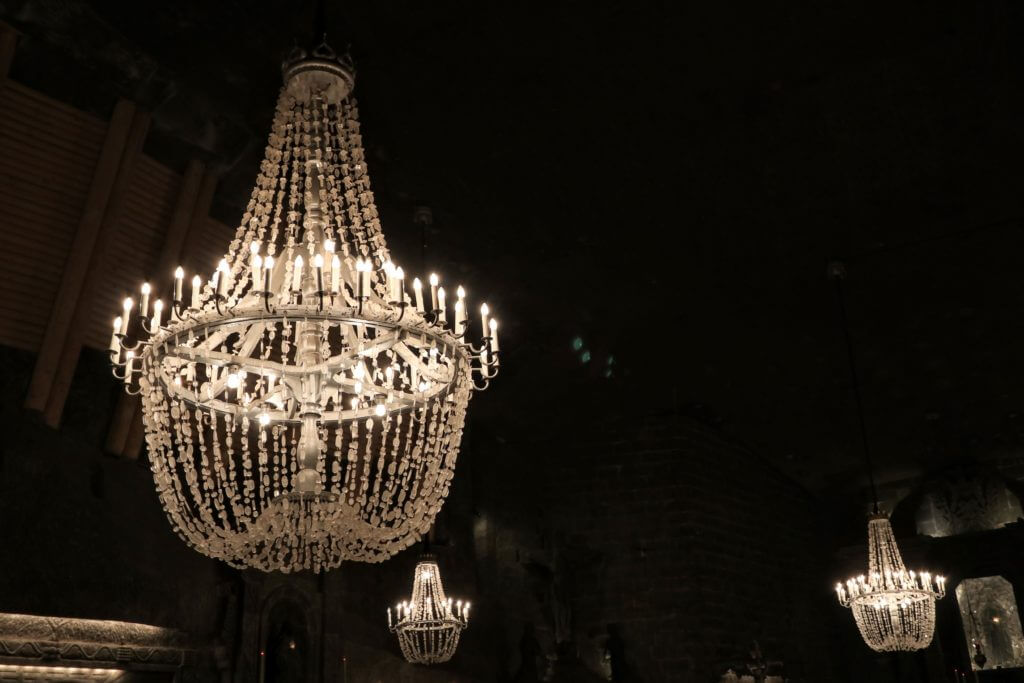
Chandeliers fill the rooms and cathedrals of the Wieliczka Salt Mine. Made of wood and salt crystals, they’re truly a marvel.
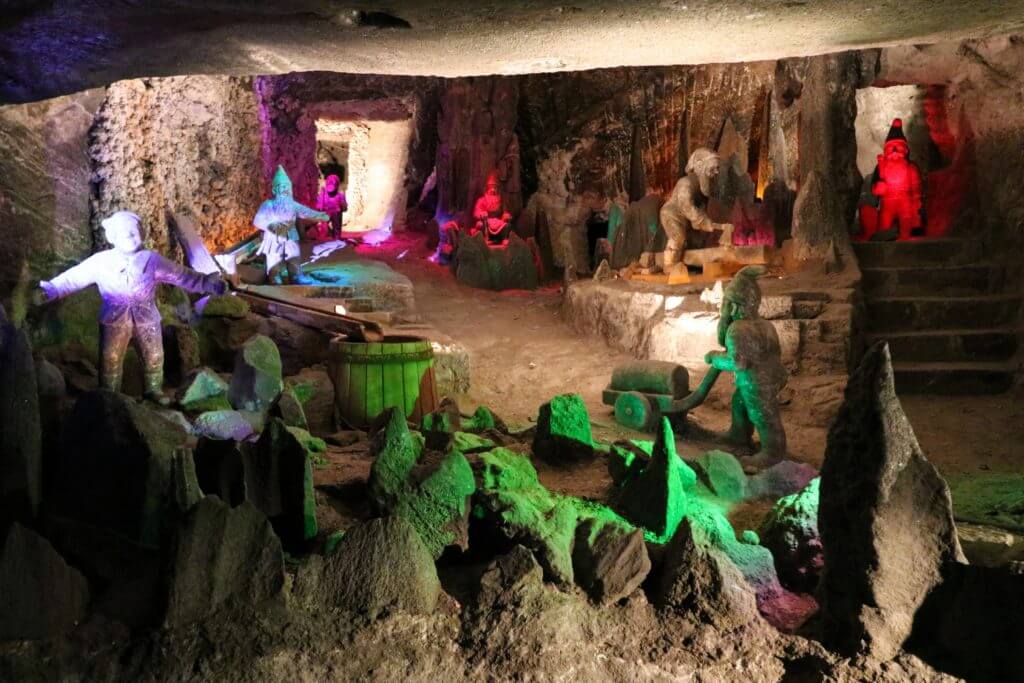
Sculptures of gnomes working in the mine are scattered throughout its passages.
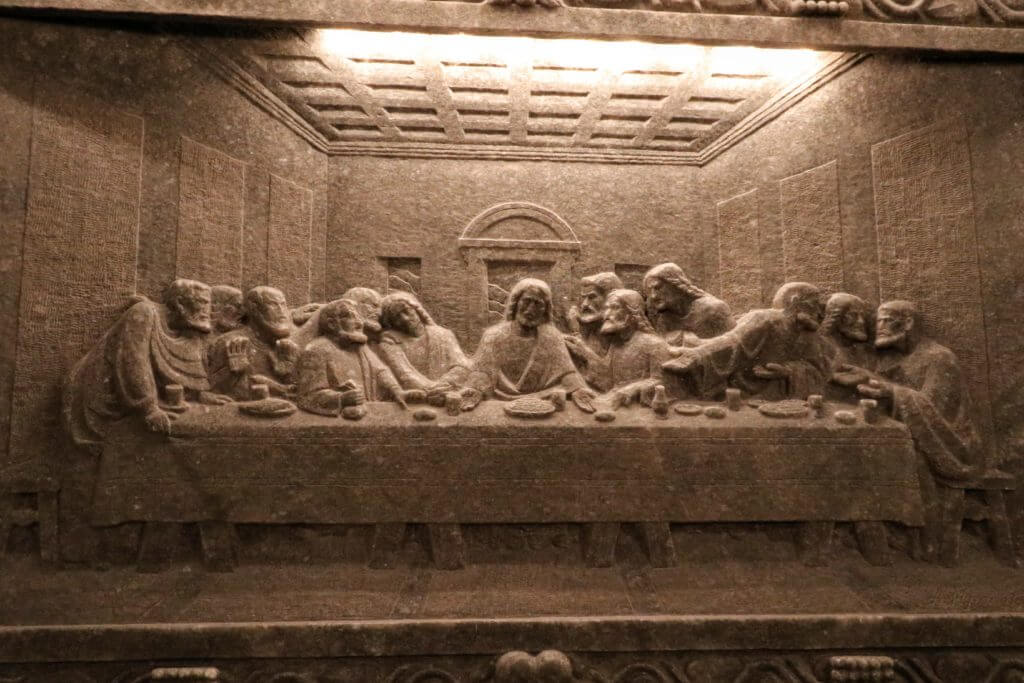
A carving of The Last Supper in St. Kinga’s Chapel.
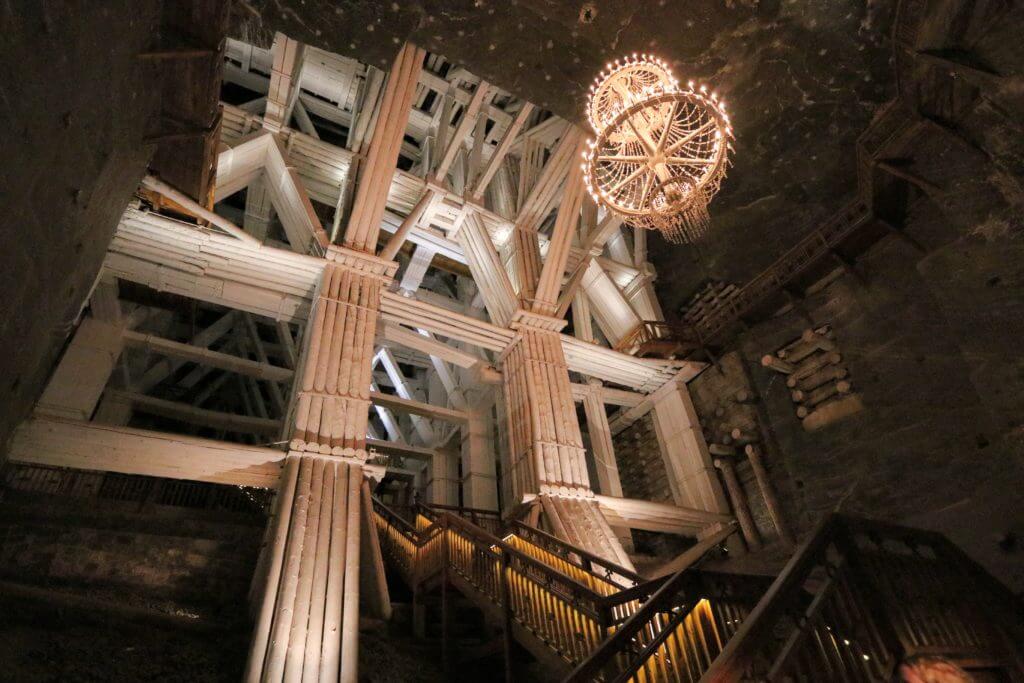
The tallest room in the Wieliczka Salt Mine, Komora Michatowice.
Know Before You Go
The salt mine’s popularity means tickets can sell out, so I’d recommend purchasing them ahead of time from a site like Viator. Photography is allowed at the beginning of the tour, but in order to take pictures from the impressive St. Kinga’s Chapel and beyond, you’ll need to purchase a photography pass. Those are available at a small table as you enter the Chapel for a small fee, paid in cash (so bring a little money with you!) There are quite a bit of stairs and walking on the tour, so it’s not recommended for those who may have challenges with mobility.
Visitors enter down a wooden staircase that descends 210 feet. Then, after the nearly 2-mile tour, you are returned to the surface via a service elevator. It’s surprisingly quick, and only takes about 30 seconds to reach the ground level again.
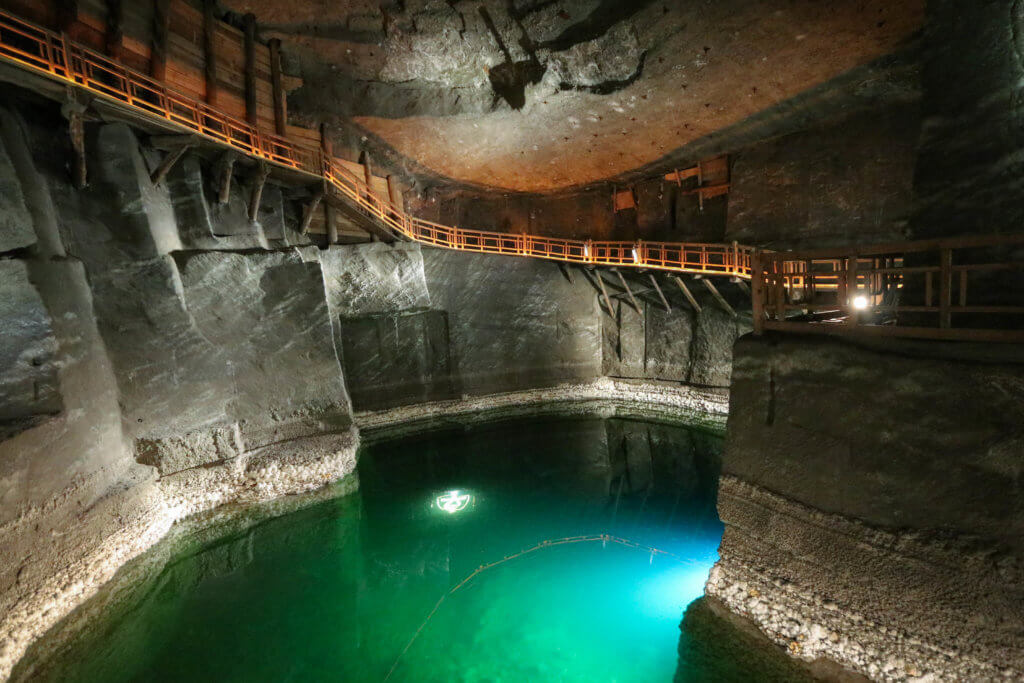
The salinity of the water is similar to that of the Dead Sea. If you were to swim in it, you’d easily float at the surface.
So while Auschwitz may be one of the main draws to the Krakow area, the Wieliczka Salt Mine shouldn’t be missed. It’s no wonder why it’s on the UNESCO’s World Cultural and Natural Heritage List.

You May Also Like:
» Picture Perfect Reasons to Visit Krakow, Poland
» A Day of Remembrance in Auschwitz
» Picture Perfect Reasons to Visit Prague


Looks amazing. Best new blog of 2017!!