


Those who do not remember the past are condemned to repeat it. -George Santayana
Imagine being torn from your family after spending five days and nights in a cramped railcar with 90 other people. Complete strangers carrying only what they could fit in a single suitcase. The smell of sweat, urine, and sickness hanging thick in the air.
Upon arriving at Auschwitz Birkenau, you’re told your husband will be kept with other men in a work camp. Meanwhile, you’re instructed to shower and board another train a ways down the track, bound for your new permanent settlement.
You make your way along a dirt road towards the tree line, gravel crunching beneath the only pair of shoes you now own. When you reach the brick building, you weakly make your way down the stairs. As your eyes adjust to the dim light, you’re forced to disrobe and continue around the corner to a large room with showerheads.
Cold and embarrassed, you look around at the women, children, elderly, and ill, as the doors are closed behind you. Some begin to cry, while others look bewildered at the scratches in the walls around them. Moments later, metal canisters drop from holes in the ceiling…

This was the horrible reality for an estimated 1,082,000 victims killed at the Auschwitz I and Auschwitz-Birkenau concentration camps between 1940 and 1945. Gassed, burned, tortured, hung, blown up, starved, frozen, shot, or experimented on. The Nazis looked for any and all means to eradicate those deemed “lesser.”
While hearing their stories is utterly heartbreaking, it’s important not to forget what happened. That’s why I traveled to Poland to see the camps for myself with an Auschwitz tour from Krakow. I knew it would be difficult, but I’ll admit I was naive as to just how hard it actually was.
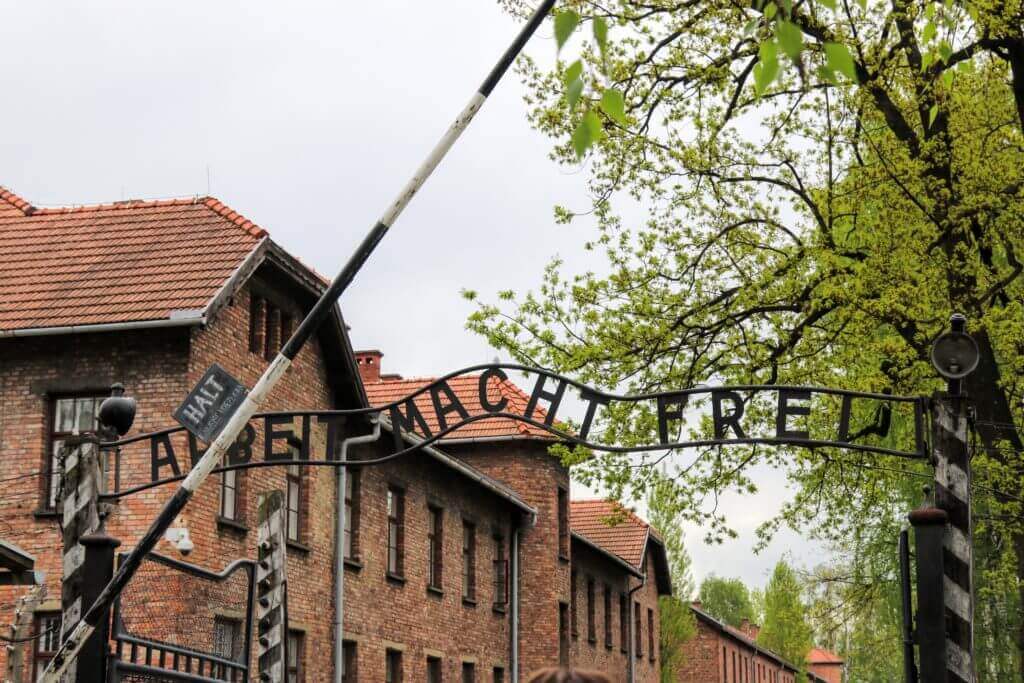
The gates into Auschwitz I. They read “arbeit macht frei”, meaning “work sets you free.” A cruel sentiment, as many victims were literally worked to death.
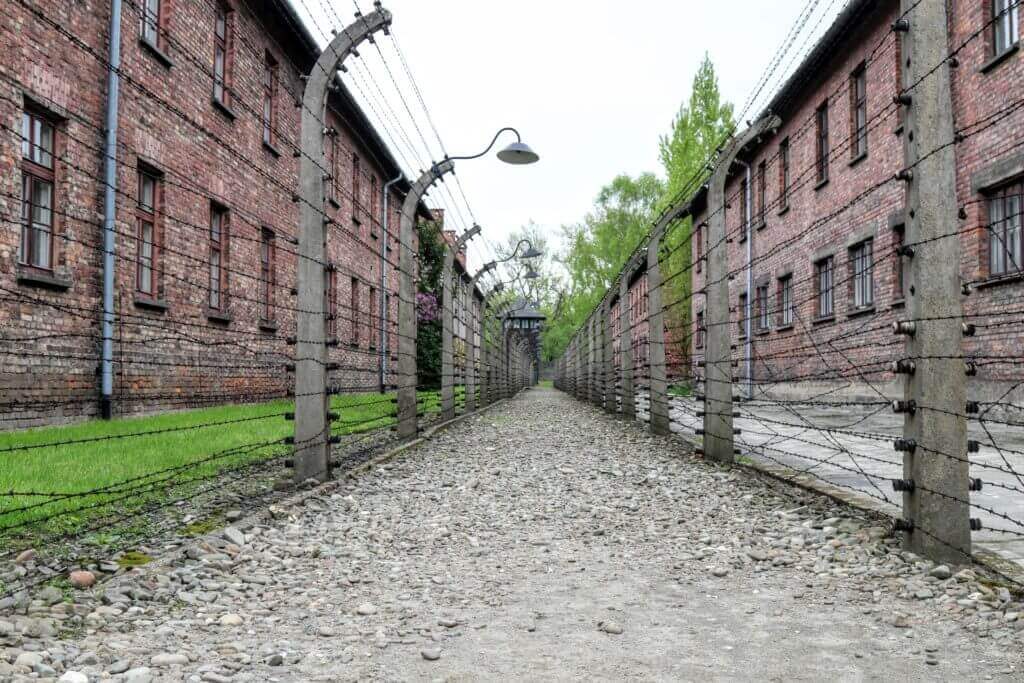
Electrified barbwire fences line the exterior and interior of Auschwitz I.
Auschwitz I
Entering Auschwitz I, you pass under an arched gateway and into the former abandon Polish army barracks. Each block has a number, and buildings were set aside for different purposes.
For example, Block 10 was where medical experiments were carried out by SS physicians. They were especially interested in twins, and whether doing something to one would be felt by the other. Monstrous. Block 11 was the prison block. Here, people were often punished by being forced to stand four to a cell no larger than a refrigerator box (making it impossible to sit.) It was also the first experimental gas chamber when the basement was sealed and Zyklon B (a pesticide) was released. Between Block 10 and 11 stands the firing wall, where prisoners were executed for the most minor of infractions. This included not meeting quotas, sharing food, etc.

A typical block in Auschwitz I.
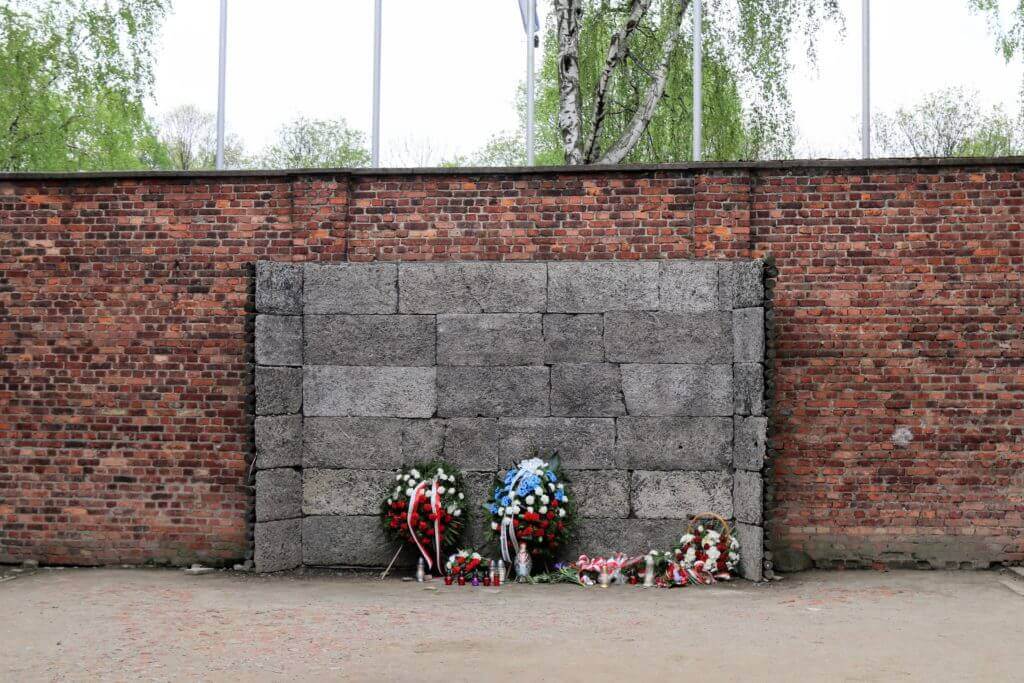
The Black Wall.

Watchtowers can be found scattered all over Auschwitz I.
#583297
Victims came to the death camps from all over Europe. Upon arrival, they were told to leave their suitcases and grab striped jumpsuits. Hopeful they would one day get their belongings back, victims wrote their names on their bags in large letters. The reality was, the Germans kept everything. Consequently, priceless heirlooms were lost to families forever.
After having their heads shaved, an identification number was tattooed on their arm. What happened to their hair? Thousands of pounds of it would be loaded onto trains, to then be made into felt and wool for railway workers’ socks. In Auschwitz I today, there is a room filled on either side with two tons of hair. Two tons! And that’s just what the Nazis didn’t have time to destroy in an attempt to cover-up their atrocities before the camp’s liberation. It’s impossible not to cry at the sight of it.
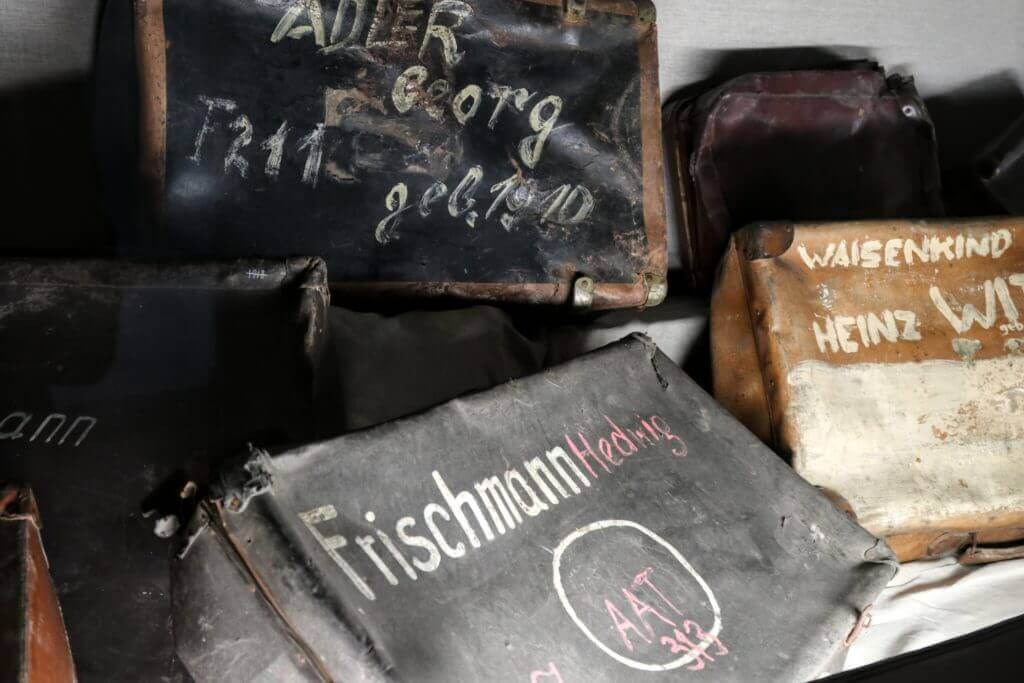
Suitcases emptied of their contents and tossed aside.
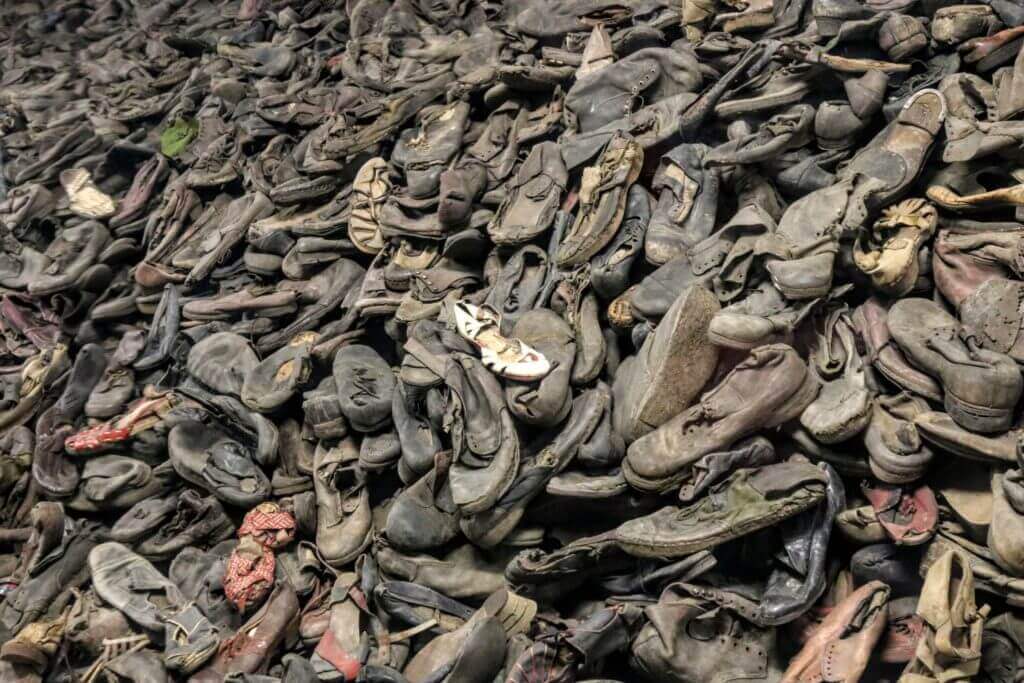
79,000 shoes belonging to Auschwitz victims.
Make Yourself At Home
During the first few weeks of the camp’s existence, people were forced to sleep on straw scattered across the concrete floor. By the spring of 1941, straw mattresses were placed on the floor from wall to wall. After an uncomfortable night of sleep in crowded rooms, victims were made to stack the mattresses in a corner. Later, tri-level bunk beds were implemented. These slept two to a level and had to be made up to military standards every morning.
Block Elders faired a little better, with private rooms and a desk. These were prisoners appointed by the SS to help oversee matters around camp. Initially, they were select German criminals, but as the camp expanded other nationalities and categories were included. These individuals had a lot of power and used it to exert pressure over fellow inmates. However, there were also some who were members of the resistance. These Block Elders used their power to try to help ease terror around the camp.
A typical washroom featured a long trough-like sink, which was also used for bathing. Prior to that, prisoners only had wells outside the barracks. Toilets were crammed into a single room, with no space or privacy.
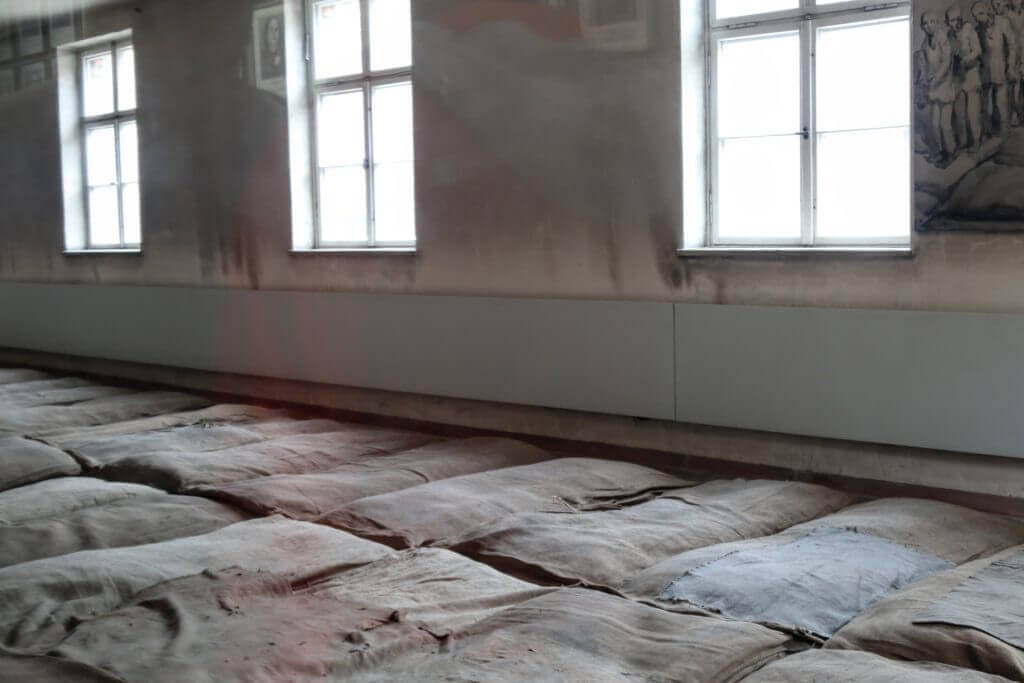
Straw mattresses lining the cold, concrete floor.
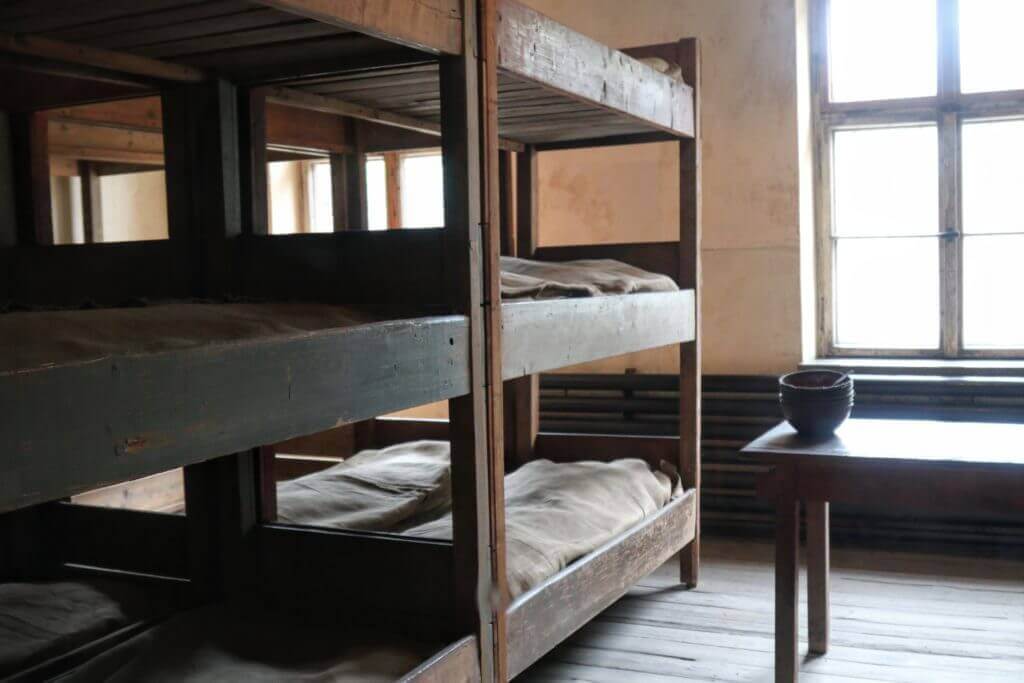
Bunk beds in a typical room inside the barracks.
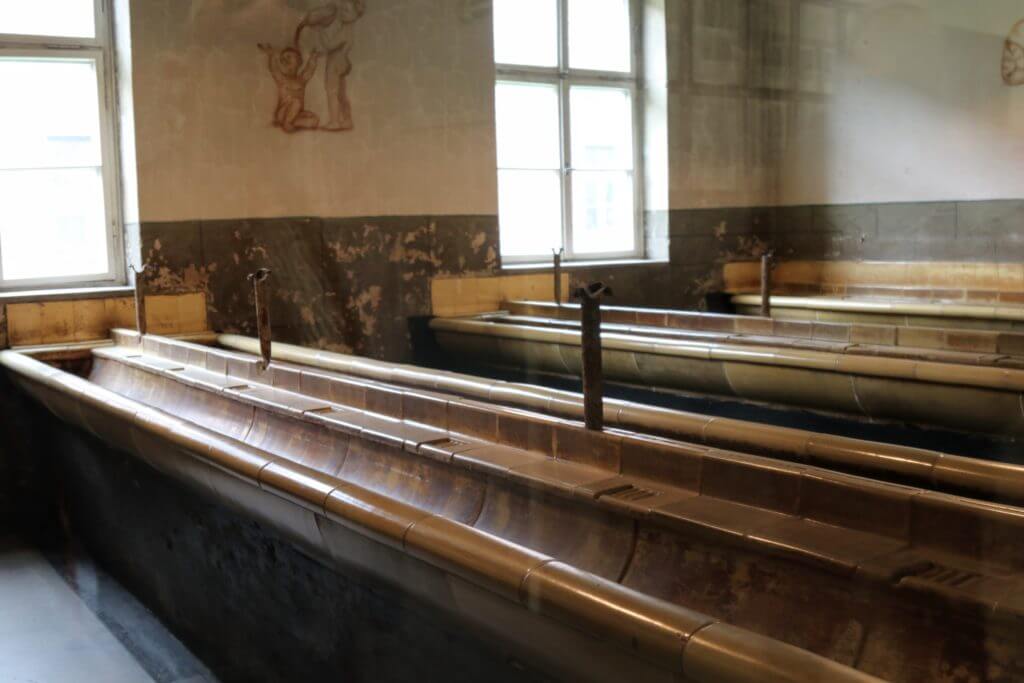
Washroom basins used to brush teeth, wash hair, and bathe.

Toilet room within the barracks.
They Were Called “Death Camps” For A Reason
It took a while for the Nazis to perfect a way to kill up to 6,000 people per day. They experimented with other methods such as firing squads, burning, and even explosives. But they all proved to be too impractical or messy.
It wasn’t until they experimented with Zyklon B, that they found a way to efficiently murder thousands. And it was an excruciating way to die. One SS officer described hearing victims screaming once the gas was dispensed, clearly fighting for their lives. After 20-30 minutes, the bodies were removed for cremation (in an effort to destroy evidence.) They were found half squatting, skin blotched with pink, red, and green spots. He noted that some were foaming at the mouth, or bleeding from their nose and ears.
Even if they weren’t killed at the hands of the Nazis, the horror was often too much. Due to the terrible conditions, it wasn’t uncommon for prisoners to throw themselves against the electric fences to simply end their suffering.

The outside of a gas chamber in Auschwitz I.
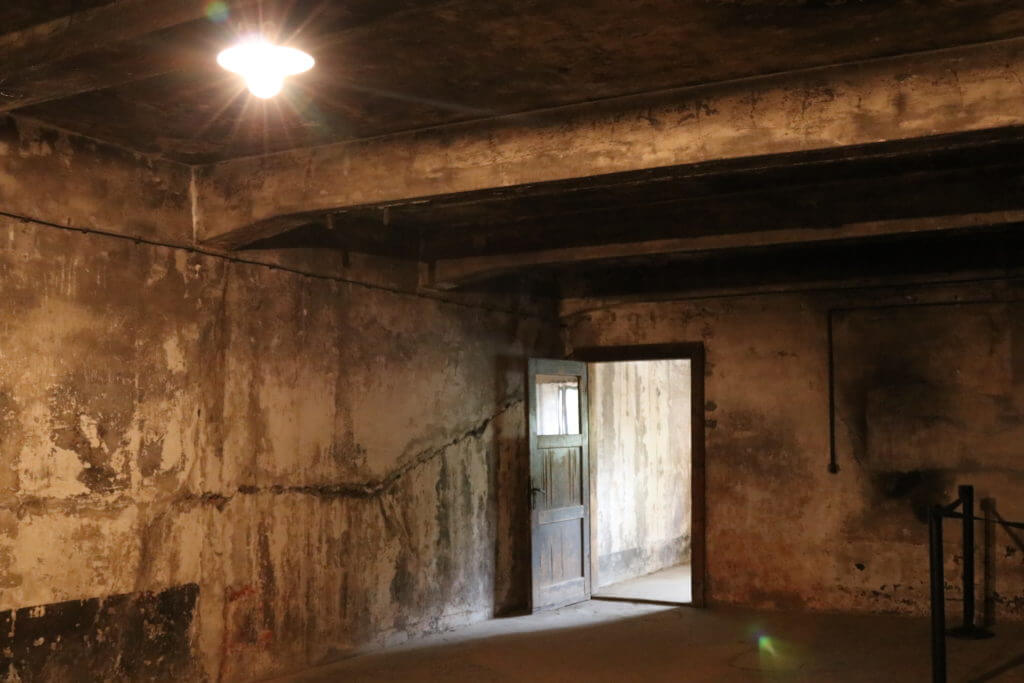
Inside the gas chambers you can still see scratches on the walls where victims desperately clawed for their lives.

Canisters of Zyklon B used in the gas chambers.
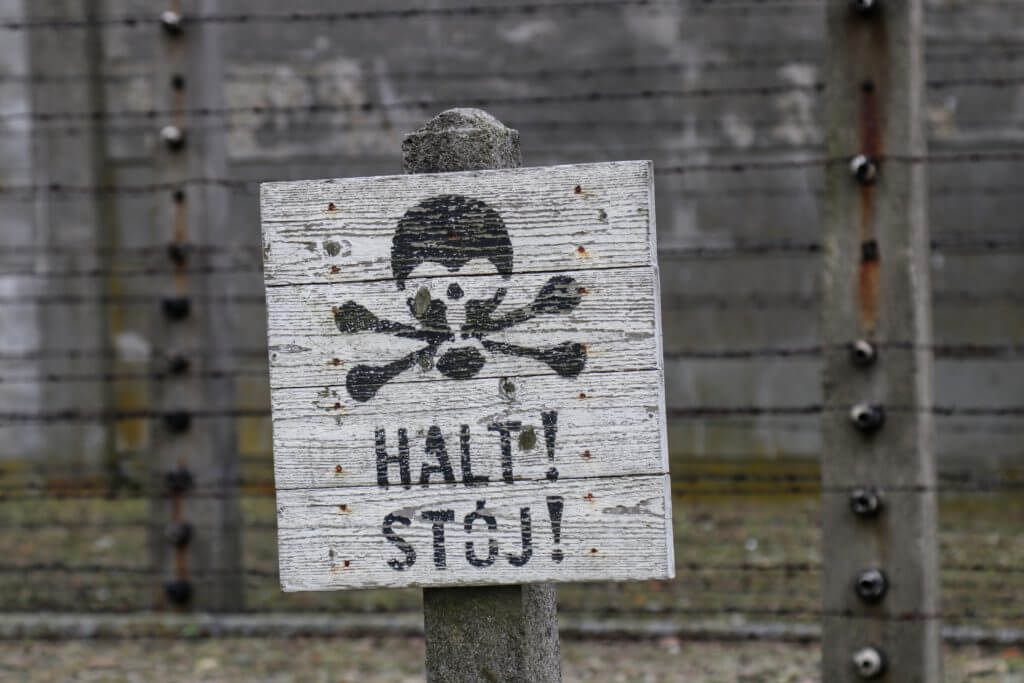
Electric fences were sometimes used as a means of suicide.
AUSCHWITZ-BIRKENAU
Auschwitz-Birkenau is basically a super-sized Auschwitz I. While the first Auschwitz camp is 12 acres, Birkenau is 360. The purpose of its very existence was to accommodate the staggering numbers of prisoners being brought in. In addition, it also expedited the murder of thousands more than Auschwitz I could accomplish. It had 5 gas chambers, which could kill over 6,000 people per day.
Despite the sheer number of prisoners, adequate facilities were non-existent. For 10,000 inmates there were only 3 buildings with toilets. These buildings were accessible in the morning before work, and in the evening before bed. In between, certain individuals had to climb down into the toilet area to scrub them clean. I can’t even imagine how awful that must have been.
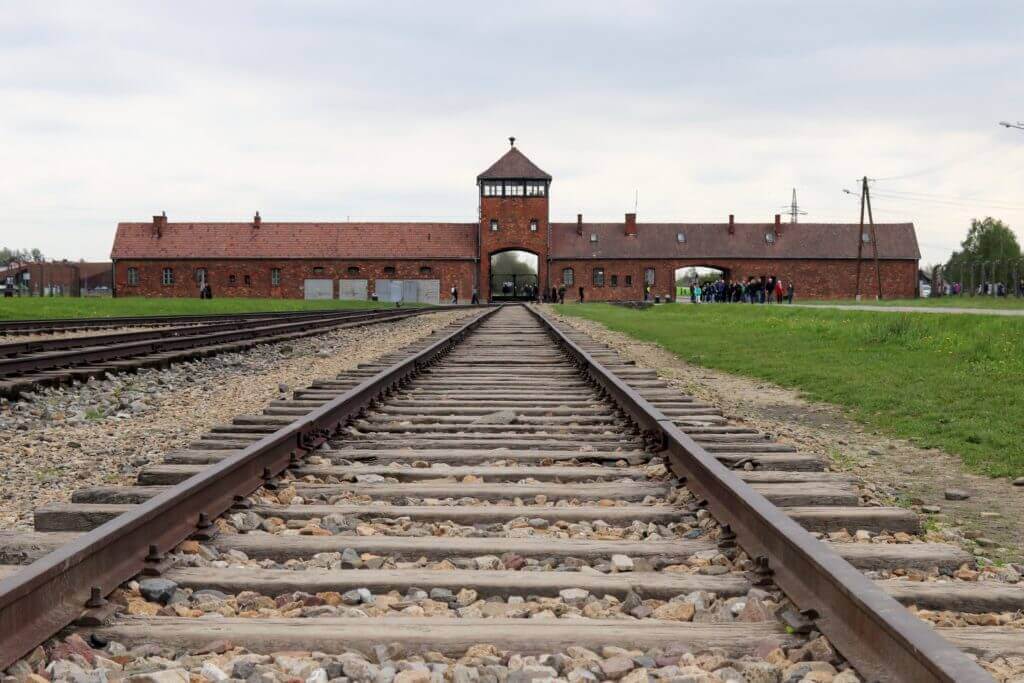
The entrance to Auschwitz-Birkenau.
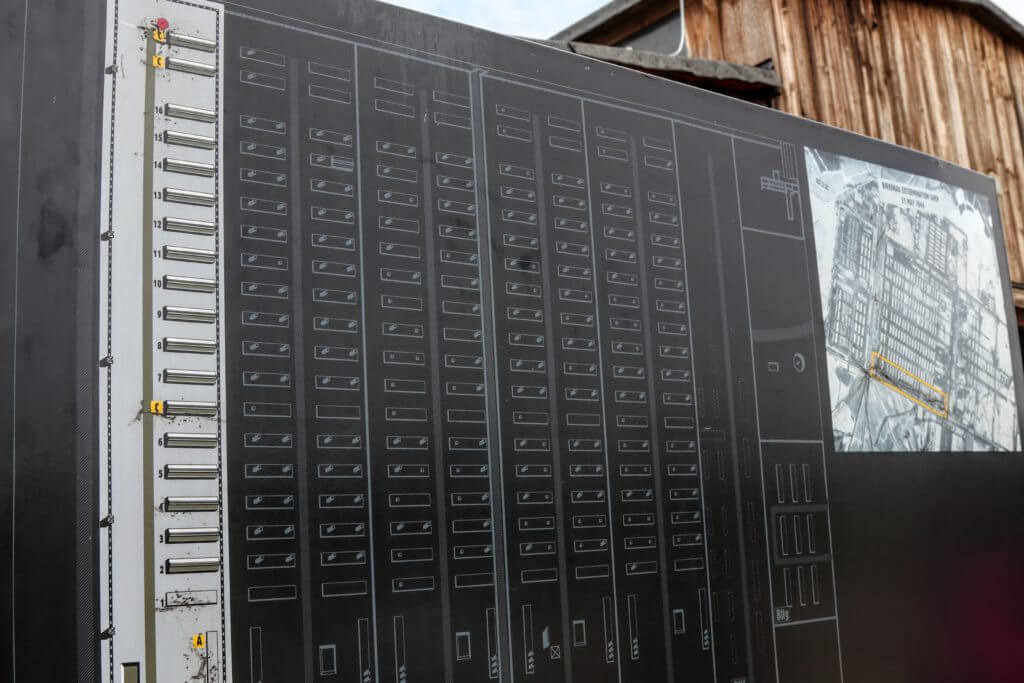
A diagram of a section in the Auschwitz-Birkenau camp. You can see the number of buildings compared to the number of bathroom facilities (indicated in yellow)
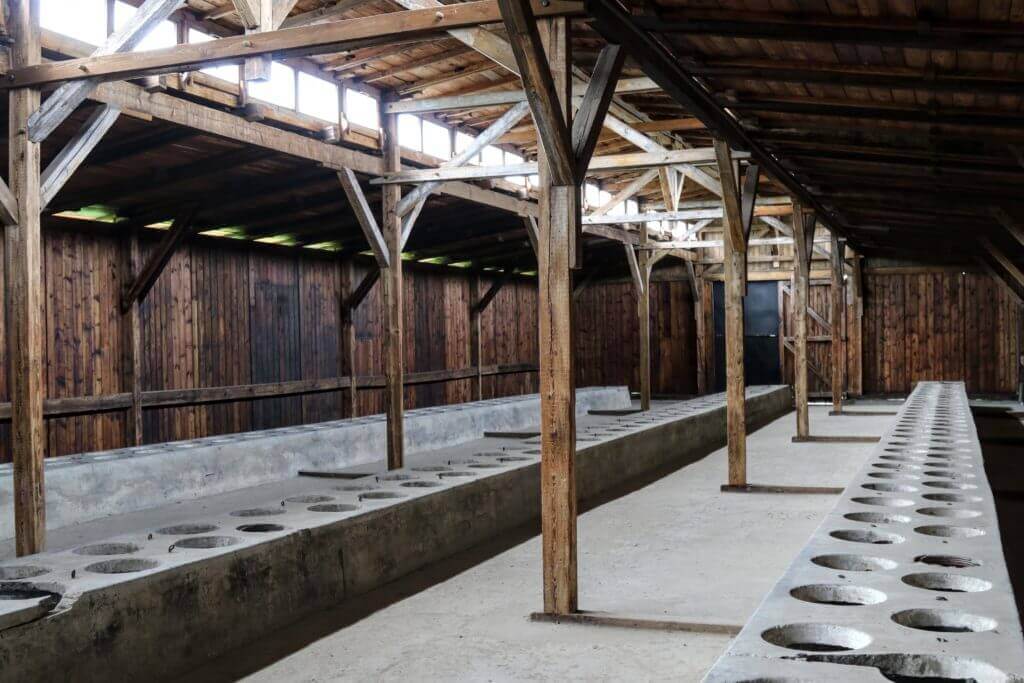
A typical bathroom in Auschwitz-Birkenau. Notice how cramped the toilets are, and how privacy was impossible.
The End of the Road
Victims would arrive with up to 90 people per railcar. The journey was arduous, with travel sometimes taking more than a week in poorly ventilated quarters. Once prisoners arrived, they were immediately separated into those who could work, and those who could not. Those deemed unfit included women, children, the elderly, the ill, and those who were pregnant. These individuals were told to walk down a road along the tracks to showers, where they would be deloused before continuing on their journey.
Because the tracks appeared to continue, they had no reason to suspect they were actually walking to their deaths. Instead of showers, they found themselves locked inside a gas chamber building, where their bodies would later be cremated.
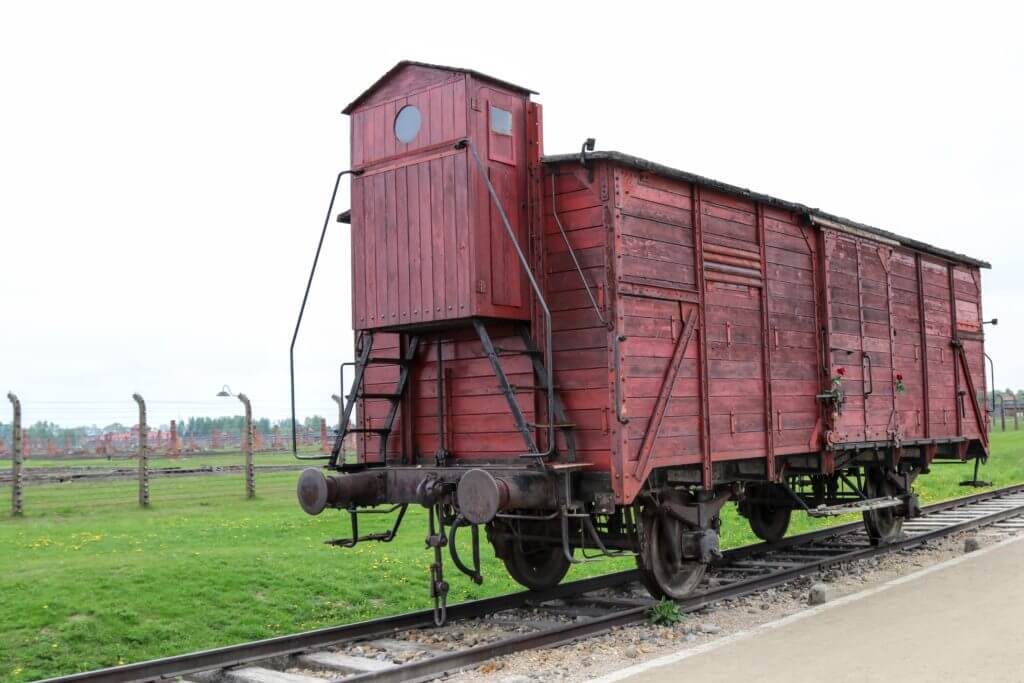
One of the railcars used to transport victims to the death camps.
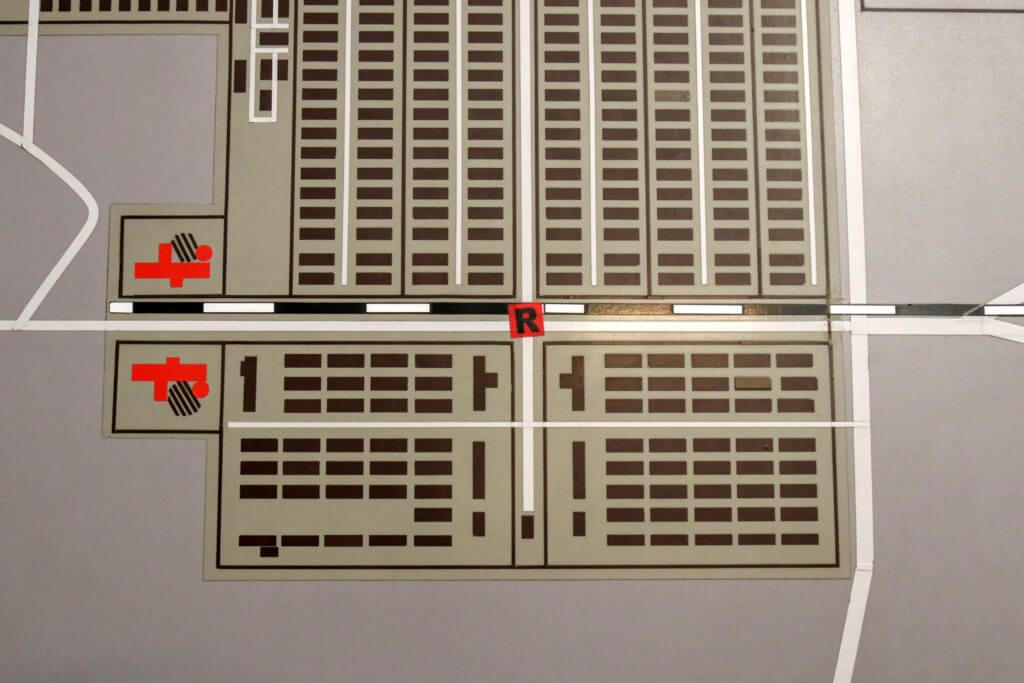
Diagram showing where victims got off the train (indicated with a red “R”), and where the tracks ended (indicated with the black and white line to the left.) On either side of the track’s end were gas chambers (marked in red.)
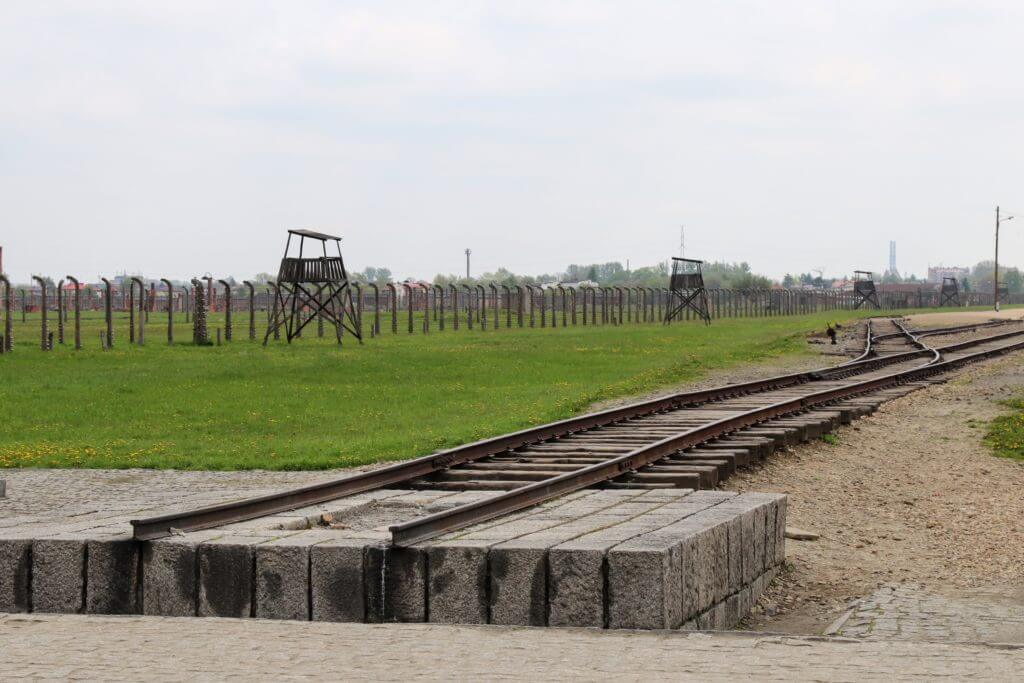
The end of the tracks at Auschwitz-Birkenau.
Remembered Despite the Rubble
In an attempt to cover-up the horrible atrocities that had been committed, the Nazis blew up gas chambers at Auschwitz-Birkenau before its liberation. In the rubble, you can still see the stairs leading down to the disrobing area and the gas chamber around the corner.
Not to be forgotten, a memorial has been erected opposite the train tracks. Plaques in many languages stretch across its expanse and read “Forever let this place be a cry of despair and a warning to humanity. Where the Nazis murdered about one and a half million men, women, and children. Mainly Jews, from various countries of Europe. Auschwitz-Birkenau 1940-1945.”

Remains of a destroyed gas chamber. The staircase led down to a disrobing area.

Gas chamber and crematorium remains in Auschwitz-Birkenau.
Resistance Wasn’t Futile
Resistance efforts were found throughout the death camps during WWII. One example that stuck with me from my time in Auschwitz was that of an older gentleman. Every day he would get up early, exercise, and go through the motions of his usual grooming habits, before starting another long day of manual labor. A younger man finally asked why he bothered. After all, they were surely going to die here.
The man replied, “Because I am still a person.”
Despite being broken down, stripped of all he owned and everyone he knew, he never let them take his humanity.
This just scratches the surface of the conditions in these camps, and the stories of those who died there. My time in Auschwitz I and Auschwitz-Birkenau was certainly a day I’ll never forget. And isn’t that the point? To minimize what happened, or keep it tucked away in the pages of a history book is to risk it happening again. Let us hope it never does.
You can read about other Holocaust sites and memorials throughout the world here.

You May Also Like:
» Picture Perfect Reasons to Visit Krakow, Poland
» Secrets of the Wieliczka Salt Mine
» How to Always Carry-On Your Luggage


Truly astonishingly that this happened
I have read alot about this and myself and my wife are heading out there end of October
Thank you so much for the insight
It’s an absolutely heartbreaking chapter in history, but definitely one that needs to be remembered so it doesn’t happen again. The tour is really informative and can get a bit emotional, but it’s well worth the trip to learn about in person.