

Cage diving with great white sharks in South Africa had been on the top of my bucket list for as long as I can remember. As a self-proclaimed science nerd, I always dreamt of becoming a marine biologist when I grew up. Studying species like great white sharks in the open ocean? It doesn’t get any better!
So when I found myself in South Africa for The Blonde Abroad Photography Tour I immediately added an extra day to my trip so I could swim with these giants of the underwater world.
And to answer the obvious questions – yes, it was absolutely incredible and no, I didn’t die. Clearly.
Why There’s Nothing To Fear
Despite what you remember from Jaws, sharks aren’t really interested in eating you. Oftentimes, they bite into you thinking you’re something else entirely (like a seal). Once they realize you aren’t the tasty morsel they were hoping for, they’ll typically leave.
In 2022 there were only 108 shark attacks worldwide. That figure is pretty staggering when you consider the billions of people who participate in aquatic recreation each year. 108 out of over a billion? I like those odds.
Of course, that didn’t stop me from planning an elaborate shark-themed funeral, should I be eaten. My urn (complete with a finned lid) would be walked down the aisle to the Jaws theme song, I would have shark facts instead of prayer cards, there would be shark-inspired parting gifts, etc. And come on, what an epic way to go out!
“So, how did she die?”
“Whelp. She was eaten by a great white shark.”
Mic drop.
But the reality is that out of all those billions of swimmers, divers, surfers, and other ocean enthusiasts, only an average of six are killed by sharks each year. Looking at the numbers, you have a mere 1 in 3,700,000 chance of being killed by a shark. By comparison, you have a 1 in 63 chance of dying from the flu, a 1 in 565 chance of dying in a car accident, or a 1 in 672 chance of dying by simply walking.
Sadly, sharks have much more to fear from us. On average, 100 million sharks and rays are killed by fisheries each year. This overfishing, coupled with habitat loss and the horrific practice of shark finning, has led to a steady decline in shark populations.
In fact, great white sharks are listed as a “vulnerable” species. However, you rarely hear about the need for conservation because they aren’t as cute as tigers or gorillas.
The Ethics of Diving with Great Whites
It’s always important to be mindful of how you impact environments when you travel so you’re not supporting animal abuse in tourism. The debate over the ethics of cage diving with great white sharks in South Africa is heating up and there are solid arguments on both sides. Is the experience really raising awareness and changing people’s mindsets about these inquisitive creatures? Does attracting sharks change their natural behavior?
First, you need to ask yourself why you want to cage dive with great whites to begin with. Do you want a selfie with these apex predators? Is it just something to brag about when you get home? If so, you may not be doing the sharks any favors by visiting.
But if you’re genuinely interested in learning more about the sharks and what threats they face, then a dive with a reputable company is a great way to do it!

What To Look For In A Tour Company
Not all diving companies are created equal, and there are ones you should stay away from when you go cage diving with great white sharks in South Africa.
So, do your homework. Find a tour company that focuses on education and conservation. There are plenty of outfitters that say they’re in it for the sharks, but actions speak louder than words. What are they actually doing to help the species beyond simply running tours so visitors can see them?
Never wanting to contribute to animal abuse, I did a lot of research before choosing a company I thought was worth supporting. I booked my excursion with Marine Dynamics and couldn’t be happier with my choice. They are knowledgeable, responsible, and passionate about helping these beautiful creatures.
As my guide Toby Rogers puts it, “First and foremost we are in it for the sharks. We have a vested interest in better understanding these animals for more robust conservation methods to be implemented for the species as a whole. With us, as you have experienced, trained and knowledgeable marine biologists on board that are able to answer a multitude of different questions. The reason being we care for and love these animals.”
He continued, “As a company, the whole operation is on another level, right from the reservations department to the purpose-built vessels and how we operate on the water. Wider scale we have dedicated research, whale watching, a conservation trust, and a seabird and penguin rehabilitation center. We are diversified, but with a unified goal of conserving and better understanding the plethora of wildlife we have around our shores.”
Sold.
Not only did I learn a ton about sharks and the threats they face, but I also had the opportunity to help with research!
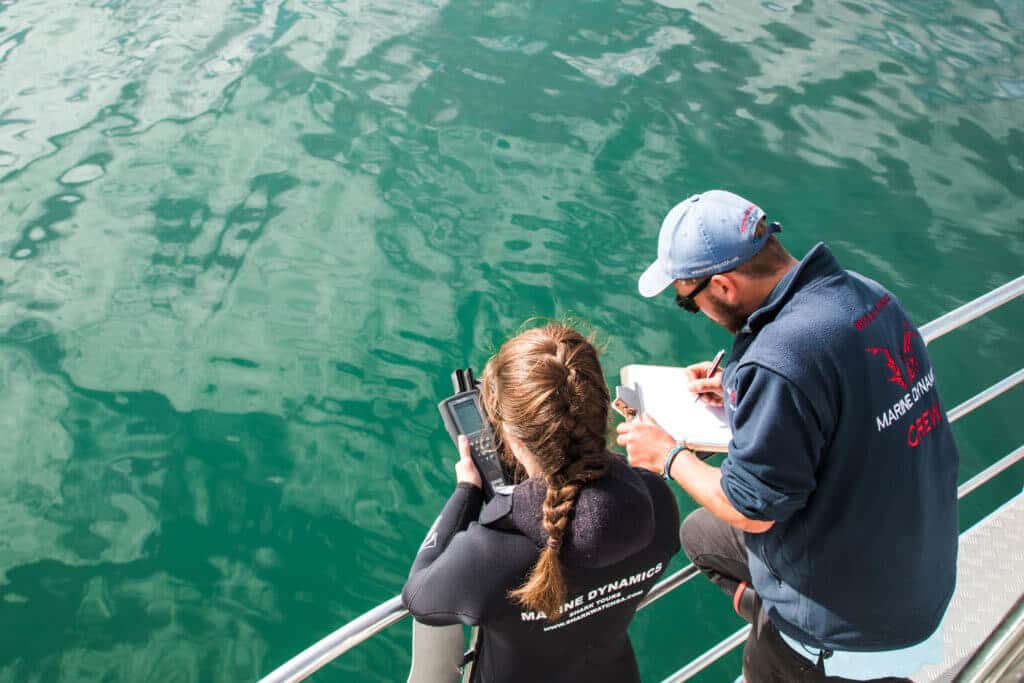
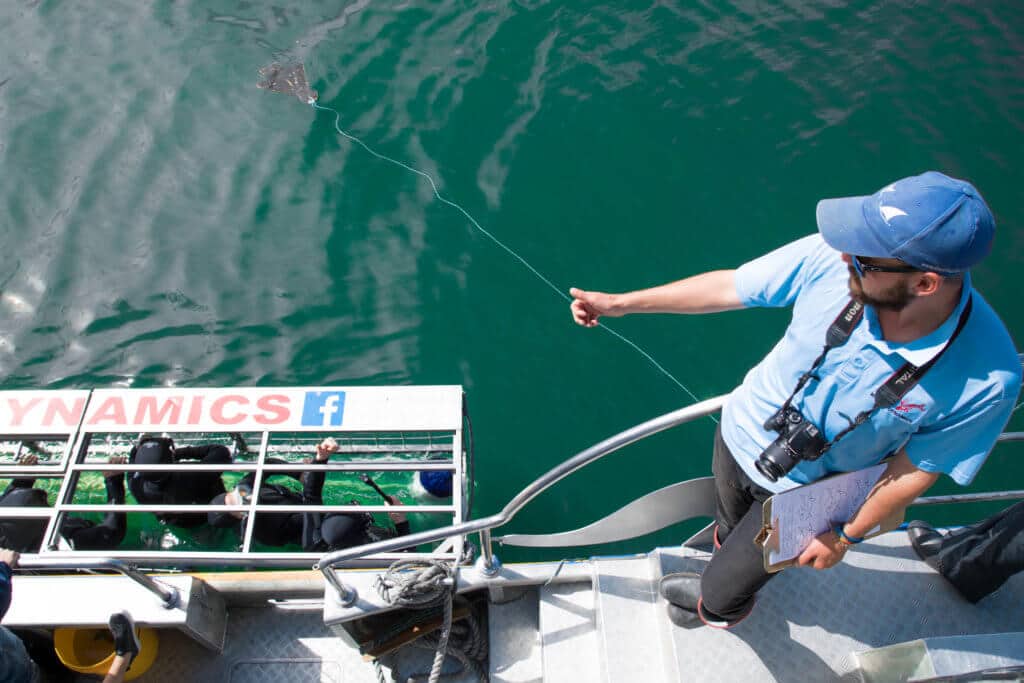
As soon as we dropped anchor Toby pulled out his YSI probe and asked for my help in gathering data. Using it, we were able to measure temperature, pressure, and dissolved oxygen in the water at three different depths. Those figures are then used to analyze the level of stratification and mixing. That data will offer a better understanding of what influence oxygen and temperature have on the presence of white sharks.
It was all my dreams of becoming a marine biologist come true! And it’s research like this that sets Marine Dynamics apart from other tour companies.
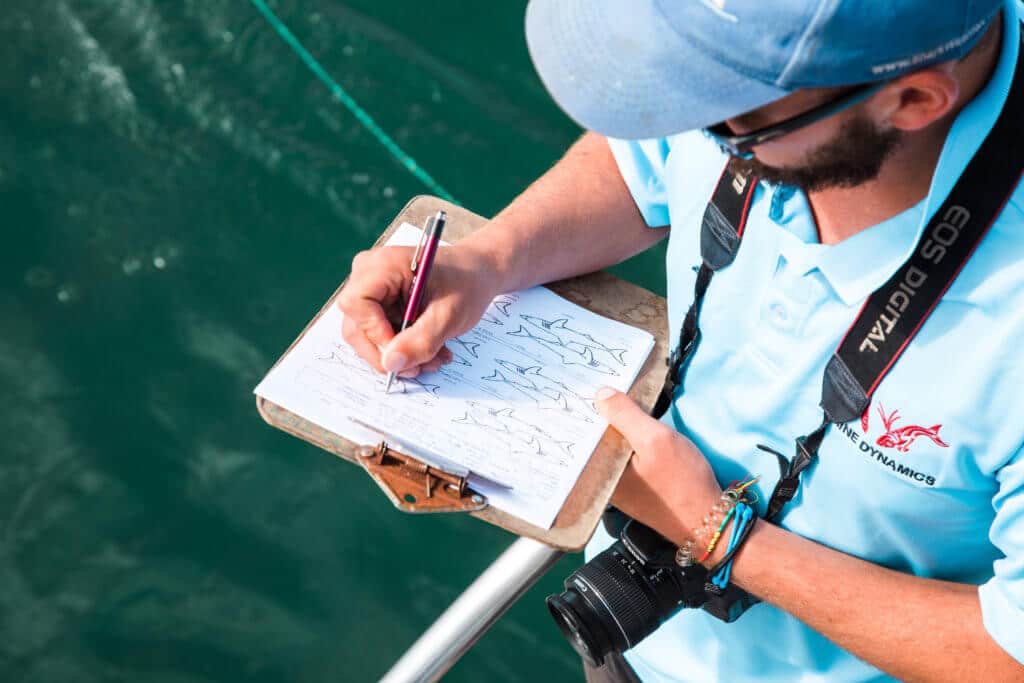
In addition to data collection, they also document which individual sharks are seen. Sharks can be identified by different markings on their bodies (torn fins, scars, etc). Using this information, Marine Dynamics can determine which sharks return and how long they stay in the area.
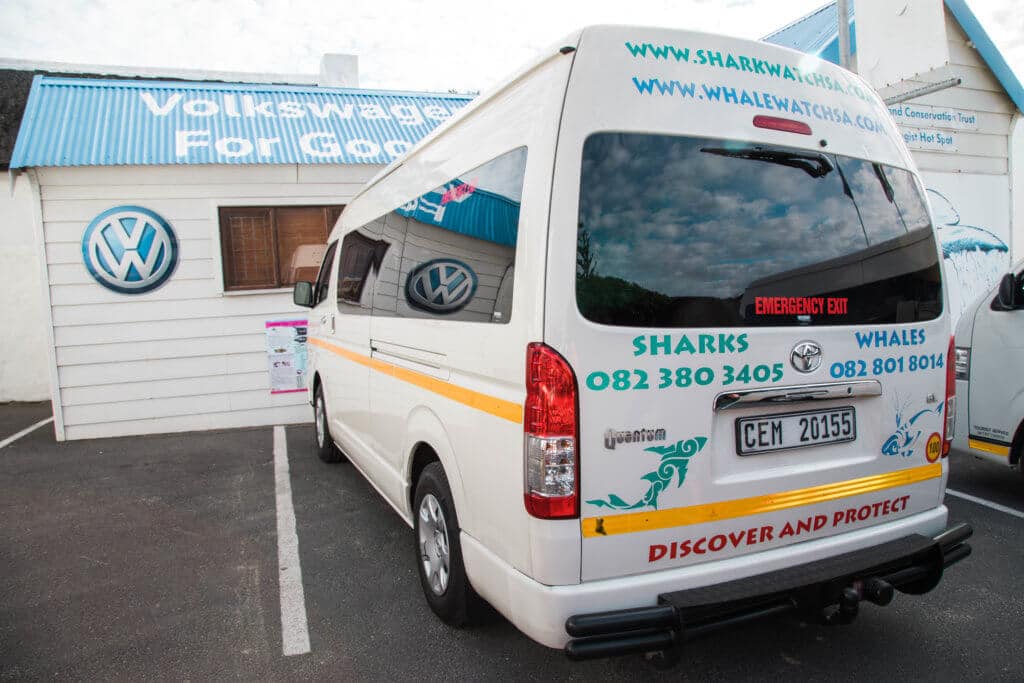
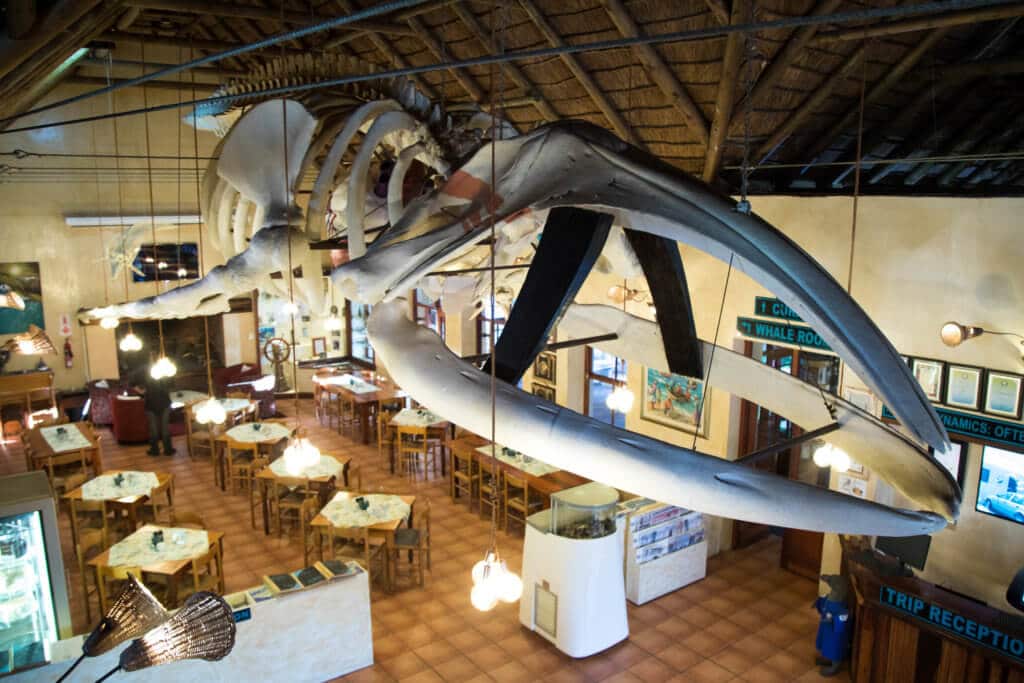
On top of a central focus on research and conservation, Marine Dynamics also provides an outstanding experience for their visitors. With convenient pick-up from Cape Town, they make it easy to get to where they’re based in Gansbaai. Their facility is clean, spacious, and even provides delicious eats so you don’t leave on an empty stomach. And finally, their 46-foot vessel is built specifically for shark diving in the Kleinbaai Slipway. It’s fast, comfortable, and (most importantly) super safe.
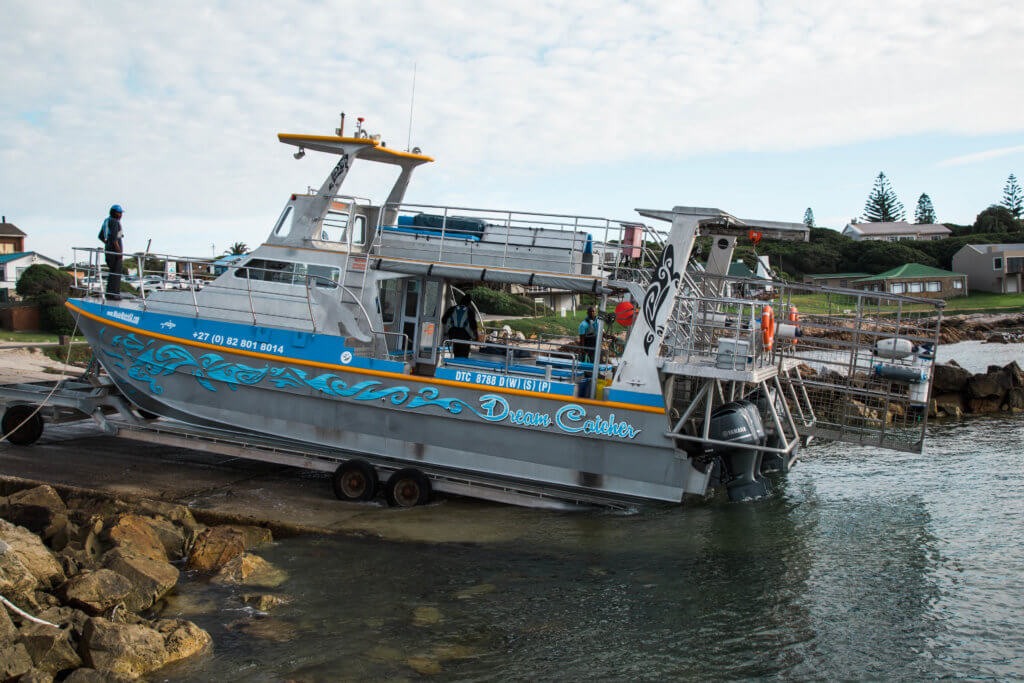
What To Expect During Your Dive
When you picture cage diving with great white sharks in South Africa you probably envision scuba gear, deep depths, and hours of boating out to remote locations. However, South Africa is a hot spot for great white sharks so the experience is much less arduous.
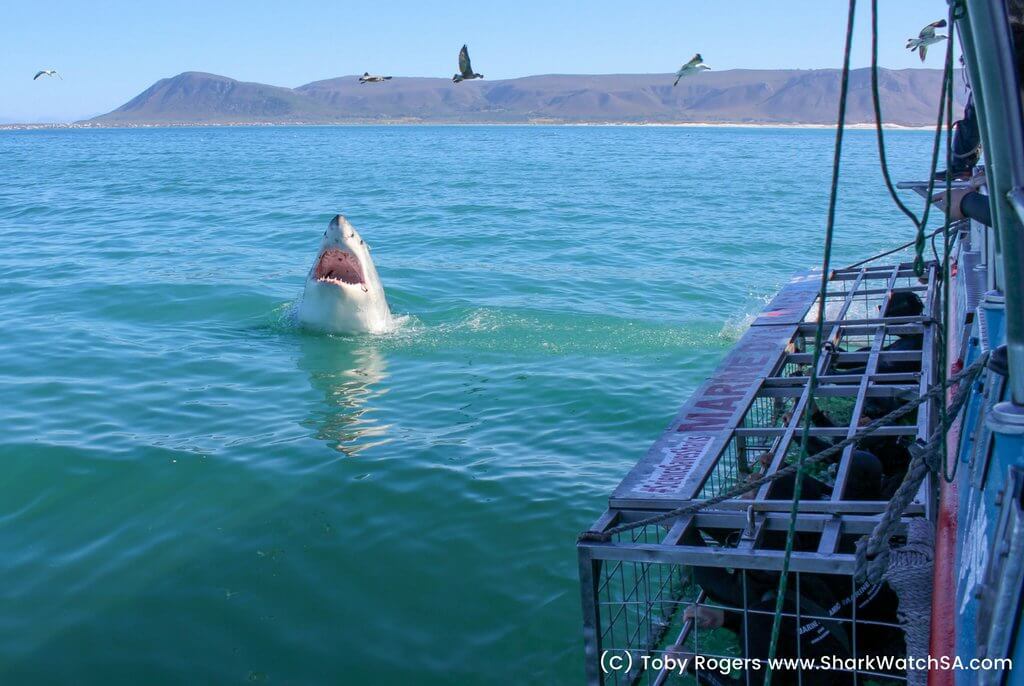
Boating out to Shark Alley near Gansbaai takes a mere 20 minutes and offers some of the best great white viewings in the world. South Africa is also the only place in the world where white sharks have been known to breach. This unique behavior makes South Africa that much more appealing over other locations around the globe.
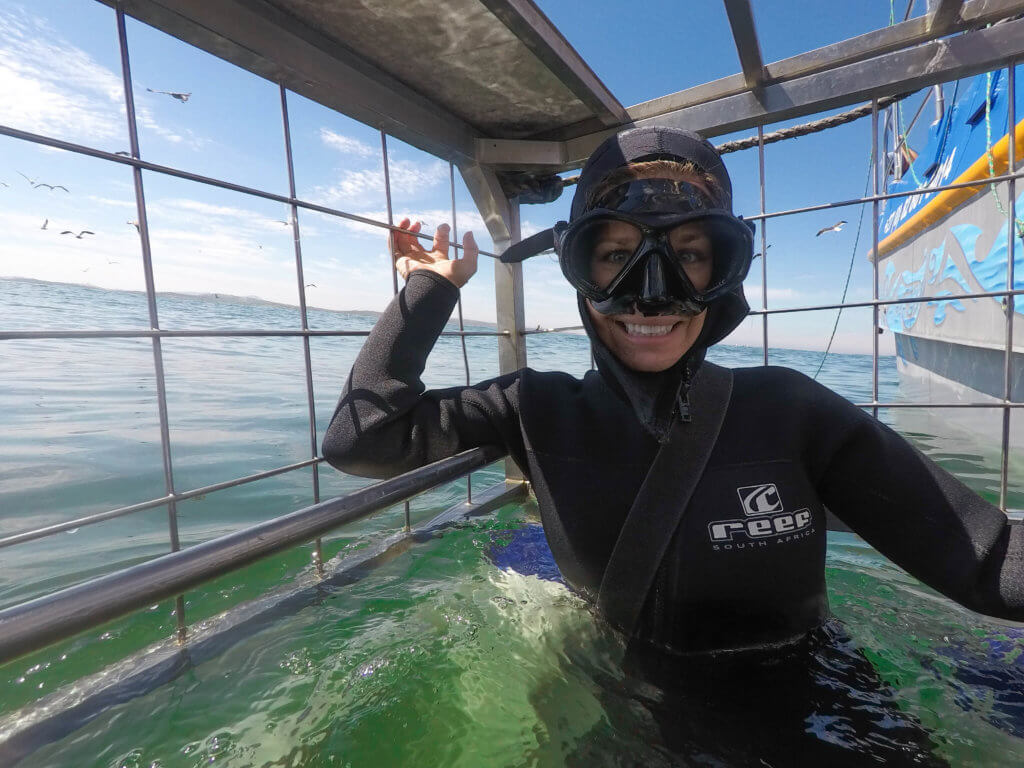
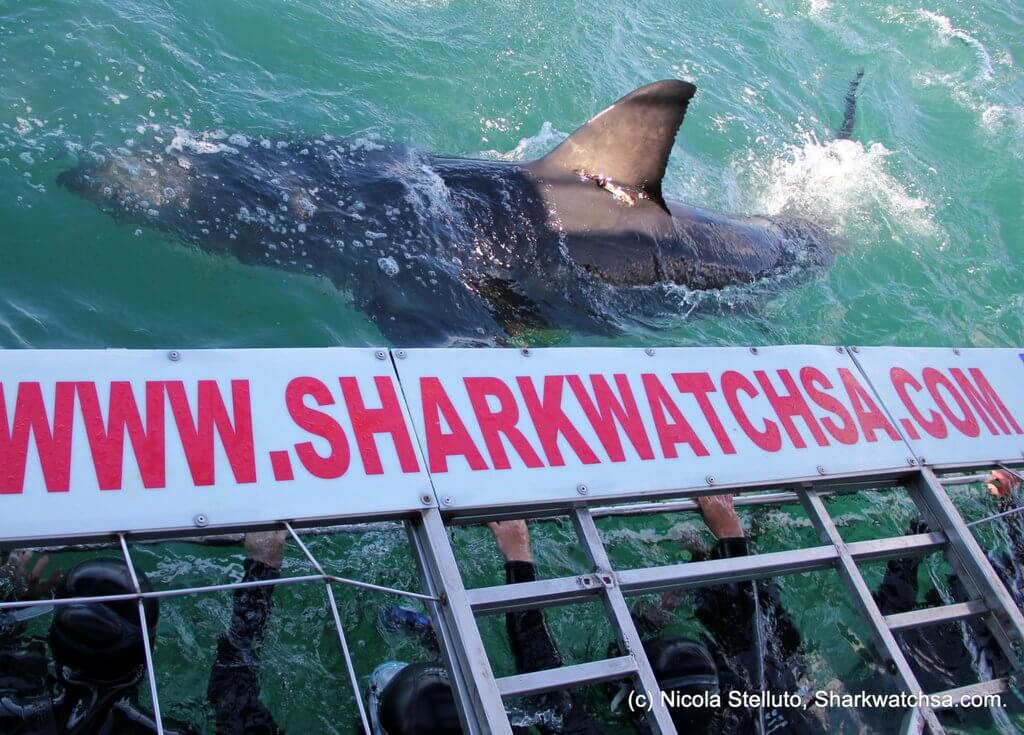
As for the cage, the dive is made even easier with one that simply hangs off the side of the boat! The cage is covered and includes bars for standing or gripping to lower yourself into the water. It’s easy to climb in and out from the vessel, and you never feel unsafe inside (just don’t stick your arms or legs outside because… obviously).
The sharks are brought near with seal decoys and a mixture of fish oil and tethered fish heads. The reason for using these is because you don’t want the sharks to associate humans with food (and there is little caloric reward in a fish head).
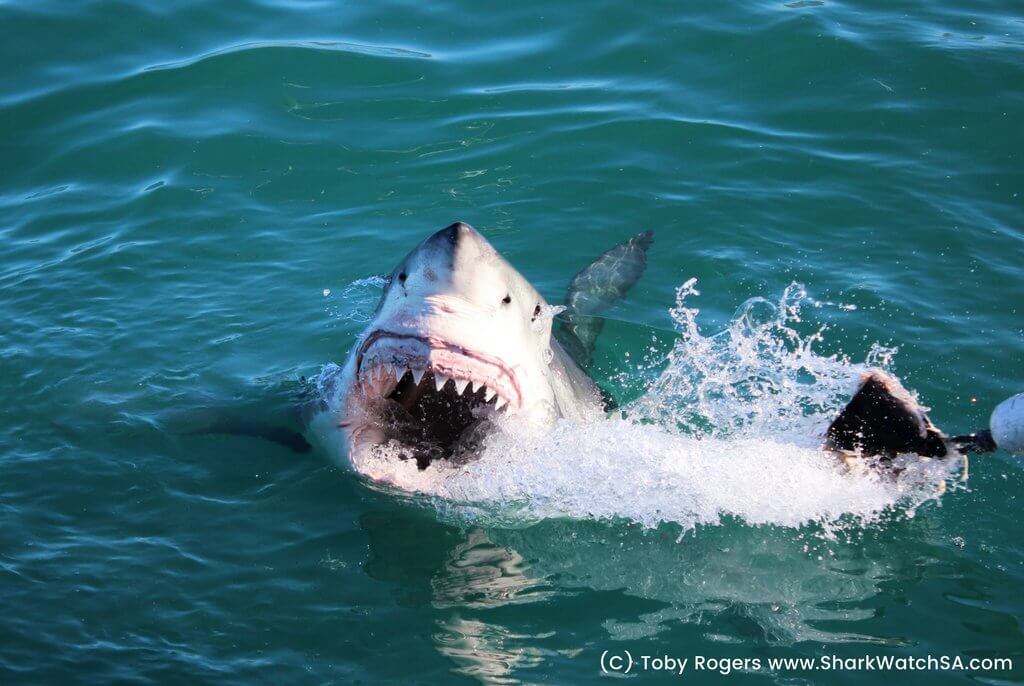
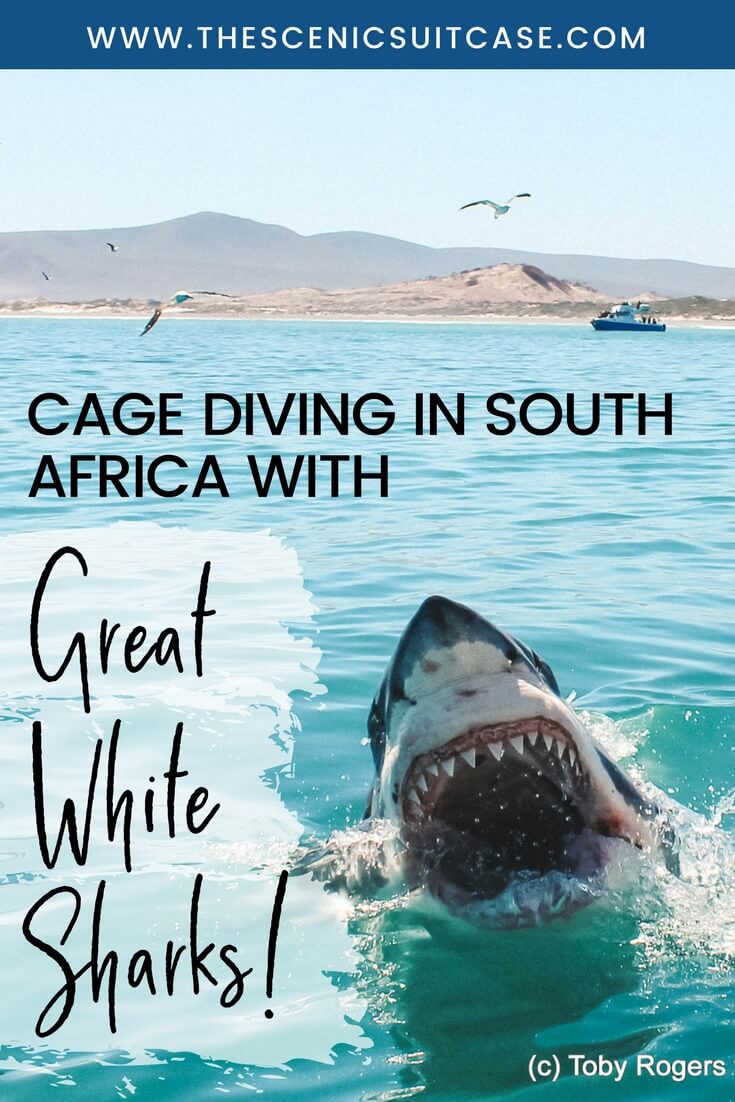
Using this method, we were fortunate to see three great whites and a copper shark (or bronze whaler). Two of the great whites were 3.8m (12.47ft) females, one was a 3.7m (12.14ft) female nicknamed ‘Campy’, and the copper shark was 2.7m (8.86ft).
Interestingly, ‘Campy’ has marks on her dorsal fin that suggest she once had a camera attached to it. According to my guide, Toby Rogers, these cameras give you “a short window into the life of a white shark. With the addition of an accelerometer you can start to infer the daily average swimming speeds and in turn, begin to work out energy budgets of the sharks.” Science!
Neck deep in frigid waters with the taste of brine in my mouth, I eagerly waited. Between shark sightings, Toby entertained us with games of trivia. And the prize when I got an answer right? A warm taquito (which I enjoyed right inside the cage!)
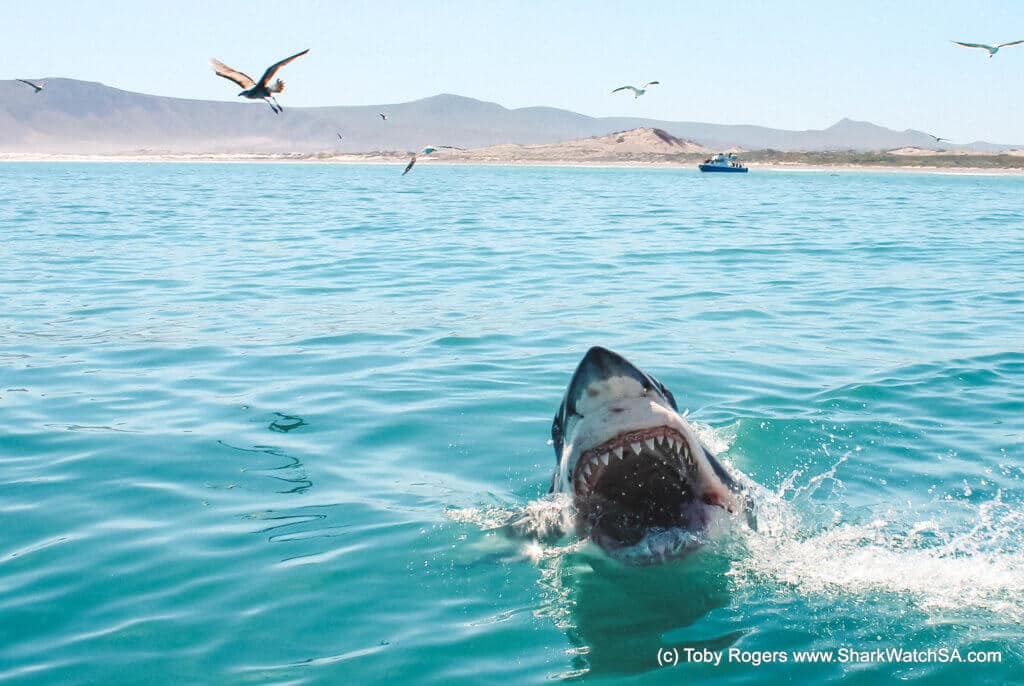
Then the thrill of the next shark would be upon us. Our guides would yell to warn us which side of the cage the shark was approaching from and as we turned it would appear! Its massive fins and overwhelming body made me feel impossibly small. The sharks would writhe their bodies and gnash their enormous teeth before fading back into the depths.
It. Was. Incredible.
After my time in the cage was over, it was back onto the boat for hot cocoa and a wrestling match with my wetsuit.

My great white dive was a once-in-a-lifetime adventure I won’t soon forget!
So if you have a passion for marine life, then using a reputable company for diving with great white sharks in South Africa is a must! And if you’re looking for the best tour company in Gansbaai, check out Marine Dynamics!
They’ll educate you on why sharks shouldn’t be feared, but rather loved for the fascinating creatures they are.
You May Also Like:
» How to Avoid Animal Abuse in Tourism
» An African Safari at the Gondwana Game Reserve
» 7 Astounding Ways Travel Changes You

I am taking the same trip with TBA escapes and cage diving has been on my travel bucket list for years! Thanks for finding a great company. Questions do they provide transportation there or did you rent a car/uber? What’s the best way to get there?
At the time they were providing transportation when you booked a tour with them. They picked me up at a central location in Cape Town (in my case, it was a hotel) so I just Ubered there and caught the tour shuttle. Not sure if they still do that or not, but my guess is they would since it’s a bit of a drive down there. Have so much fun on both the tour (which is fantastic) and your TBA Escape! Kiersten’s team does such an incredible job with those, I’m dying to go on another! 🙂