


When it comes to photography, there are countless accessories you can purchase. Camera straps, cleaning kits, memory cards, flashes, tripods… the list goes on and on! But, the one accessory you absolutely need? A lens filter.
However, with so many different types of lens filters to choose from, it’s hard to know which one is right for you!
To alleviate the overwhelm, here are the basics of what lens filters do and the different types of photography each is best suited for.
What Lens Filters Do
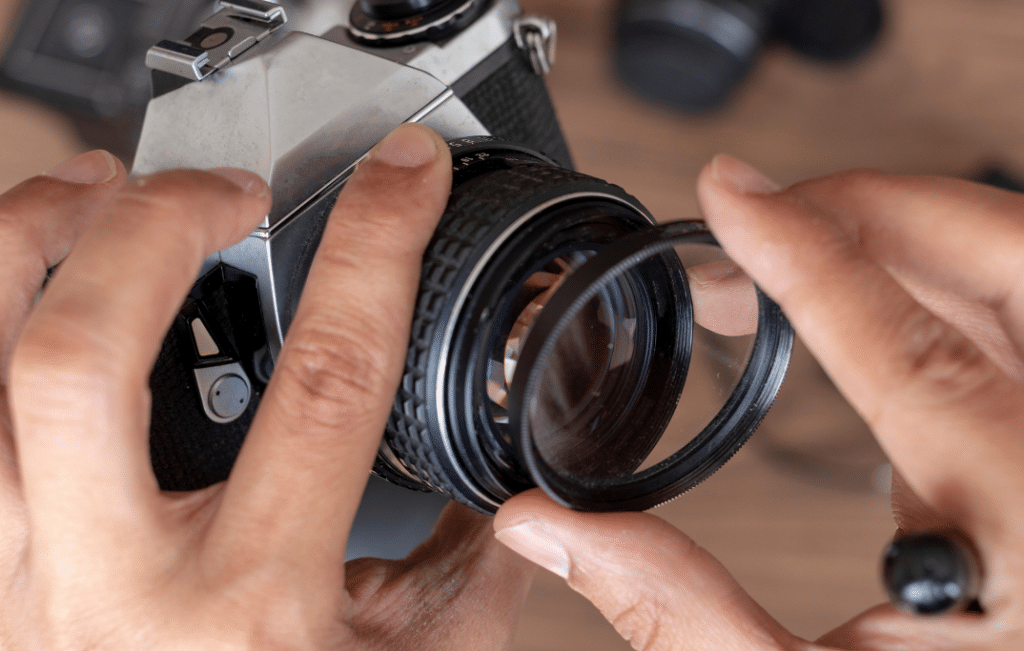
First things first – what the heck is a lens filter? Your new best friend, that’s what. Lens filters have a variety of different functions that will help you step up your photography game in a big way.
Protect The Lens
If nothing else, lens filters help protect the front element glass on your lens. And, because lenses can cost thousands, keeping the glass scratch free is a big deal. That’s why the first thing I purchase when I get a new lens is a filter. It offers the peace of mind that comes from knowing your investment is protected.
Enhance Images
Filters can help you achieve more color and drama in your photos. Plus, certain filters can help you enhance your images with special effects like light bursts and even macro photography!
Allow For Longer Exposures
Depending on the type of filter you’re using, they can also help you slow down your exposure (even in daylight) so you can capture movement within the frame.
Types of Lens Filters
Now that I have you sufficiently jazzed up about using filters, let’s delve into the different types of filters and what each of them is used for.
Ultra Violet (UV) Filters
Ultra Violet (or UV) Filters help protect the front element of your lens from nicks, scratches, dust, and moisture that can not only ruin a good photo, but also destroy your lens. In addition, they help block some of the UV light coming into your lens to minimize haze.
As the first line of defense in protecting your lens’ glass, you want to make sure your UV filter is high quality so it’s durable without downgrading the quality of your photos.
I have one of these on every lens I own. I highly suggest you do the same!
USED FOR: All types of photography
Polarizing Filters
Polarizing Filters are essentially awesome pairs of sunglasses for your lens. They help reduce glare, darken the sky a bit, and help bring out colors that are otherwise lost in the brightness of day.
Essentially, think about how the world looks when you slip on a pair of polarizing sunglasses. Yup, it’s just like that for your camera.
USED FOR: All types of photography (especially landscape)
Color Correcting Filters
For anyone who wants to skip the extra step of adjusting the tint in photos during editing, Color Correcting Filters are a great way to go. When using them, you can warm or cool the tone of an image to help enhance the mood you’re trying to achieve.
For example, I hate how indoor photos always tend to lean on the yellowish side. To combat that issue, I can use a cooling filter to help mitigate the yellows and bring out more whites and blues in the image.
USED FOR: All types of photography
Neutral Density (ND) Filters
Ah, Neutral Density Filters. My favorite types of lens filters! Neutral Density (or ND) Filters use darkened glass to cut down the amount of light reaching your sensor. And, they come in many different forms: regular ND filters, graduated ND filters, and variable ND filters. But more on those in a minute!
So, why would you want less light hitting your camera’s sensor? Slower shutter speeds!
Using an ND filter, you can shoot with reduced shutter speeds without overexposing your image. This allows you to catch movement (such as water flowing, traffic driving, etc) even during the daytime! And, because they come in many different shades, you can purchase one according to how long of a shutter speed (or how many stops) you need.
Of course, slower shutter speeds mean you need to keep your camera steady. So, I always suggest using a tripod to avoid shake.
USED FOR: Long exposure, landscape, street, and flash photography
Graduated ND Filters
Graduated ND Filters transition between dark and clear glass within the filter. That’s useful when shooting scenes where you want to regulate the light in a certain area of your frame but not another (such as light from the sky with a darker foreground). In that case, the top half of the graduated ND filter is darker and then transitions to clear glass at the bottom.
In addition to keeping the sky in your photos from being too bright, you can also find graduated ND filters meant specifically for sunrises and sunsets! They feature darker glass in the middle to help cut down the brightness of the sun on the horizon, while the top and bottom of the filters remain clear to avoid losing detail in the sky and foreground. Brilliant!
USED FOR: Landscape photography (especially during sunrise or sunset)
Variable ND Filters
Finally, there are Variable ND Filters. These are essentially ND filters with two pieces of polarizing glass placed opposite each other such that, when twisted, they adjust the tint of the entire filter. It’s like magic!
These are awesome if you’re not sure how long of a shutter speed you’re going to need, or when lighting conditions may change and you want to avoid switching out filters in the field. And, their ability to go from light to dark makes these filters exceptionally versatile!
But, such versatility comes with drawbacks. Since variable ND filters work off of polarizing glass, they can create unwanted rainbow effects when shooting water or computer screens. Additionally, the darker the ND filter goes, the greater the chances of a shadowed cross pattern emerging in your image (especially when shooting with a wide-angle lens). So, while they’re extremely convenient, they do have their disadvantages.
USED FOR: Long exposure and landscape photography when you need versatility
Before You Buy
Much like anything else you purchase, there are different price points when it comes to lens filters. And, it’s only human to want to save money and get one on the cheaper end of the spectrum.
Don’t!
Sure, you can find lens filters for a steal, but you get what you pay for. The quality of the glass is vastly different, which means the quality of the resulting photos will be too. And, why would you want to spend good money for an amazing lens only to throw a sub-par filter over it?
Cheap will inevitably lower the quality of your photos.
When choosing a filter, it pays to go with a trusted brand that offers superior quality glass. Not only does it mean you’re getting a more durable filter, it also means your lens’ performance won’t be hampered. A few brands I love are ProMaster (which is what I shoot with), K&F, and B+W.

So, if you’re looking to step up your photography or videography game, then try out some of these different types of lens filters! Not only will they help enhance your images, they will also make shooting a whole lot more fun!
You May Also Like:
» 3 Simple Basics of Photography
» Beginner’s Guide to Editing in Lightroom
» 10 Tips For Better Photography Composition


Leave a Reply