
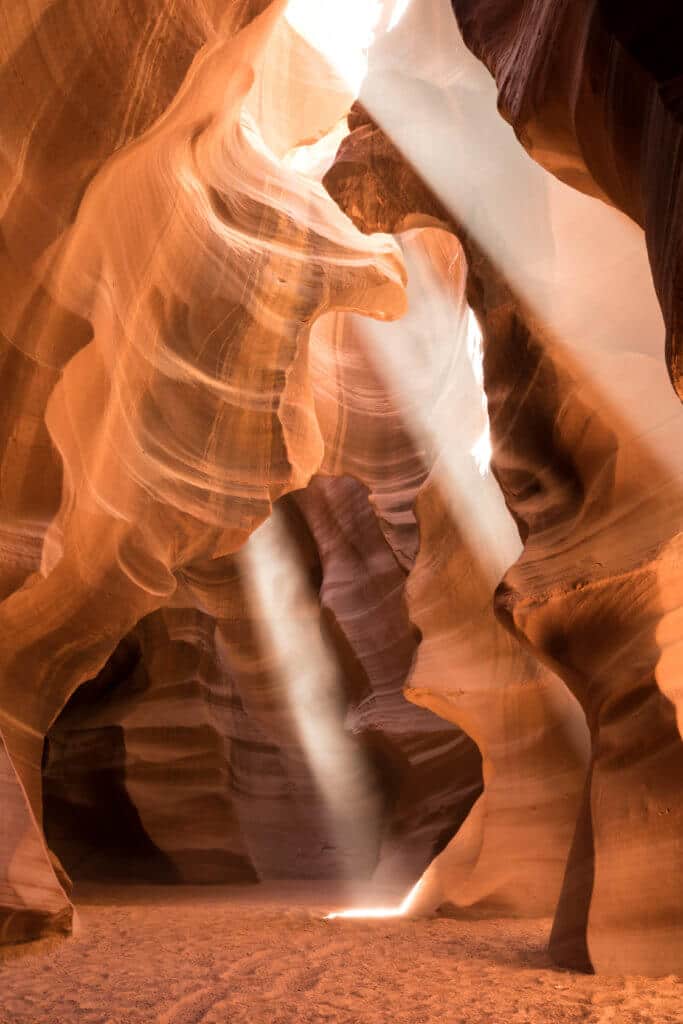
 Antelope Canyon. If you’ve ever seen pictures of the American southwest, then chances are you’ve seen shots of this stunning natural wonder. Its beams of light and multi-hued walls seem almost otherworldly.
And like many other photography enthusiasts, being able to photograph Antelope Canyon had long been on my bucket list.
But capturing the picture-perfect shots you see of the canyon is much trickier than you’d think. From picking the right tour to using the correct camera settings, here’s what you need to know before visiting Antelope Canyon.
Antelope Canyon
Located just outside Page, Arizona, Antelope Canyon is arguably the most recognizable slot canyon in the world. Formed by floods through the Navajo sandstone, the canyon is split into two sections: Upper Antelope Canyon and Lower Antelope Canyon. Both are located on a Navajo tribal park, which has required a tour for access since 1997. More on the tour options in a minute. First, let’s talk about the difference between the two canyon sections.
Upper Antelope Canyon
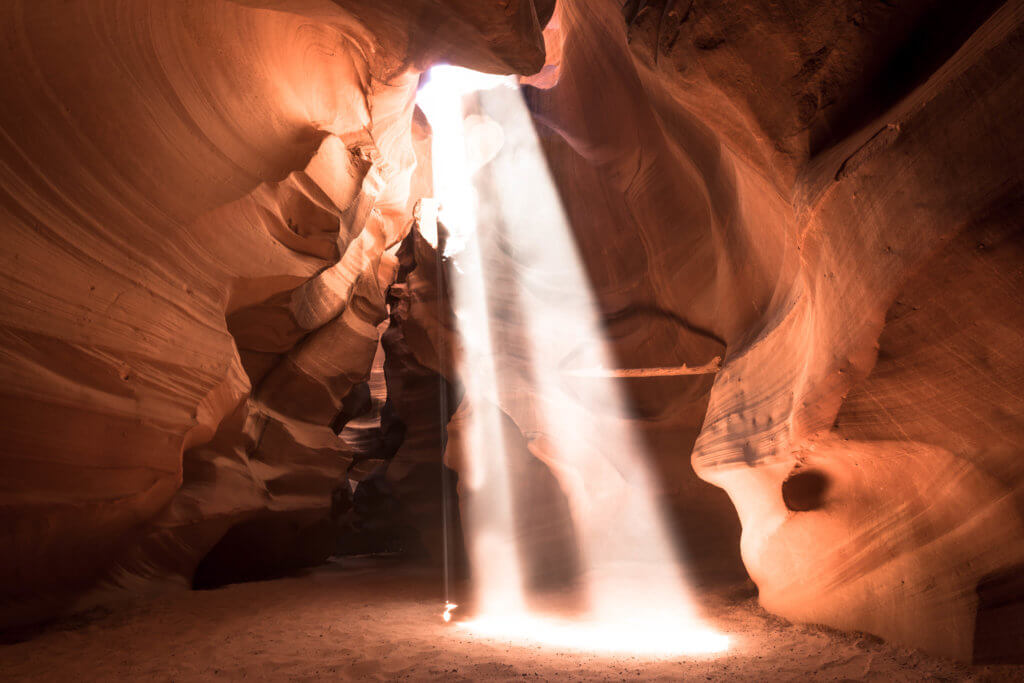
Upper Antelope Canyon, or Tsé bighánílíní in Navajo (meaning “the place where water runs through the rocks”), is the most photographed of the two sections. This is because Upper Antelope Canyon tends to have more dramatic beams of light, which peak between mid-March and early October.
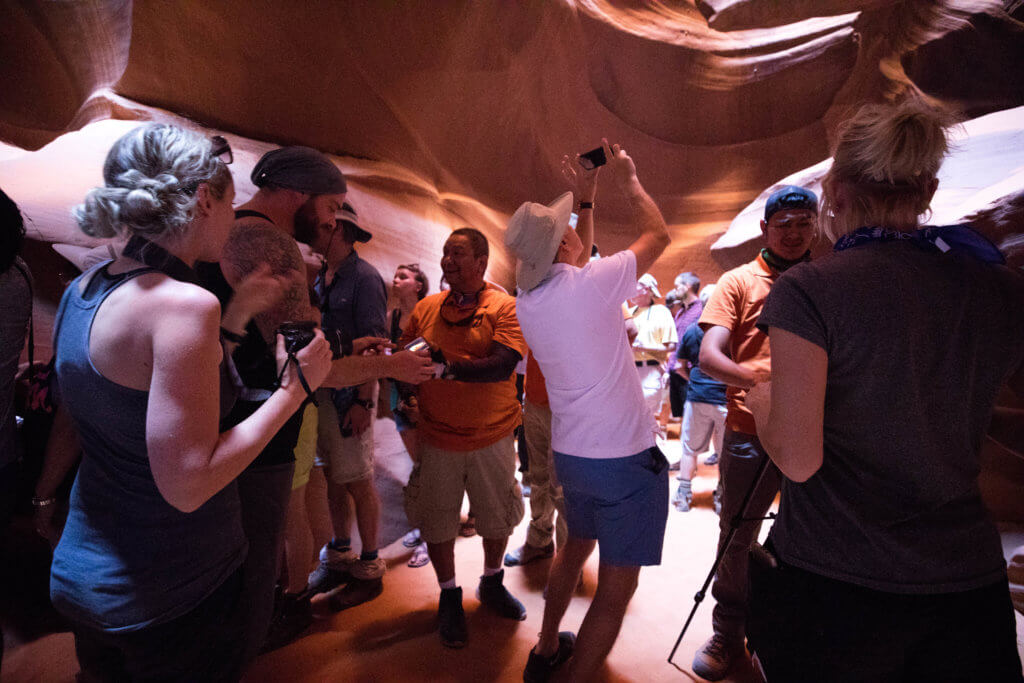
The entrance is on ground level, so exploring Upper Antelope Canyon requires no climbing. However, with ease of access comes crowds. Lots of them. And because Upper Antelope Canyon is only 300 feet long and has people both coming and going, it’s not uncommon to have upwards of 100+ visitors at one time. A nightmare for anyone with claustrophobia!
Still, if you know how to book the right tour, Upper Antelope Canyon’s beauty is well worth the chaos (as you’ll see in photos from my recent visit).
Lower Antelope Canyon
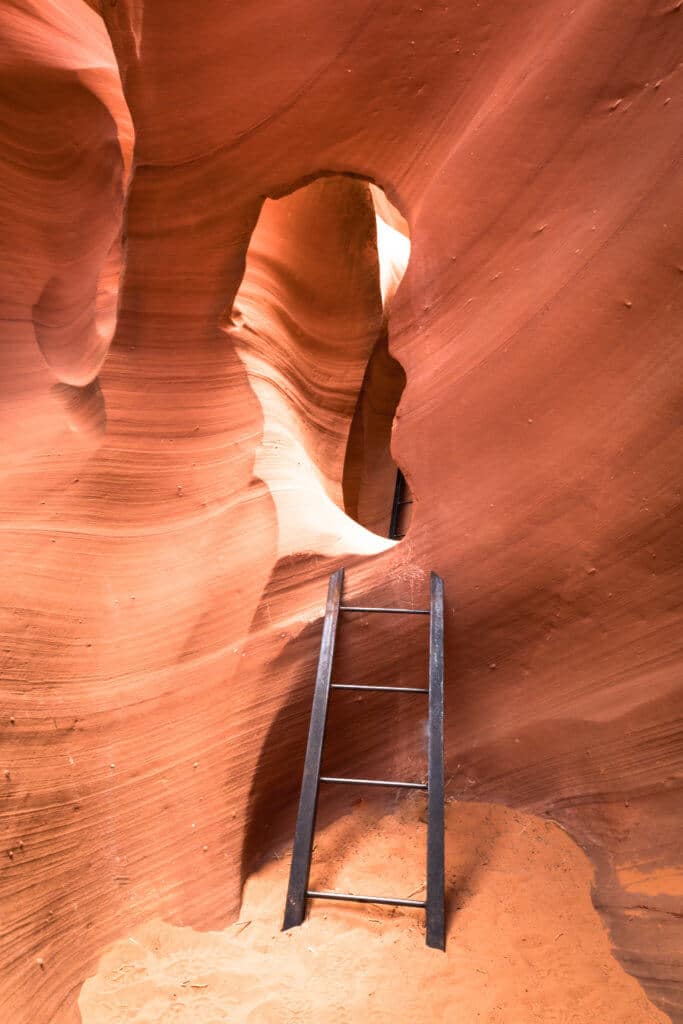
Lower Antelope Canyon, or Hazdistazí (meaning “spiral rock arches” in Navajo) is a little more cumbersome to visit. Its walls are much closer together, and access requires climbing down and back up a series of metal stairs. It’s important to note that because of falling sand, the stairs can be a bit slick (so watch your step!)
Because the canyon is so narrow in certain areas, visitors must enter at one end and exit another. This traffic limitation coupled with somewhat precarious access really helps control crowds. Consequently, the Lower Antelope is far less busy and offers the chance to photograph Antelope Canyon without wrangling hoards of tourists.


Picking The Right Tour
Because you’re unable to access either Upper or Lower Antelope Canyon without a guide, there are several companies that now offer tours. But which one’s right for you? Do you want to visit during the day? Or at night? Are you simply wanting to drink in the beauty of the canyon? Or are you hoping to capture it with a few epic shots? Are you ok with crowds? What about moderate physical activity?
There’s a lot to consider before you book!
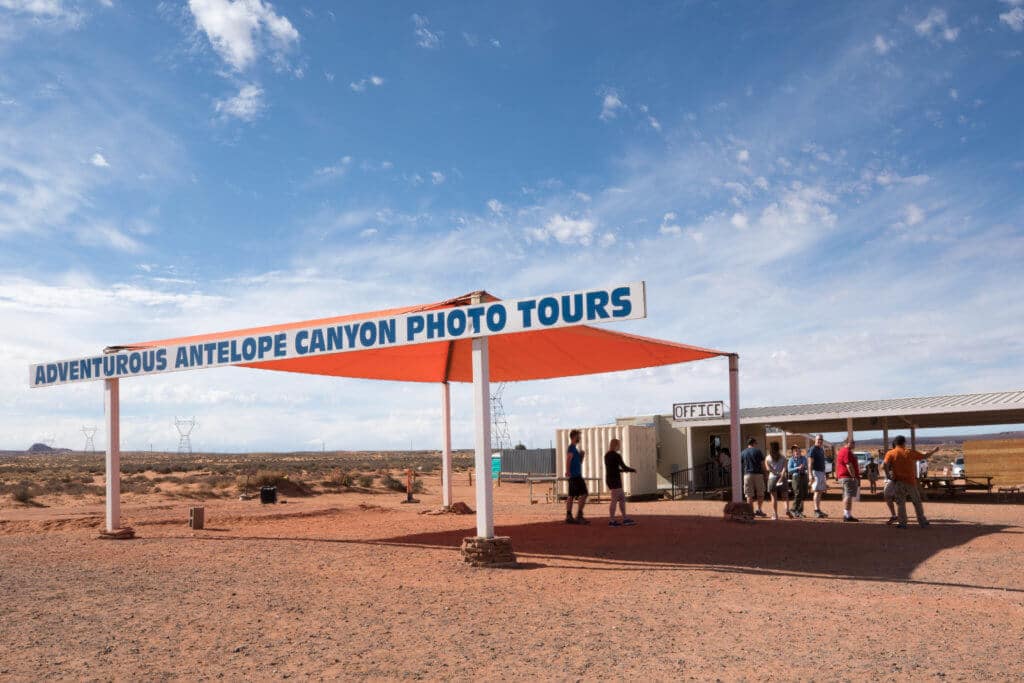
I did a lot of research on tour companies until I found one that fit my needs: Adventurous Antelope Canyon Photo Tours (AACPT). Located on US Highway 98 at mile marker 302, AACPT is a convenient 10-minute drive from Page. Not only do they offer small group tours, but they’re also the only company that has private access to three other slot canyons! Jackpot!
Photography Tours
My main focus was to photograph Antelope Canyon. Consequently, I chose to book a photography tour so I had the best chance at achieving the shots I wanted.
And boy am I glad I paid extra for it! Antelope Canyon is wall to wall people, and without the tour guides shuffling visitors out of the shot, I would have left disappointed. With a photography tour, visitors are able to capture the beauty of the canyon without a sea of people in the way.
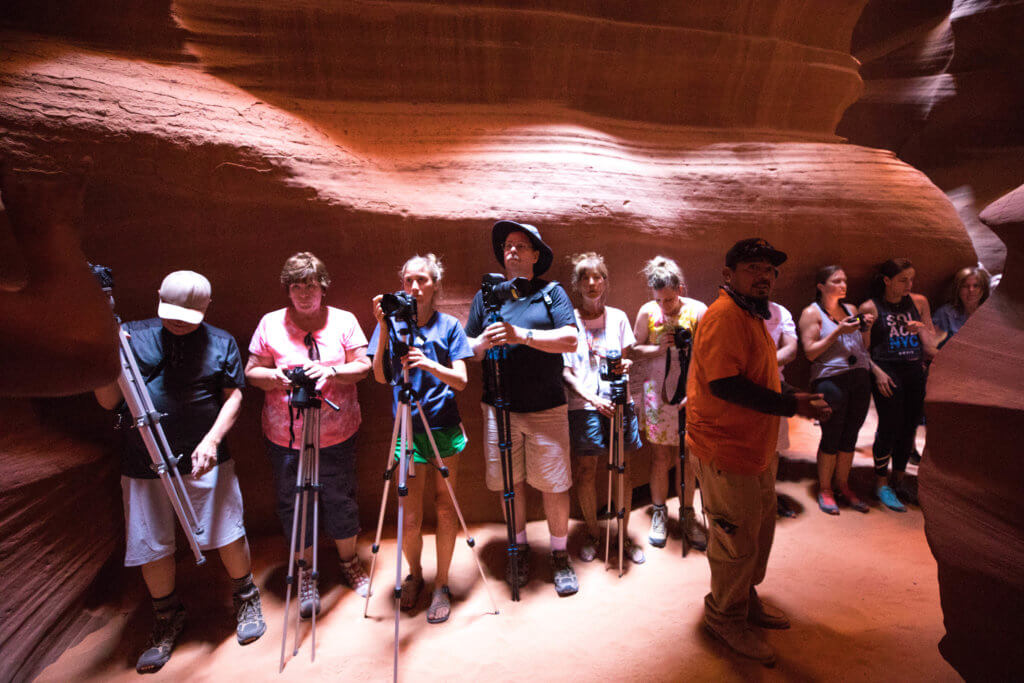
Areas of the canyon are hastily cleared of tourists while photography groups tweaked their camera settings. After, photographers are lined up and given two minutes to shoot each chamber without the threat of photobombs. It’s a bit of a fire drill, but it’s by far the best option to photograph Upper Antelope Canyon.
In addition to wrangling tourists out of the way, the photography tour guides offered suggestions on the best camera settings, as well as background on the canyon and its history. It’s a well-rounded tour that’s well worth the cost.
You can find the available options and times for photography tours here.
Requirements
Certain photography tours require each visitor to have their own DSLR, SLR or mirrorless camera and full-size tripod. No tag-alongs, no exceptions. However, if you have children or some non-photographers with you, there are also photography tours available that require only one DSLR camera and tripod for your group.
Sightseeing Tours
If you lack the desire to photograph Antelope Canyon and prefer to simply enjoy its beauty, you can do that too! Adventurous Antelope Canyon Photo Tours offers a variety of sightseeing options to experience this gem of the American southwest. And because they have access to three other slot canyons, you can add one or more of those on to your Antelope Canyon tour (which I highly recommend! More on that later…)
You can find the available tour options and times for those here.
Night Tours
Surprisingly, some of the most beautiful shots of Antelope Canyon are achieved at night. The canyon walls are illuminated with glowing paper sacks, which creates a dazzling ambiance. The light glistens off the sandstone like millions of tiny crystals in a way you can’t experience during the day. Not surprisingly, some visitors find it the perfect atmosphere for a dramatic wedding proposal.
Tips for Photography
Photographing Antelope Canyon can be tricky, to say the least. So, to make the most of your time in the canyon, there are a few things to know before your tour.
The Right Lens
A wide-angle lens is a must when you photograph Antelope Canyon. Passages are narrow so capturing the impressive detail of the canyon’s interior is nearly impossible without one. I shot on my Canon 16-35mm f/2.8L (mounted on my full-frame Canon 5D Mark IV) and was thrilled with the results! If you have a crop-frame camera, I suggest the Canon 10-22mm f/3.5-4.5 to achieve a similar range.
Capturing Light Beams
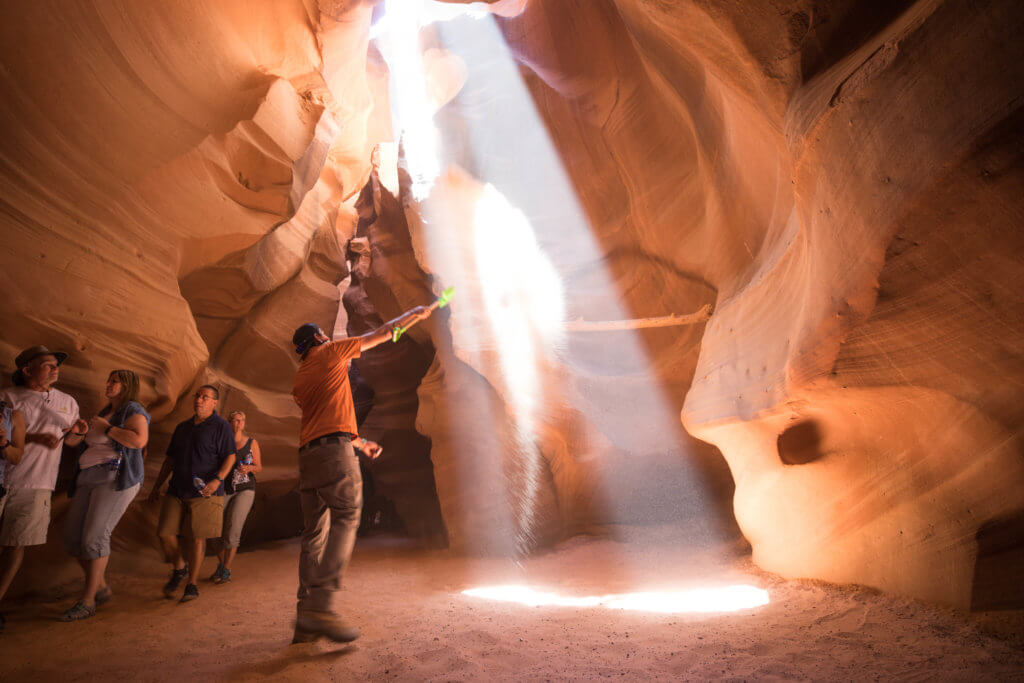
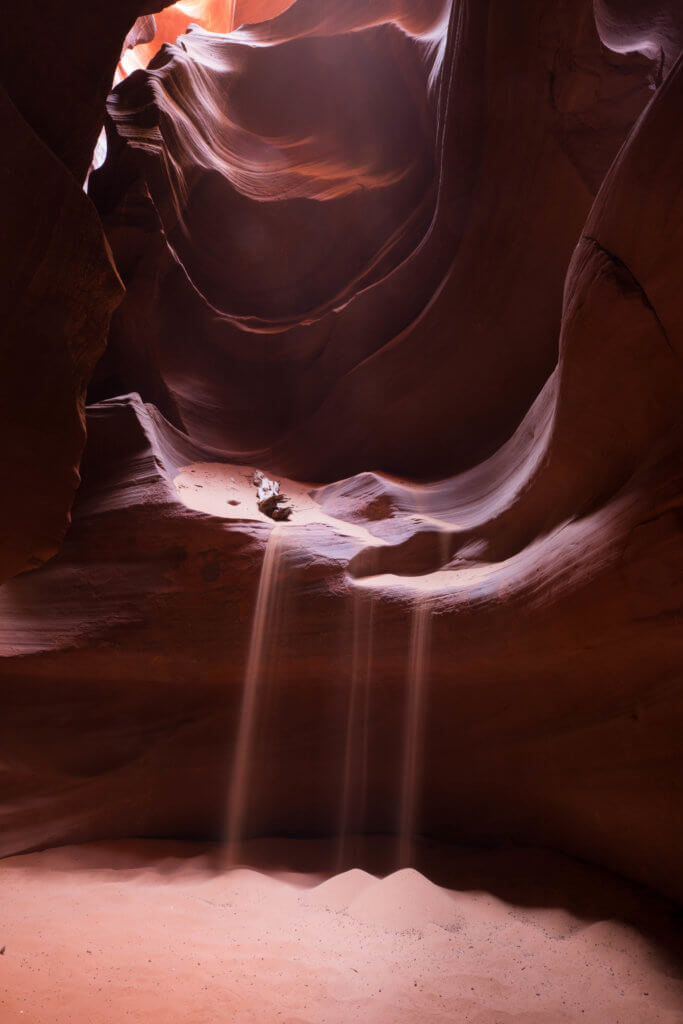
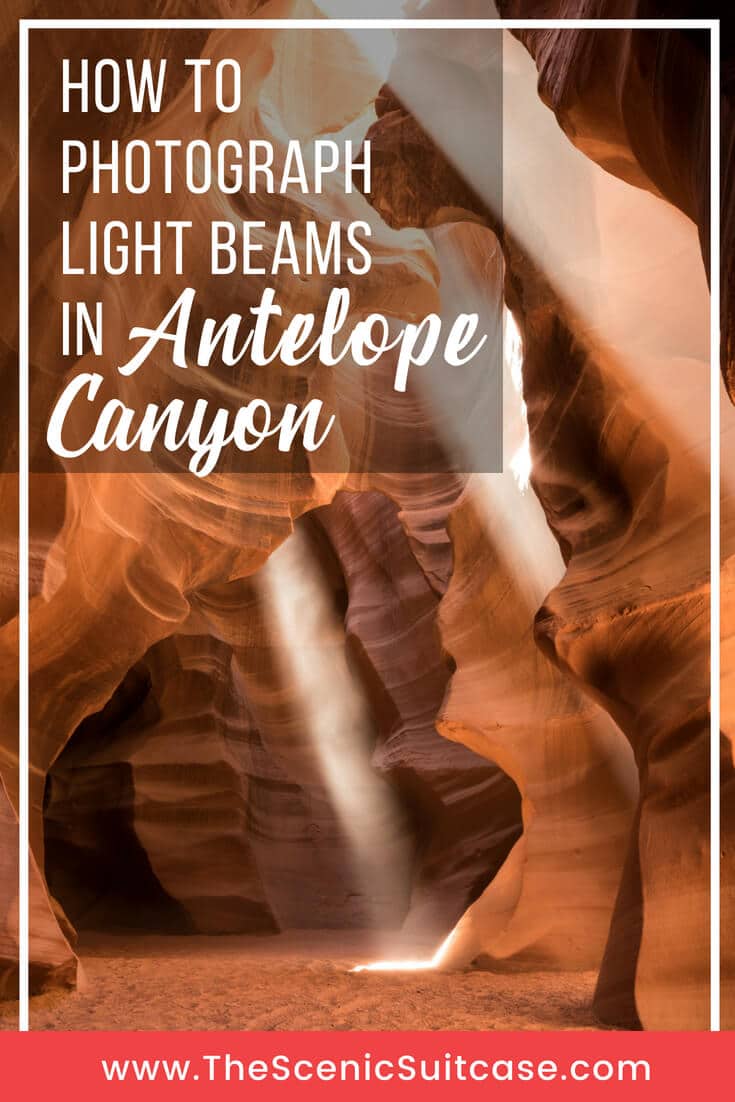
The most well-known feature of Antelope Canyon is its impressive light beams. The secret to capturing the heavenly light? Sand! The beams are made more intense by throwing fine sand from the canyon floor into the air. When you book a photography tour, your guides will handle this for you while you happily snap away.
Expert Tip
While the fine sand enhances the beams, it also does a number on your camera. To avoid a layer of dust on your lens (which can ruin your shots) bring a lens blower, brush, or microfiber cloth with you and use it after every few shots. This will keep your glass clean and your photos clear.
Shutter Speed
Bright sunlight contends with dark passages throughout the canyon, so lighting is a challenge. In order to keep your ISO as low as possible (I kept mine at 100), you’ll want to lower your shutter speed. This is where your tripod comes in handy! I set my shutter speed between 25/10 seconds and 16/10 seconds for shots of the canyon interior, and 30/1 second to capture the falling sand.
Helpful Hint
If you’re not quite sure what most of that means, check out my post on The 3 Simple Basics For How To Use A DSLR Camera.
Don’t Forget To Look Up!
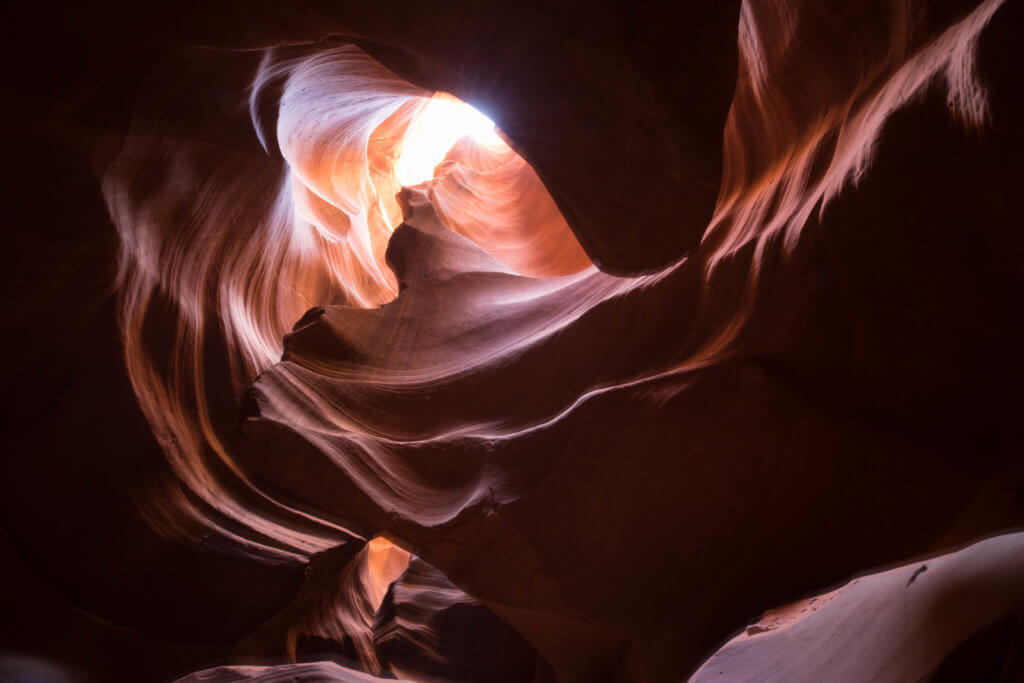
Some of the most incredible rock formations are right over your head. So as you’re taking photos of the canyon, don’t forget to point your camera up every now and then!
Know Before You Go
A few other things to be aware of when visiting Antelope Canyon to avoid any unwelcome surprises:
- Like any other slot canyon, Antelope Canyon is susceptible to flash flooding. Consequently, if there are storms in the area tours may be canceled for your safety.
- Because Antelope Canyon is so narrow, belongings are not allowed inside. This includes camera bags, purses, fanny packs, etc. The reason is the sandstone walls are soft and the canyon is crowded, so bags scraping would destroy the interior. As a result, I suggest wearing pants with pockets big enough to store your valuables (credit cards, passport, etc) and be prepared to leave the rest in your car or the tour vehicle.
- Antelope Canyon and the surrounding slot canyons are home to spiders, snakes, owls, and other wildlife. While seeing them inside isn’t a guarantee, it’s also not uncommon. Rest assured your guide will remove any snakes that may be poisonous, but be aware and respectful of their home.
- The floor of Antelope Canyon is sandy and sometimes uneven. For this reason, wearing appropriate footwear like secure sandals or close-toed shoes is a good idea.
- Despite comfortable temperatures inside Antelope Canyon, it can get pretty toasty outside of it. So bring water with you in the vehicle to stay hydrated before and after the tour.
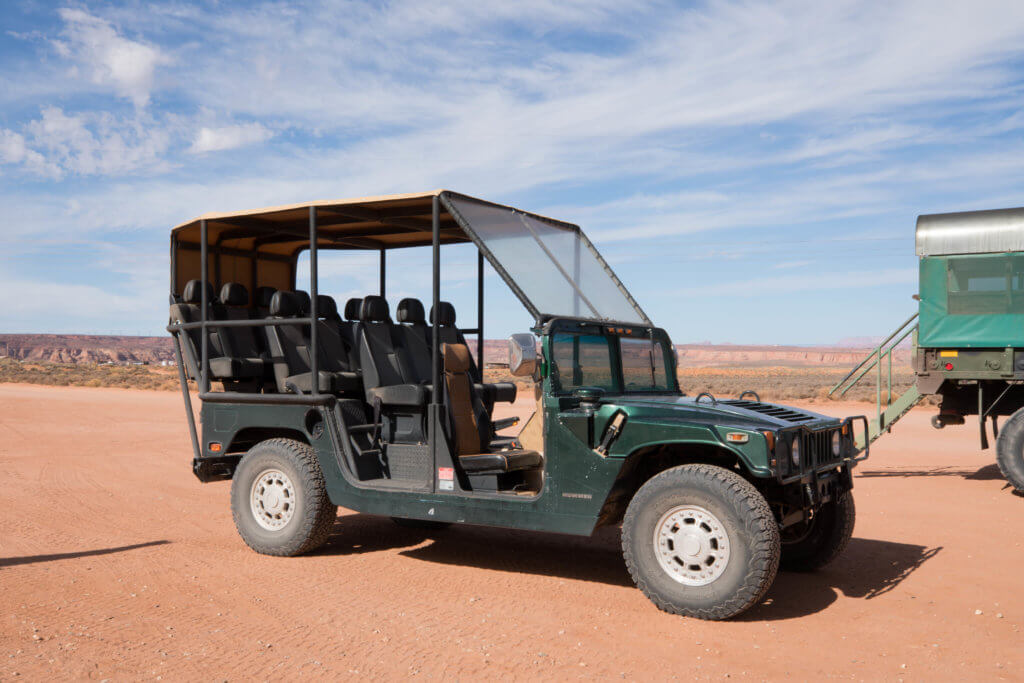
- To reach the entrance to Antelope Canyon, you must off-road in a tour vehicle through a dried-up creekbed. Driving there can get pretty bumpy (and dusty, if you’re in an open-air vehicle). It’s not bad, but just something to be aware of.
- Be prepared for lots of people. I know I’ve mentioned it before, but it bears repeating. There are multiple tour companies with multiple tour groups in the canyon during operating hours. This means the canyon can become a bit of a crowded mess, so know that going in. (This is why booking a photography tour is a must if you want any decent shots!)
Neighboring Slot Canyons
As I mentioned, Adventurous Antelope Canyon Photo Tours is the only tour company with access to three other private slot canyons when you book your Upper Antelope Canyon tour. Those include Rattlesnake Canyon, Owl Canyon, and Mountain Sheep Canyon.
I strongly suggest you add at least one of these (if not more) to your reservation!
While Antelope Canyon remains the crown jewel of the area, these other slot canyons have their own unique beauty. Plus, because they are exclusive to AACPT, they are far less crowded (giving you a more serene southwest experience).
I added Rattlesnake Canyon to my booking and was so glad I did! Because of a cancellation and no-show, my editor (the amazing Tenacious Gracious) and I were the only ones on our tour! And with only one other small tour group of four behind us, we felt we had the canyon all to ourselves. It allowed us to take our time, ask questions, and concentrate on getting the perfect shot.
And unlike Upper Antelope Canyon, the other slot canyons allow you the opportunity to be in some of your photos. So if you’re looking for the perfect shot of you exploring the narrow canyon walls, then booking one of these other tours is a must!


Being able to photograph Antelope Canyon is certainly a bucket list-worthy experience. Its striking beauty lives up to the hype and will not only leave you with gorgeous images but also an immense appreciation for nature as well.
So if you’re road-tripping through the American southwest, make sure to add Antelope Canyon to your itinerary! You won’t be disappointed!
NOTE: I was not compensated for writing about Adventurous Antelope Canyon Photo Tours. All views expressed are authentic based on my experience.
You May Also Like:
» Reasons To Visit The American Southwest
» A Local’s Guide to the Great Sand Dunes
» 10 National Parks To See Before You Die

Hello
Please let me know when you are open so I can reserve a photo tour ASAP. Thanks
Sherry Bell
ImagineSedona.com
928.204.1381
Snerry@sherryinsedona.com
I actually don’t run the tours, those are done through the tour company listed in the post. You can contact them here and they should be able to help! 🙂
https://www.navajoantelopecanyon.com/Contact.html