

There are countless reasons to visit Marrakesh. The alluring city entices visitors with fascinating culture, incredible architecture, and some of the most delectable cuisine in the world (not to mention mouth-watering mint tea!)
But, with so much to see and do, where should you start? Here are 10 highlights that are sure to make your Moroccan adventure a memorable one.
1. La Mamounia
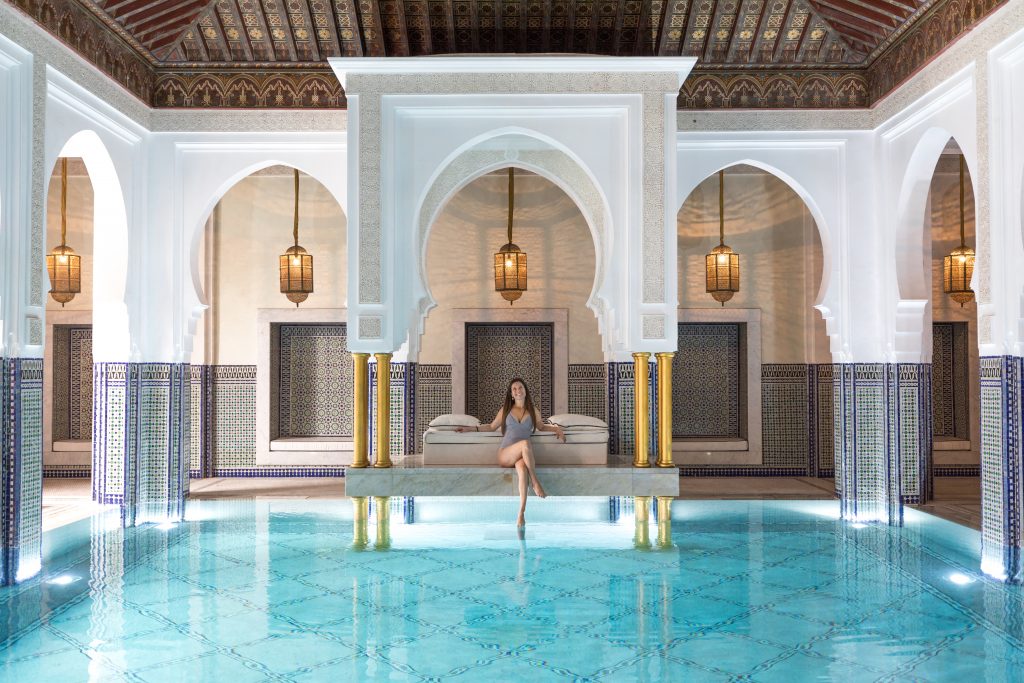
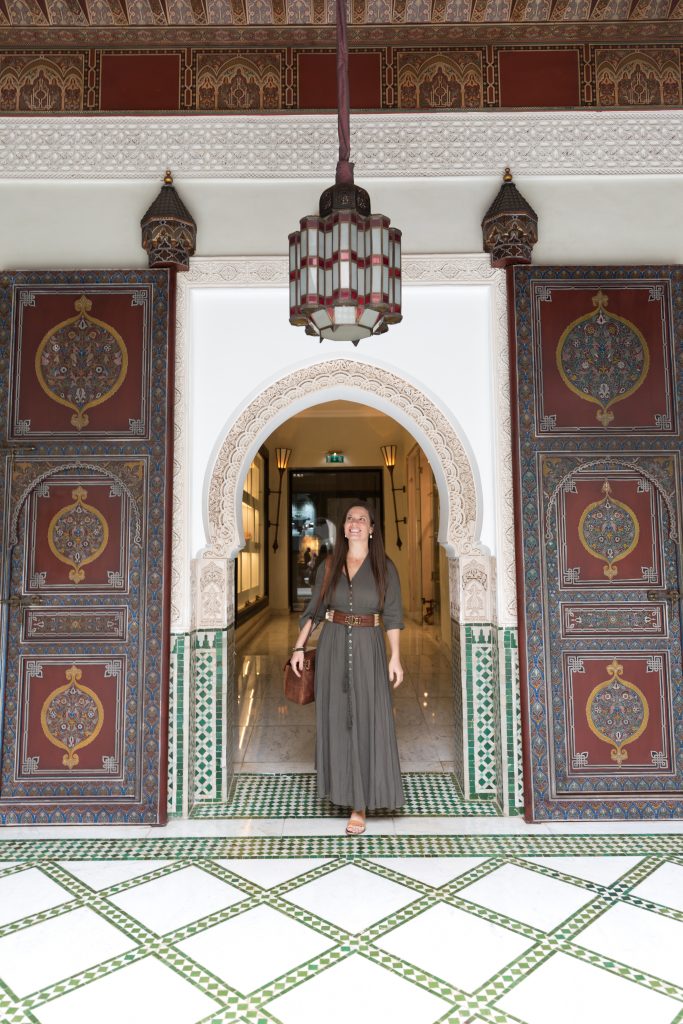
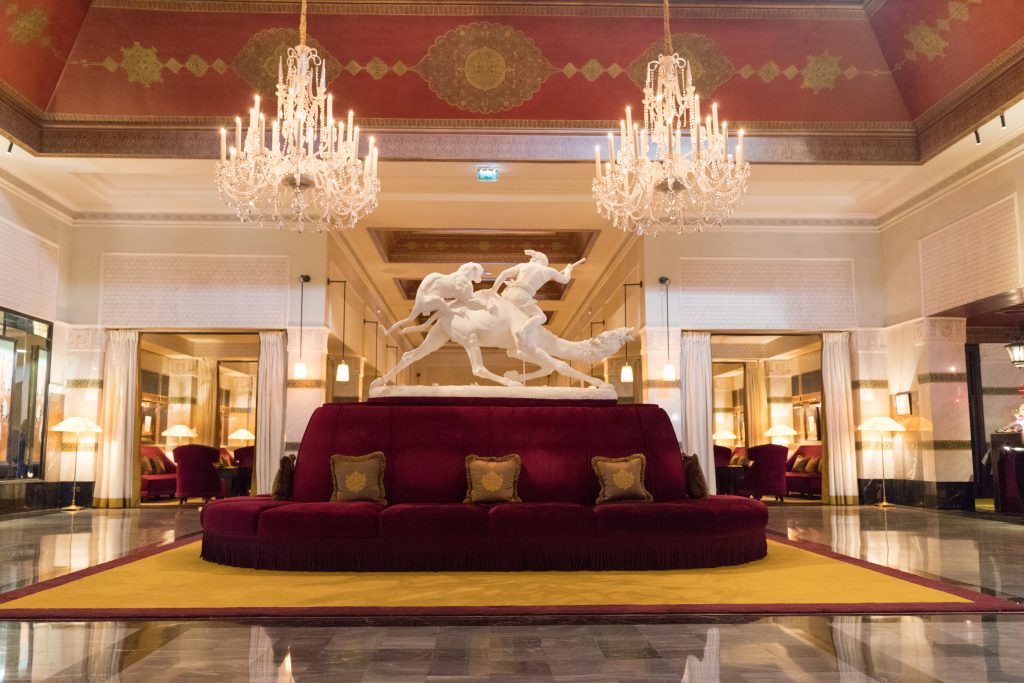
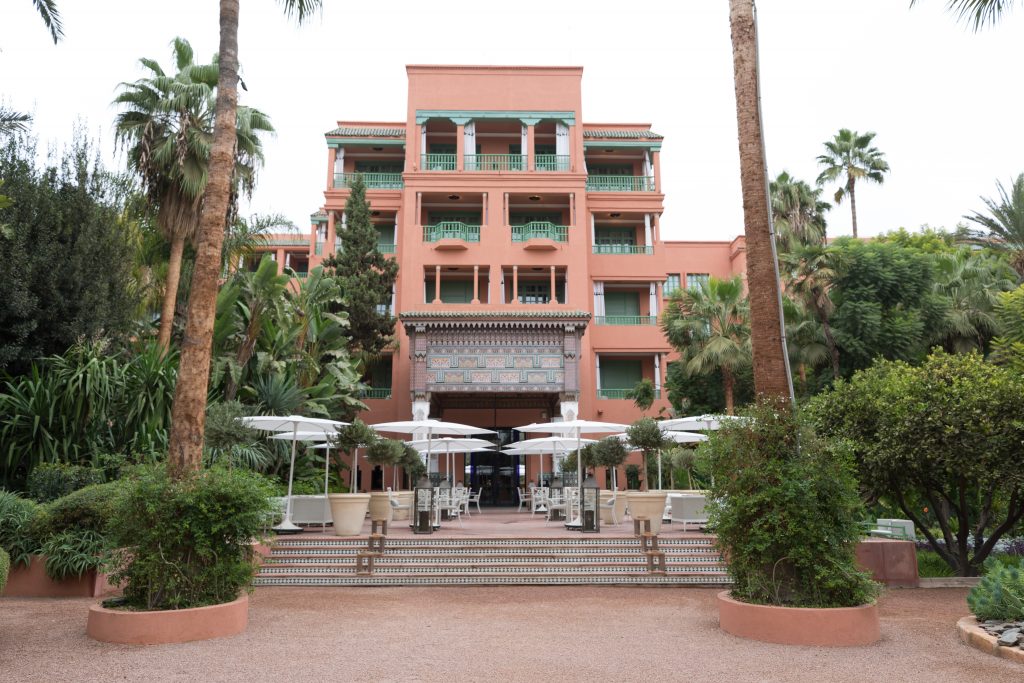
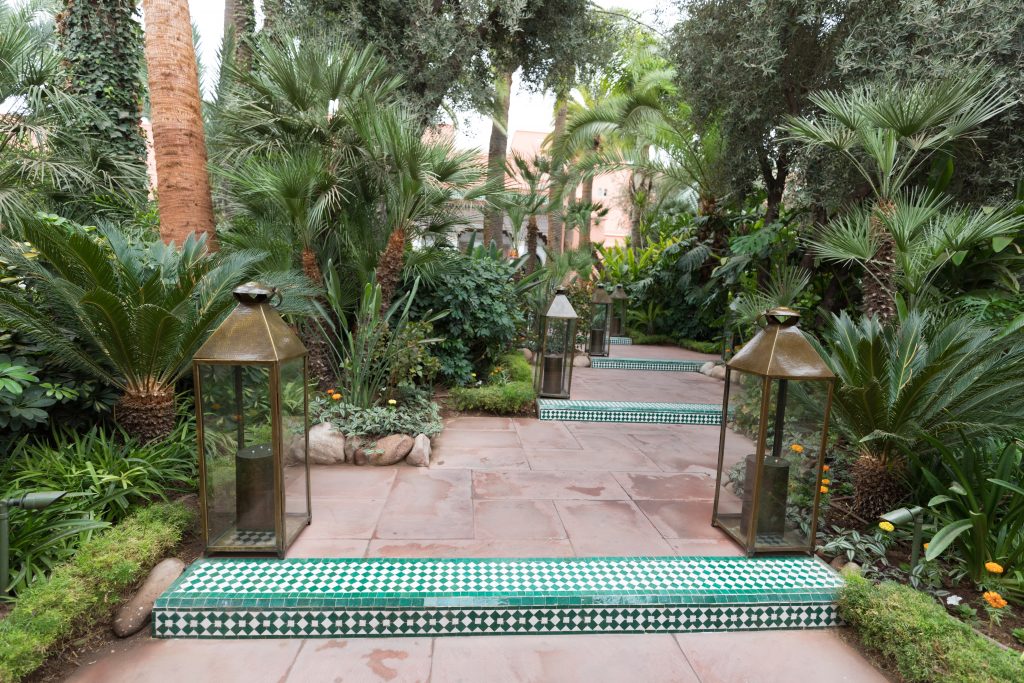
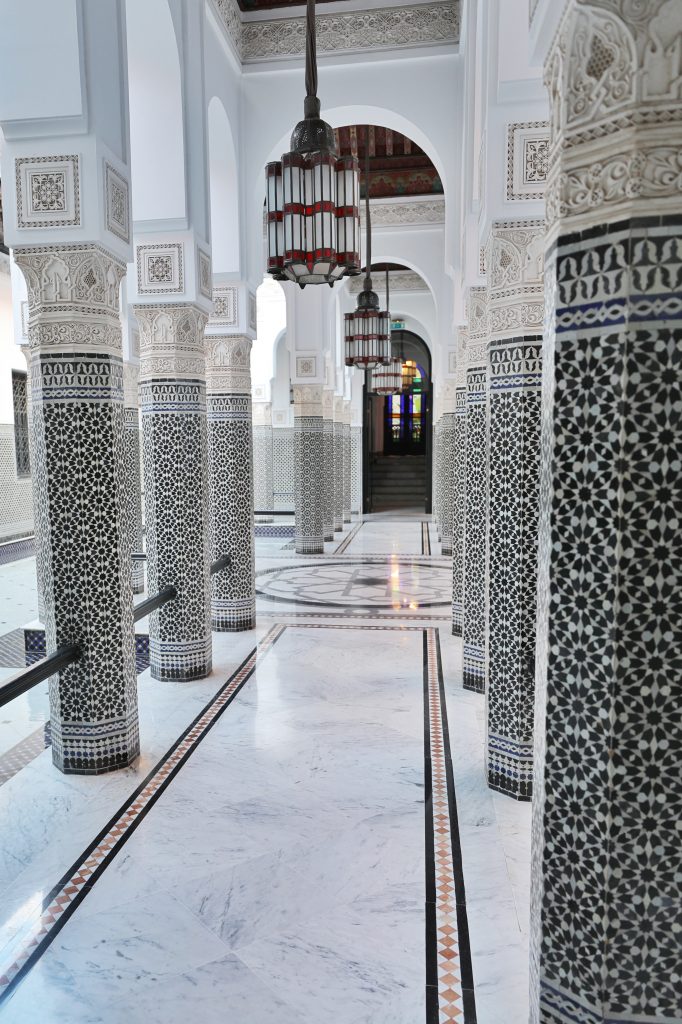
Arguably one of the most Insta-worthy locations in Marrakesh, La Mamounia has been recognized as the #1 Hotel In The World for good reason. The luxurious decor, sprawling grounds, and upscale clientele make you feel as if you’re walking through the set of a Bond film.
The five-star establishment also features four restaurants, two pools, multiple boutiques, lush gardens, an elegant casino, and a lavish spa.
While you’re there, don’t miss the chance to experience a traditional Hammam! I suggest booking a Season Pass, which grants you full access to the spa and pools, either a massage or Hammam treatment, and a buffet lunch. It’s a great option for those who want to see La Mamounia without the price tag that comes with booking a room.
Read all about my first hammam experience at La Mamounia here!

2. Bahia Palace
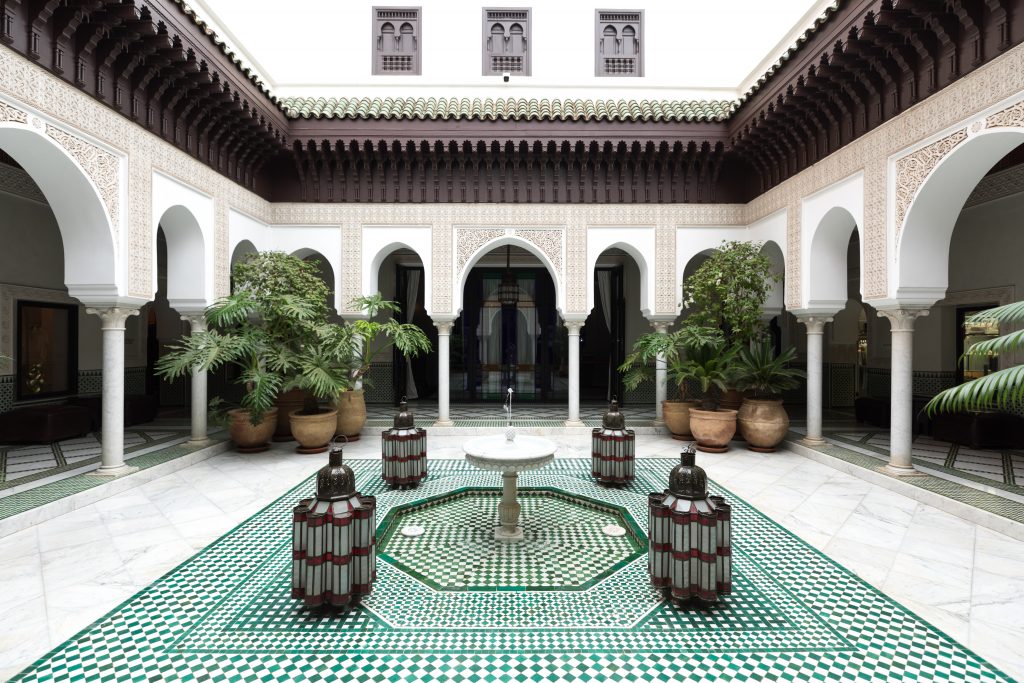
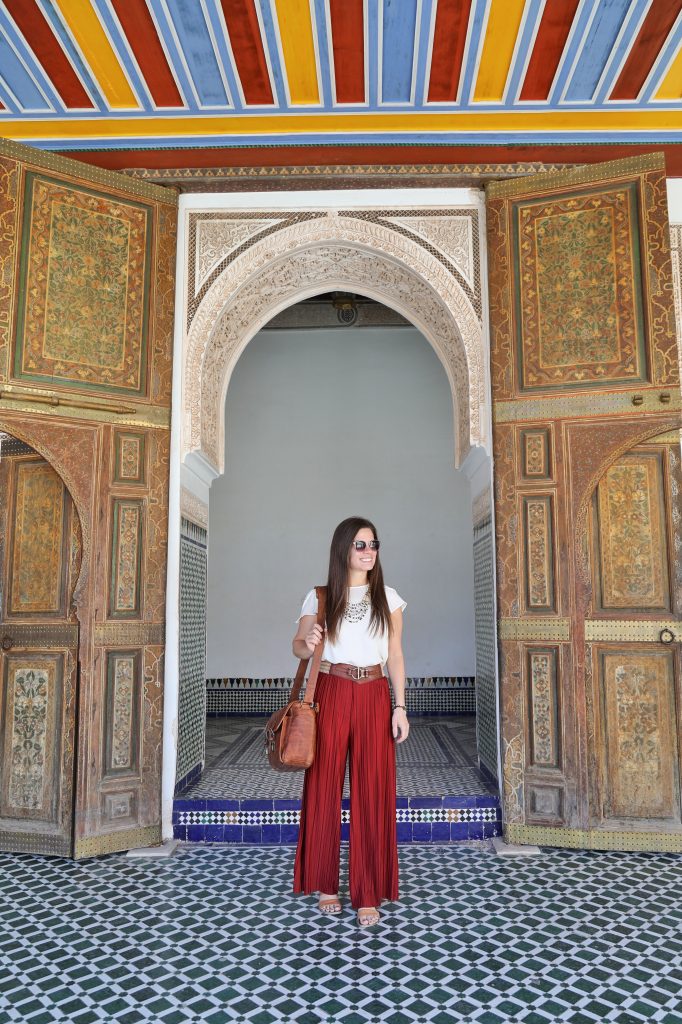
Built in the late 19th-century, the Bahia Palace was meant to be the greatest palace of its time. It was constructed for the personal use of Si Moussa Ba Ahmed, the grand vizier of the sultan. He lived here with his four wives, 24 concubines, and multiple children (talk about a full house!)
The grounds feature a 2-acre garden with rooms that open to elaborate courtyards and decor that embodies both Islamic and Moroccan styles. Visitors can explore the palace’s many rooms, several of which contain Moroccan art and history.

3. Jardin Majorelle
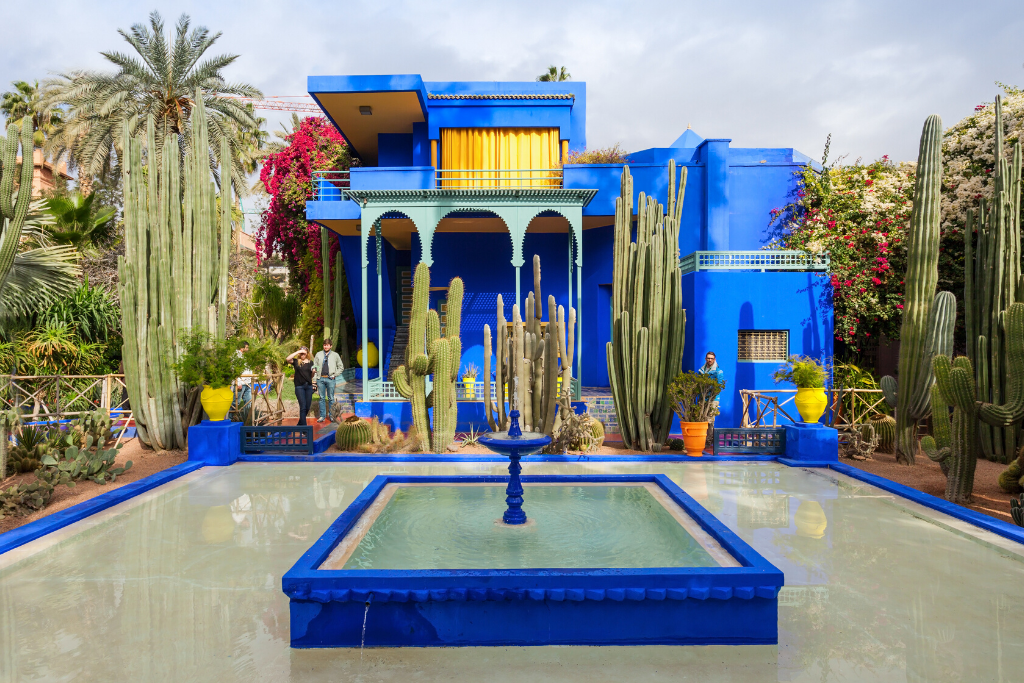
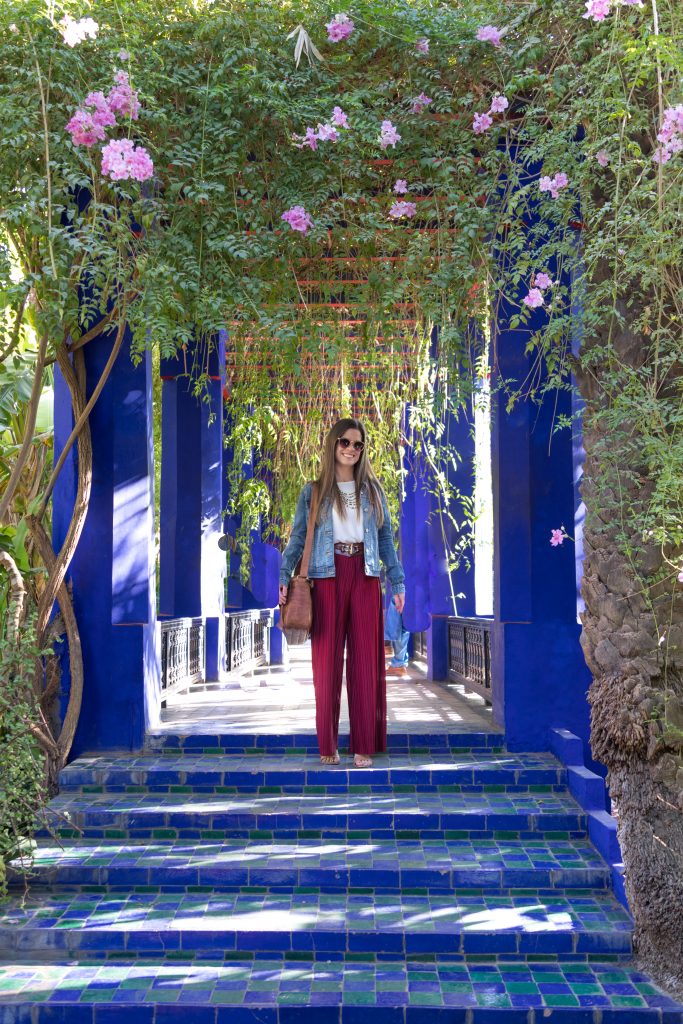
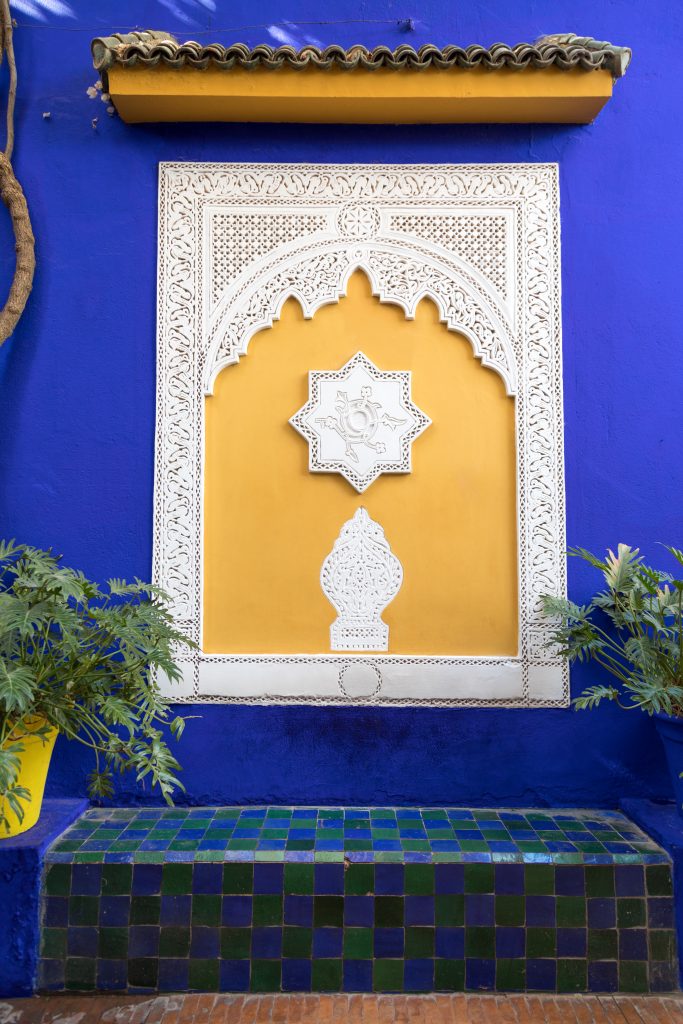
One of the most popular reasons to visit Marrakesh is a stroll through Jardin Majorelle. This 2.5-acre botanical garden and artist’s landscape is a refuge of calm inside the bustling city. It encompasses a bamboo forest, cactus gardens, banana trees, floral vines, water features, and a brilliant blue facade designed by French architect, Paul Sinoir.
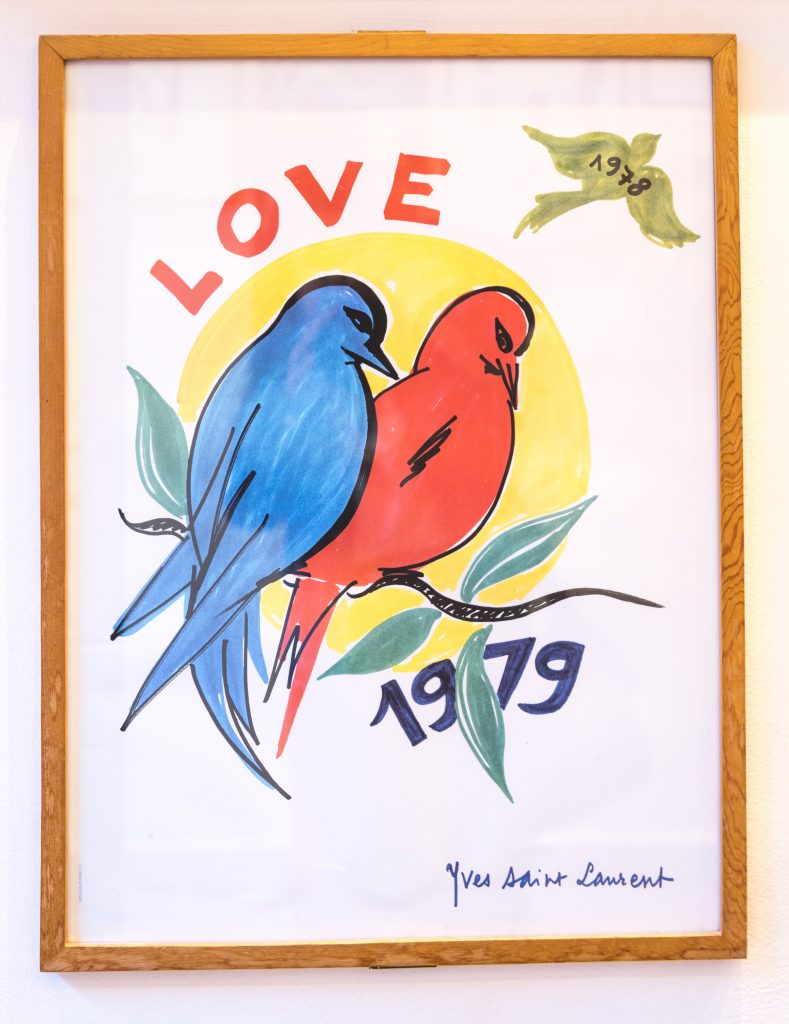
The space was built by French Orientalist artist Jacques Majorelle in 1923, who lived here with his wife until their divorce. The property was later purchased by fashion designers Yves Saint-Laurent and Pierre Bergé, who restored it to its former brilliance. Today, the grounds have a memorial to Yves Saint-Laurent as well as a museum that houses many of his artistic creations.
Because of the garden’s popularity, I suggest you purchase a ticket ahead of time to avoid the long entry line (which often wraps around the block!)

4. Koutoubia
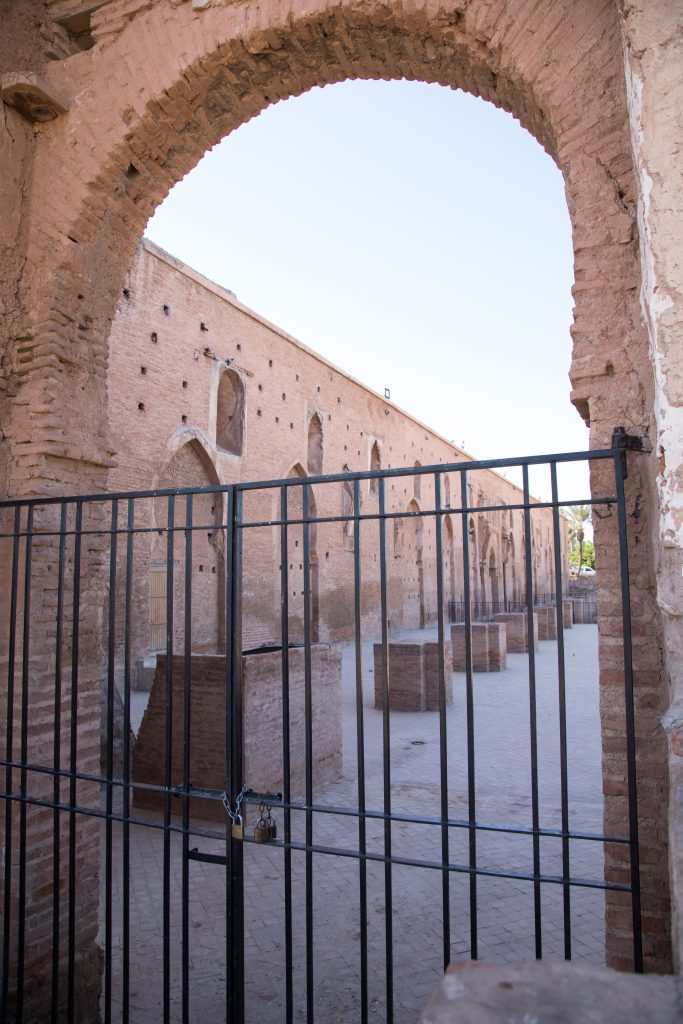
As the largest mosque in Marrakesh, Koutoubia is considered a symbol of the ancient city. Founded in 1147 by the Almohad caliph Abd al-Mu’min, it’s an impressive example of Almohad architecture. With an eye-catching tower that stands 252-feet high, it’s also the tallest building in Marrakesh (and visible from just about everywhere, so it’s a great point of reference as you wander the maze-like twists and turns of the medina!)
From the mosque’s minaret, the adhan (or ‘call to prayer’) is given five times a day by the muezzin (or ‘announcer’). Fajr occurs in the morning before sunrise, dhuhr at midday, ‘asr in the mid-afternoon, maghrib at sunset, and ‘isha at night.
By far one of my favorite memories of Marrakesh was the evening’s adhan. Sitting on the rooftop of the riad sipping mint tea and listening to it as the sun dipped below the horizon… it’s one of those magical moments in life that sticks with you long after your bags are unpacked.


5. Saaddien’s Tombs
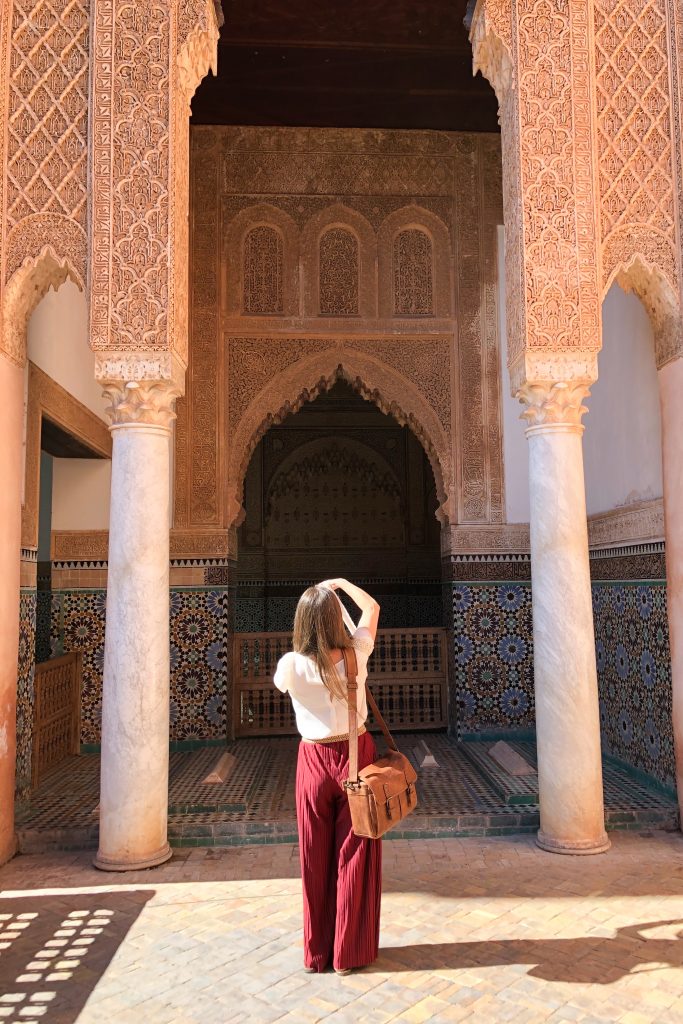
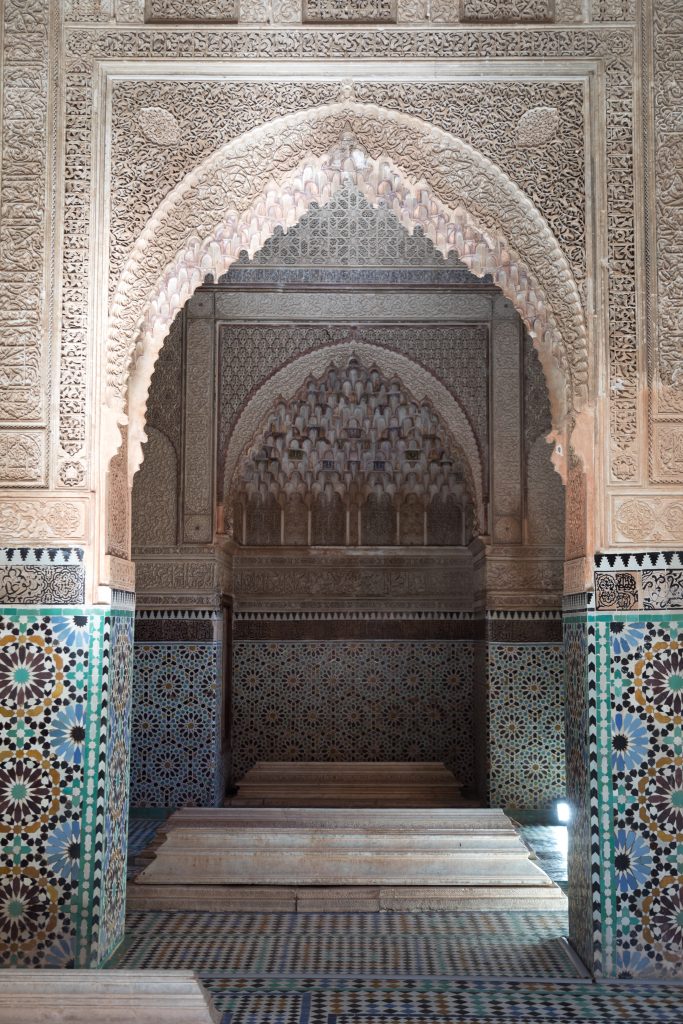
The Saadian Tombs are a historic necropolis containing the remains of important figures from the Saadi Dynasty between 1549 and 1659. However, when the dynasty fell the new ruler, Moulay Ismail, hid the tombs behind massive walls in an effort to erase the Saadi history. They remained there, forgotten for nearly two centuries until they were rediscovered in 1917. They were then restored to their former glory and put on display for locals and visitors alike.
Today, the tombs are guarded by stray cats and sluggish tortoises. They keep an eye on the tombs’ Italian marble, gold, plasterwork, woodwork, and tilework that draw thousands of visitors each year.
But, the impressive tombs come with an all-too-common drawback: long lines. And, while you may breeze through the ticket line, the line inside to see the main tomb is another story. It winds like a serpent around the grounds and is incredibly slow-moving. Therefore, I suggest arriving early to avoid the crowds.
And, while you’re there, mosey around the corner to see the decorative brick gate of Bab Agnaou. Built in the 12th-century, it was the entrance to the royal kasbah in the southern part of the medina. Up close, it’s an impressive sight to behold!


6. Palmeraie (Palm Grove)
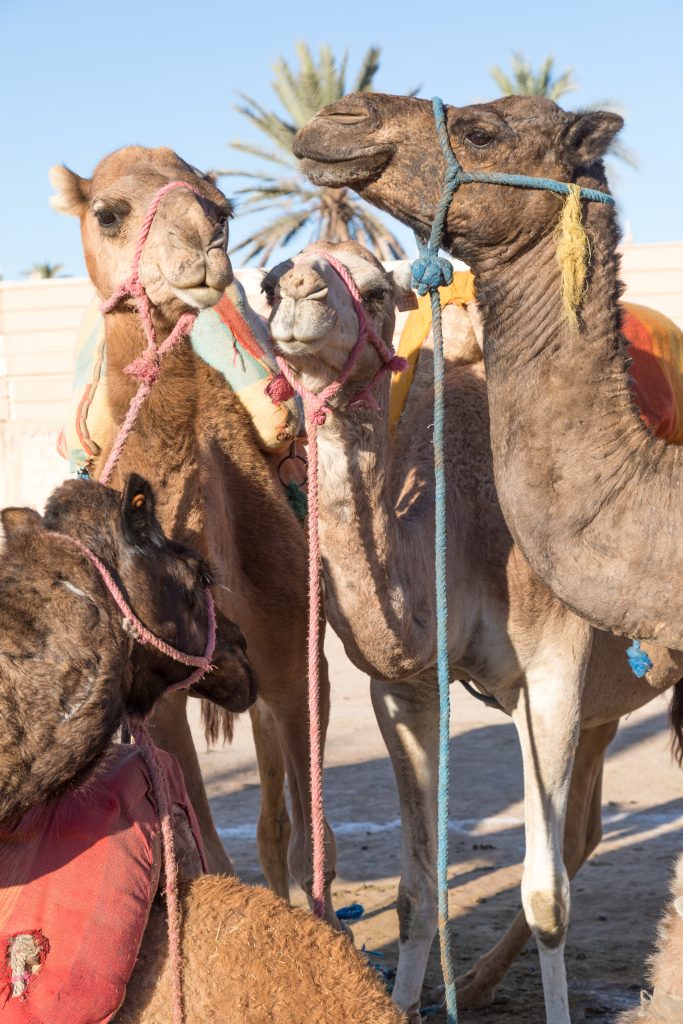
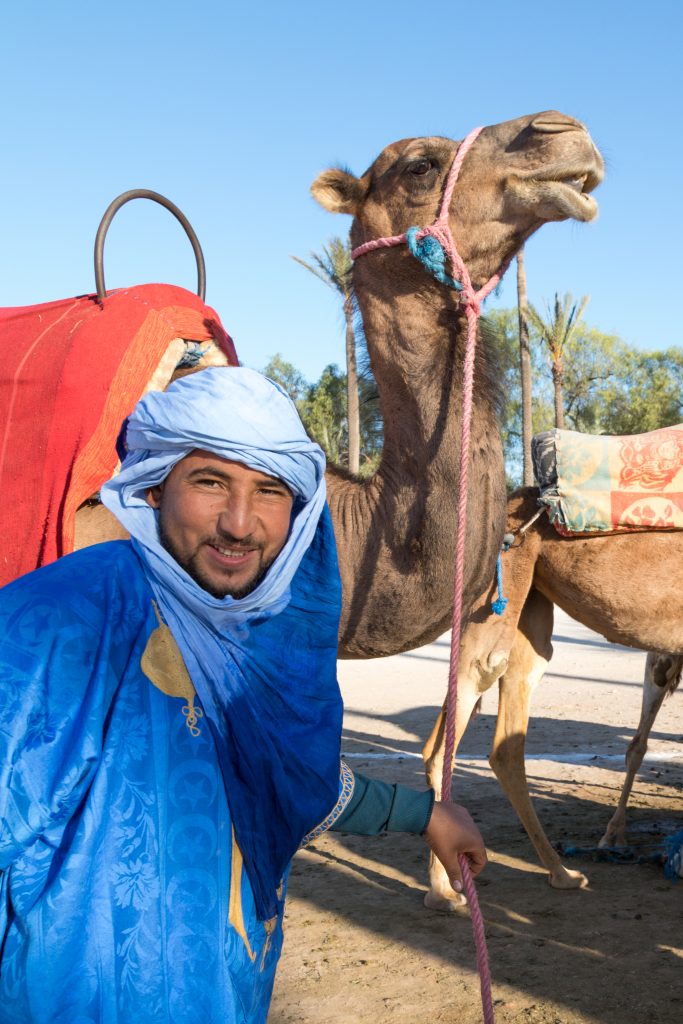
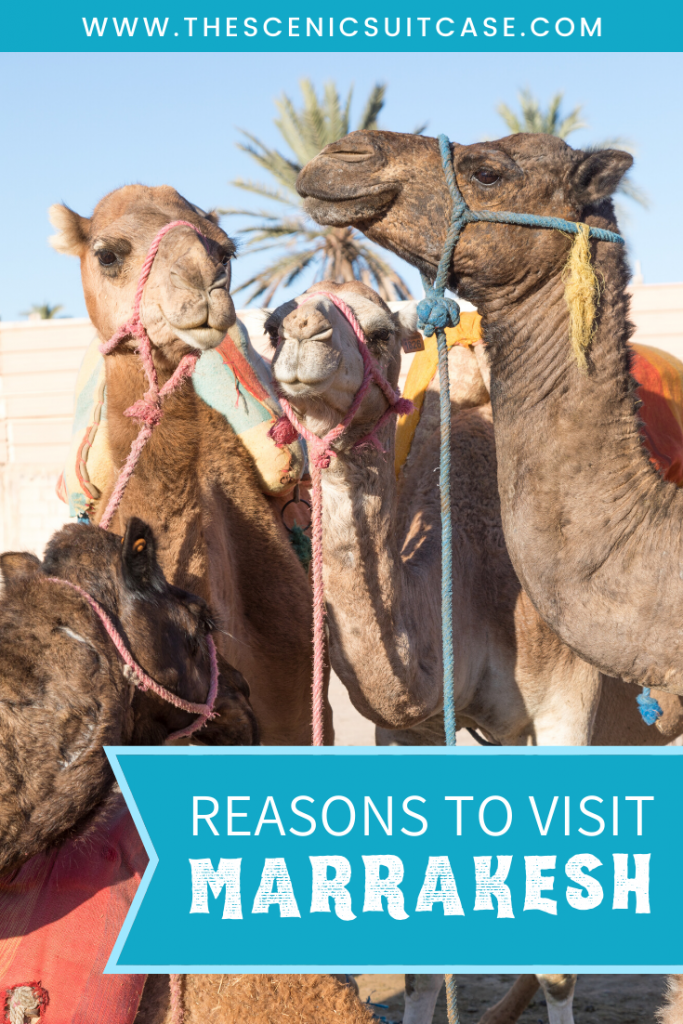
One experience emblematic of a Moroccan adventure is a desert camel ride. And, with its close proximity to Marrakesh, the Palmeraie is a popular place for visitors to go. With 54-square miles of arid landscape and several hundred thousand palm trees, it’s an oasis just outside the city.
What better way to see it than atop a camel’s back!
But, when it comes to animal encounters, be a conscientious traveler. It’s easy to unknowingly support animal abuse in tourism if you don’t know what to look for. Don’t accept rides from handlers that are hitting their animals or where the animals have sores or appear dehydrated. Also, camel’s feet are meant for walking on sand and not rocks, so avoid rides on camels in the mountains where it’s harder on their leathery pads.
7. The Souks & Jama El f’na
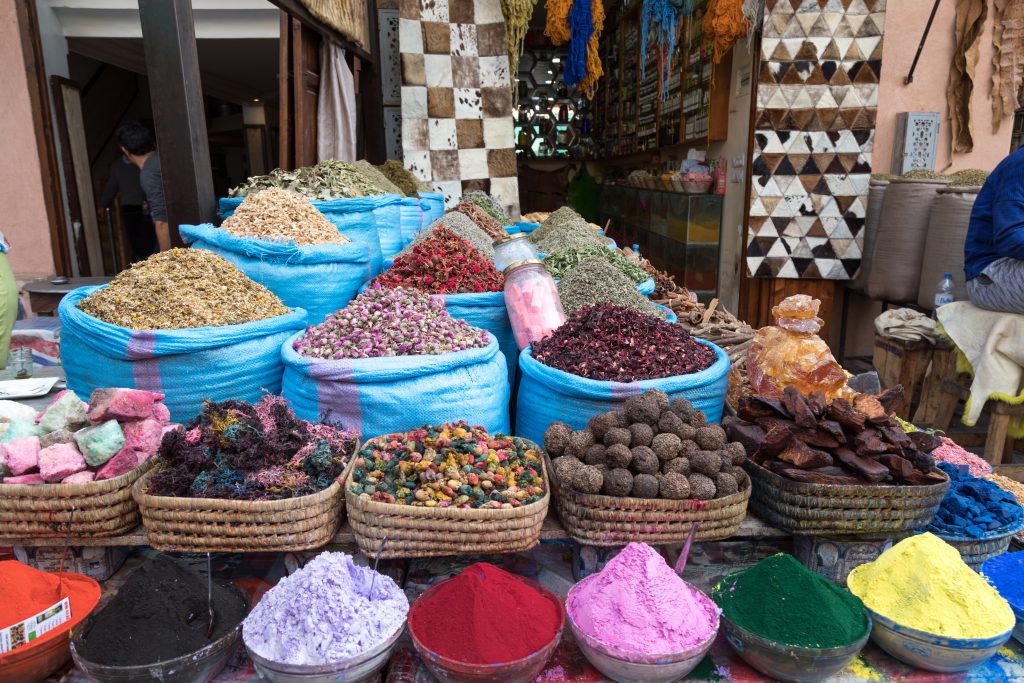
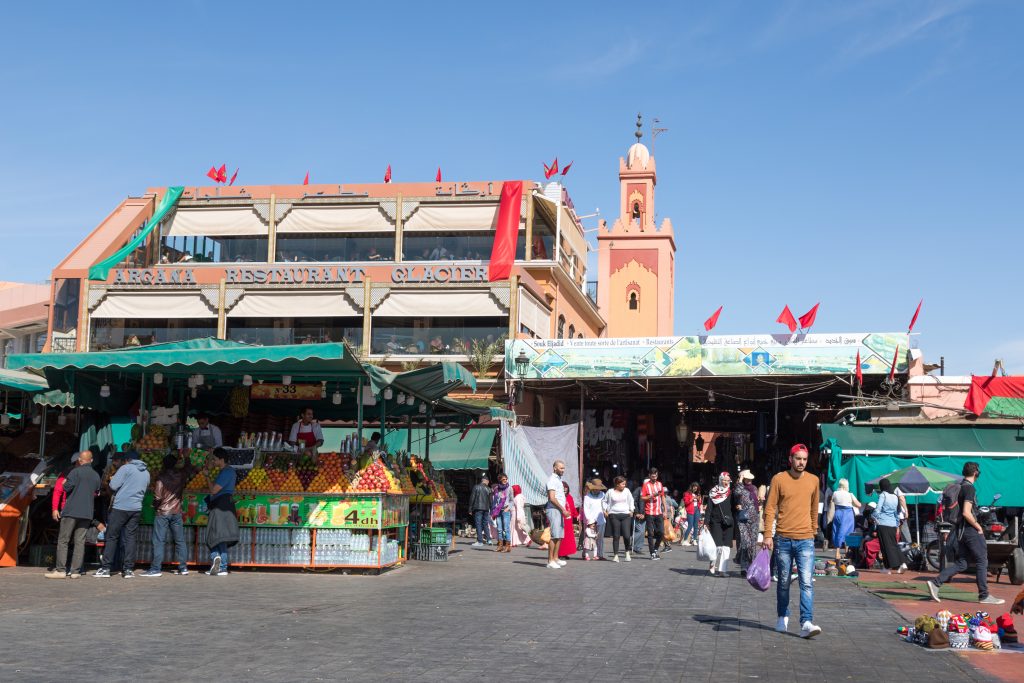
One of the best reasons to visit Marrakesh? The shopping! The souks and main market square of Jama El f’na have everything you could possibly imagine. Spices, lamps, dishes, pillows, baskets, apparel, keepsakes, you name it!
The hustle and bustle are electric as you squeeze your way through the crowded corridors. As you walk by, shop owners try to entice you with their wares and bargain-basement prices. In fact, half the fun of buying something is haggling for a better price!
But, while I love a good deal as much as the next person, don’t get greedy. Because a few extra dollars may not be much to you, but it could make a big difference in the life of a local. That’s because the average Moroccan monthly salary is only about $541.00, so many rely on tourists as a way to make ends meet.
The souks and Jama El f’na are also full of fascinating photo ops. Shimmering gold stalls, brilliantly colored spices, and walls of intricately designed dishes. It’s a photographer’s dream-come-true!
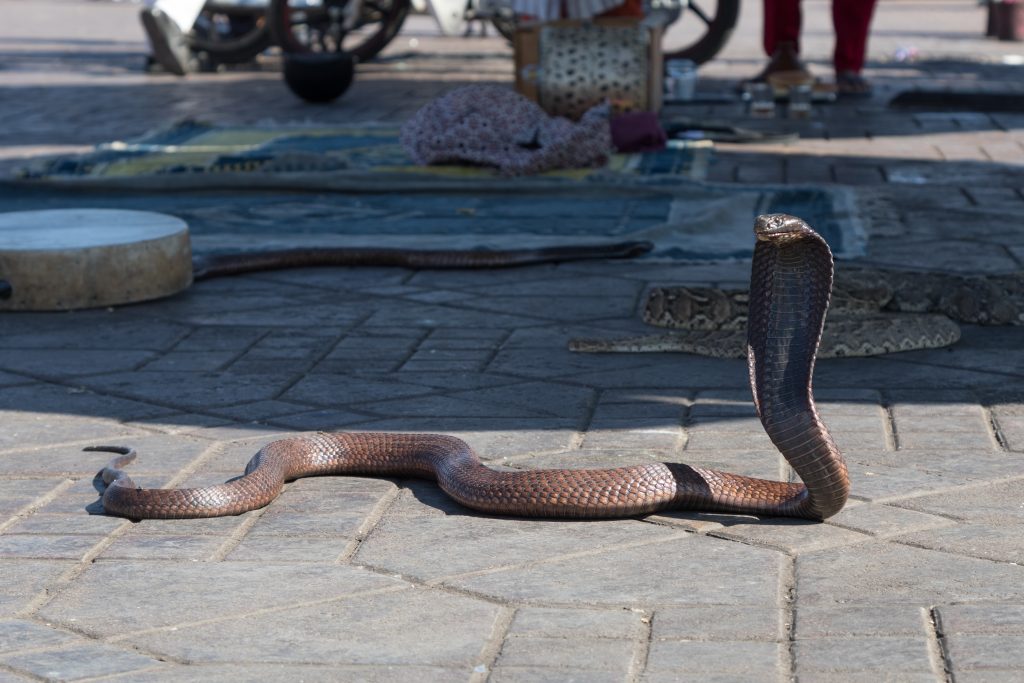
However, some of these photo ops include more animal abuse, so it’s good to be aware of what to avoid. For instance, visitors are often approached by snake handlers offering pictures for a price. They try to drape the snake over you, insisting the poor creature is harmless, before demanding payment. But, what they don’t share is the snake’s fangs have been painfully ripped out and they’re often limp from being drugged. So, just be wary of anyone offering photos with animals like snakes, monkeys, and hawks to avoid supporting ill-treatment.


8. The Medina
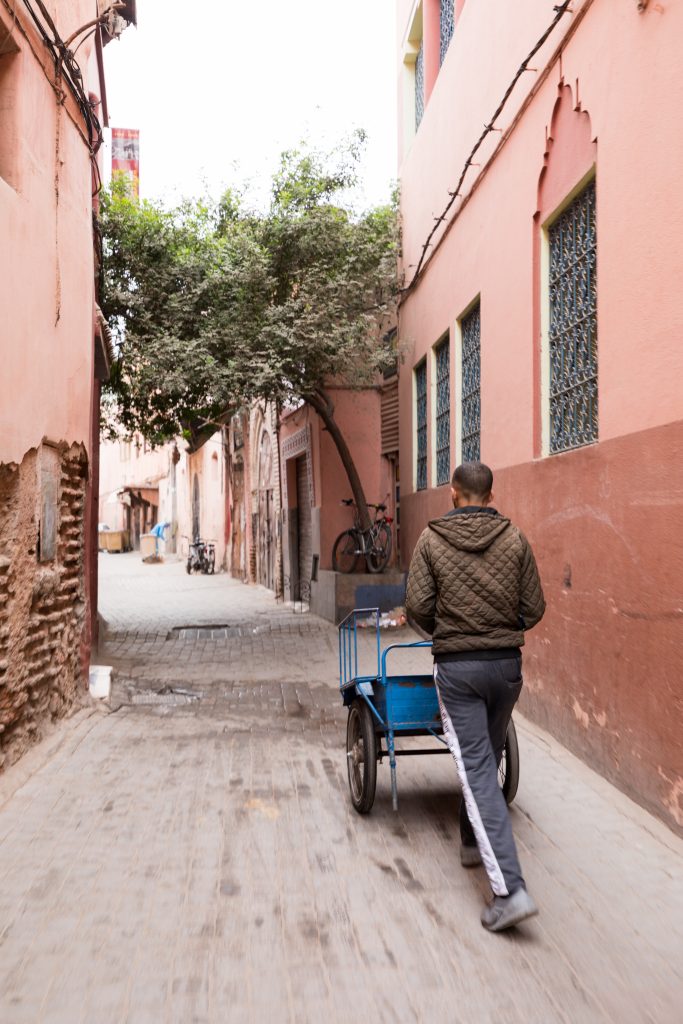
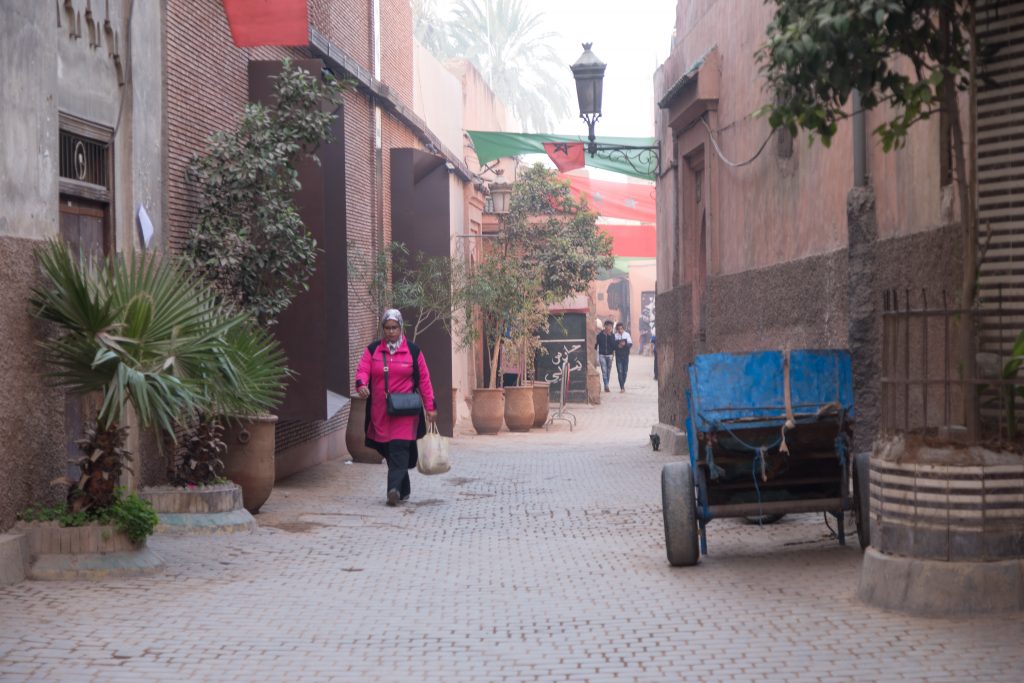
Marrakesh’s medina was founded in 1070 by the Almoravids and stands today as the historical center of the city. To protect against invaders, it’s enclosed by fortified stone walls that are over 25-feet high and 6-feet thick. However, if invaders did find their way inside their odyssey was far from over. The cobblestone streets were designed in a chaotic mess of twists and turns to confuse outsiders who entered.
What does that mean for visitors?
An impossible labyrinth where getting lost is a certainty and cell service is questionable. That’s why you’ll find a number of locals eager to help guide you… for a price. So, if you’re staying at a local riad have them arrange a guide to help get you to your accommodations, restaurants, etc. You’ll still need to pay them, but it will be at a much more reasonable cost. And, if you do find yourself alone and turned around, ask a shop owner for directions. They’re far less likely to take advantage of your ignorance since they need to stay with their store.
Don’t worry though. Before long, you’ll start to recognize landmarks and be able to navigate the maze of ancient streets like a pro!


9. Riads
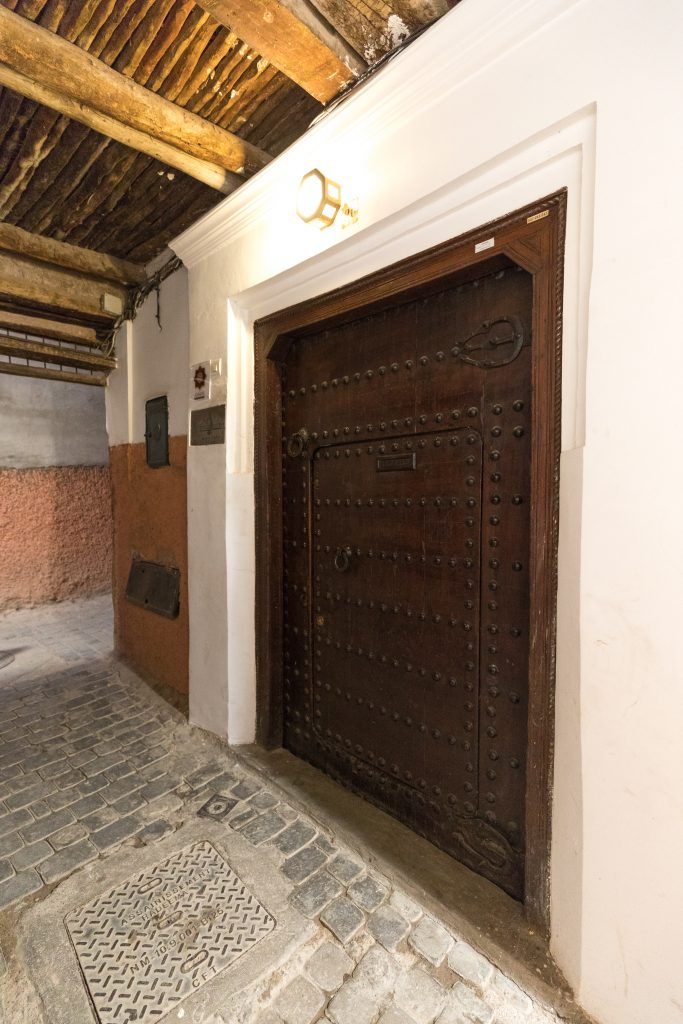
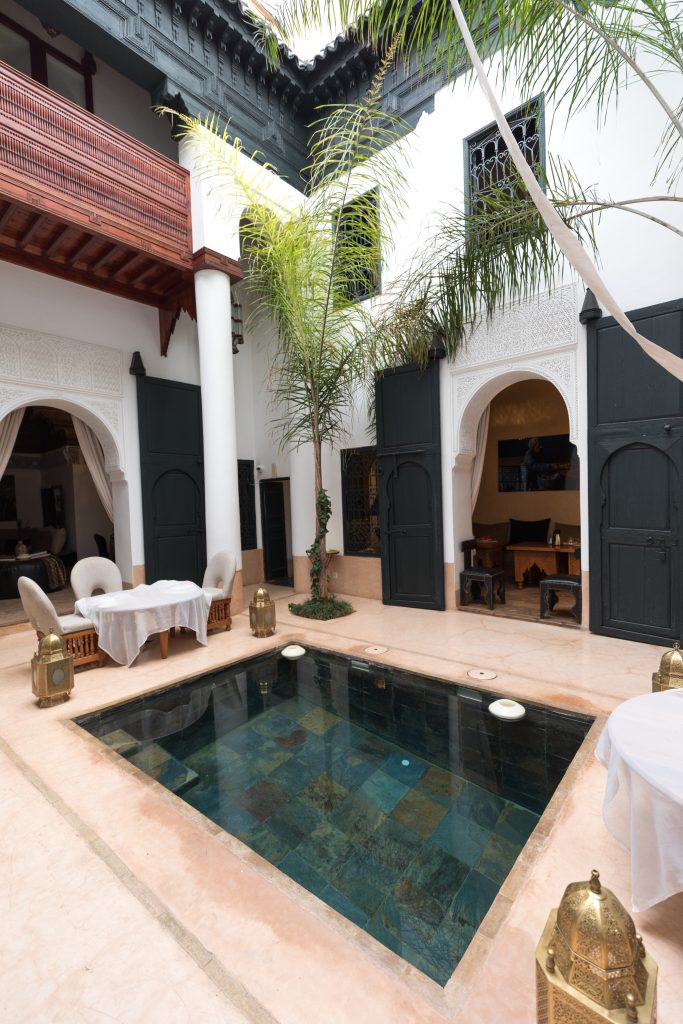
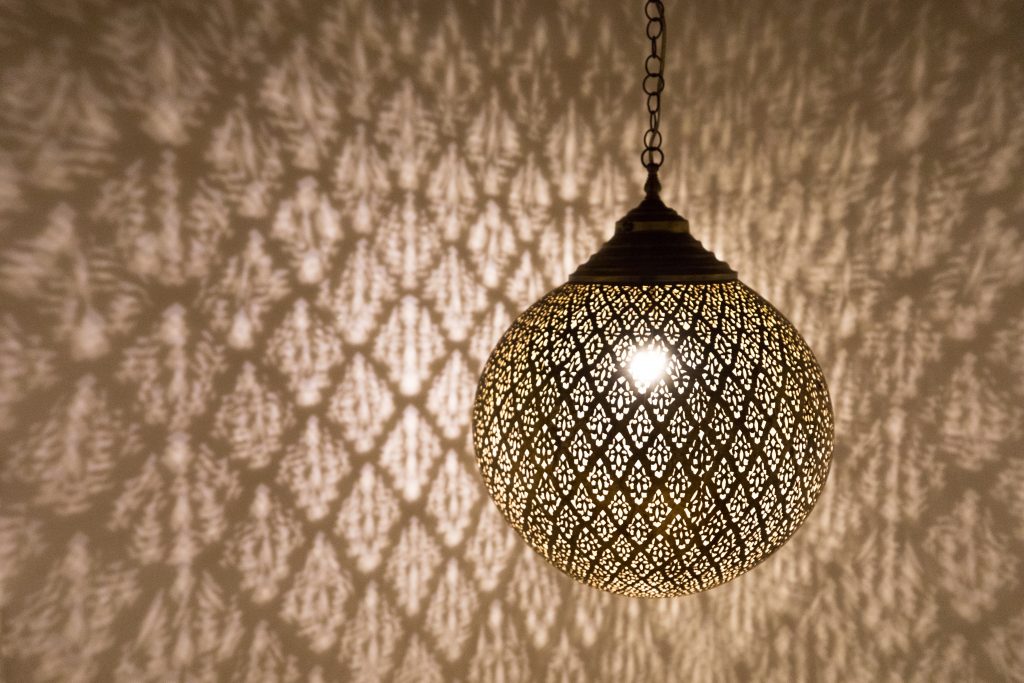
During your stay in Marrakesh, skip the hotel and stay at a local riad instead. These traditional Moroccan houses may not look like much from the outside, but on the inside, their dazzling decor is a haven of serenity and calm.
Each features a unique central courtyard (often with an inviting pool) surrounded by private guest rooms. And, almost all have rooftop patios where you can kick back and relax after a busy day wandering the medina.
Historically, riads offered families privacy from the outside world. This was particularly important for women, who could enjoy solace in their home with no outer windows and high-walled terraces to protect from prying eyes. Today, they offer visitors a chance to live like a local with a more authentic Moroccan experience.
Unlike larger hotels, riads are essentially run like a bed & breakfast. Upon arrival, you’ll be greeted with traditional cookies and a cup of mint tea. Meals are made by an on-site chef who often offers cooking classes to teach you how classic cuisine is made. And, the on-site manager can conveniently arrange transports, guides, and activities during your stay.
There are hundreds of riads scattered throughout the medina, and each has its own character and charm. So, while you may think they’re just a convenient place to lay your head, they’ll quickly become one of your favorite reasons to visit Marrakesh.

10. The Atlas Mountains
Just a short 45-minute drive from Marrakesh, the Atlas Mountains are an escape from the commotion of the city (and another great reason to visit Marrakesh!) The mountains here are considered the High Atlas and contain some of the most dramatic peaks and waterfalls in the 930-mile mountain range.
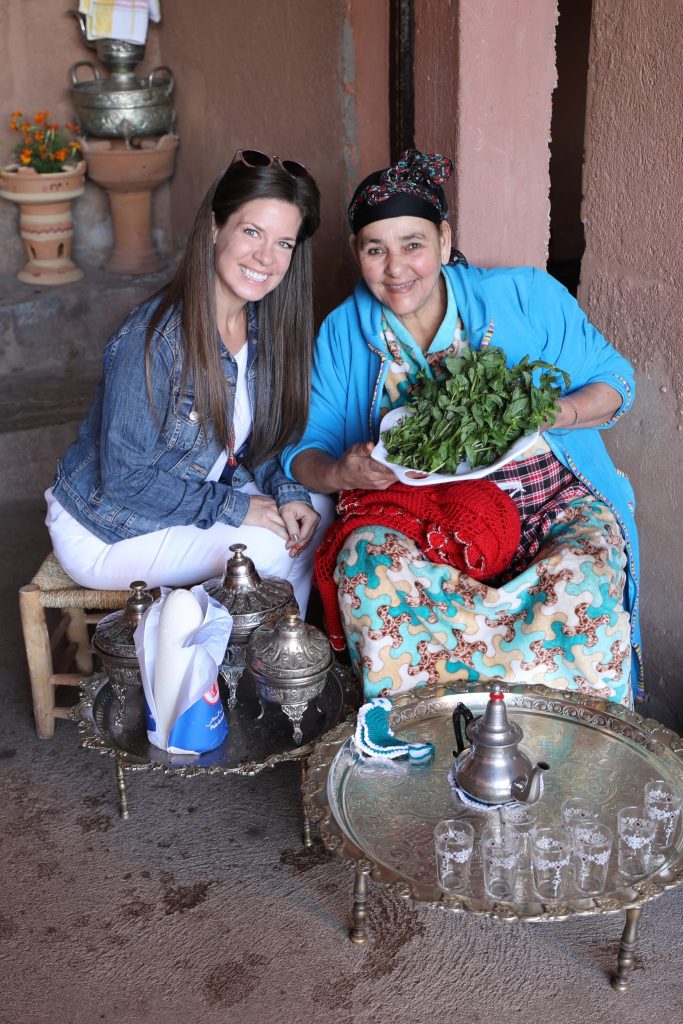
Dotted with small villages and Berber homes, day trips here often give visitors a glimpse into local life. That’s because many tours include stops at homes of Berber families for a meal and mint tea. The locals are incredibly welcoming and love showing guests their lifestyle and traditions. As an expression of gratitude, leaving dirham (the local currency) is customary and much appreciated.
In the mood to put on your adventure pants? Then, set out on a trek to the top of the tallest peak in North Africa: Toubkal. At an imposing 13,671-feet, a climb to the top takes about two days (with plenty of stops in remote Berber villages along the way for mint tea). From its summit, your efforts are rewarded with a view of the mountains fading off towards the Sahara Desert.


These are just a few of the reasons to visit Marrakesh, but there are many, many more. Its captivating culture, intricate architecture, delectable dishes, and welcoming locals are sure to make it an adventure you’ll never forget!
Have you been to Marrakesh before? Comment below, I’d love to hear what you thought!
You May Also Like:
» What To Expect From Your First Hammam
» 12 Things To Know Before Visiting Marrakesh
» The Complete Conservative Country Packing Guide


Leave a Reply